Written by the PetFitness team and reviewed by our Certified Canine Fitness Trainers. Last updated November 6, 2026.
Knowing how to build muscle on a dog is not about making a dog look impressive, though a well-muscled dog does. It’s about joints that last, a back that doesn’t give out at ten, a hind end that still gets up off the floor at fourteen, and a dog that can do the things it loves without getting hurt doing them. Muscle is the support structure for everything else, and most pet dogs have far less of it than they should, because walking on a leash, which is the only exercise many dogs get, builds almost none. This guide is strength training for dogs: what builds muscle and what doesn’t, the exercises that work the hind legs, the core and the front end, a weekly plan you can run in the backyard, the food side, and the mistakes that get dogs hurt. If your dog’s back legs are weak because of age, injury or illness rather than lack of training, start with our guide to weak back legs instead; this one is for healthy dogs that need conditioning.
The short version
- Walking doesn’t build muscle. Resistance does: hills, stairs, sit-to-stands, backing up, tug, swimming, pulling, balance work. Two or three short strength sessions a week on top of walks.
- Hind legs first. That’s where dogs lose muscle and where injuries happen. Sit-to-stands, hill walks, backing up and paws-up are the four that matter.
- Protein: at least 25 to 30 percent of the diet on a dry-matter basis from real animal sources. Most adult kibble is enough if the dog is eating enough of it. No supplements needed for a pet dog.
- Timeline: visible change in 6 to 8 weeks, real change in 3 to 4 months. Muscle builds slowly in dogs the same as in people.
- Who should wait: puppies under 12 to 18 months (no loaded or repetitive work until growth plates close), overweight dogs (get lean first), and any dog with a diagnosed joint problem (vet first).
- Warm up, keep sessions to 10 or 15 minutes, and stop on form. A dog that starts cheating the movement is done for the day.
Why most dogs are under-muscled
A dog’s body was built to sprint, climb, dig, carry, pull and wrestle, and the muscle that does those things only stays if it’s used. The average pet dog gets a leash walk at a steady pace on flat ground, which is aerobic exercise and good for the heart, lungs and weight, but puts almost no load on the big muscles of the hind end. The result is the dog you see in every park: fine from the front, narrow and soft through the thighs, and a little wobbly getting up off the floor at eight. That dog is the one that tears a cruciate ligament on an ordinary jump, because the muscles that should be stabilizing the knee aren’t there.
Muscle protects joints. It absorbs the forces that would otherwise go through ligaments and cartilage, holds the hips and knees in alignment, and lets a dog control its own movement instead of being thrown around by it. It also sets a dog’s metabolism, so a muscled dog stays lean more easily, and it’s the thing that slows the decline in old age; dogs don’t get frail because they get old, they get frail because they lose muscle, and the dogs that go into their senior years with a strong hind end stay mobile years longer. Building it is the single most under-done thing in dog fitness, and it doesn’t take a gym.
What builds muscle and what doesn’t
Muscle grows in response to resistance: the muscle has to work against something harder than usual, recover, and come back a little stronger. A walk doesn’t do it, however long. Fetch doesn’t do it; it builds speed and wrecks joints. Running alongside a bike builds stamina, not strength. What does it is slow, controlled, loaded movement: pushing up a hill, climbing stairs, standing up from a sit, holding a position on an unstable surface, pulling against something, swimming against water. The common thread is that the dog works hard for a short time and then rests, rather than moving easily for a long time.
The second ingredient is recovery. Muscle is built between sessions, not during them. Two or three strength sessions a week with a day between is the right dose for most dogs; daily strength work is where you start seeing sore dogs, sloppy form and injuries. Walks on the other days are fine and good.
The third is form. A dog that cheats an exercise (a crooked sit, a hop instead of a step, a lean onto the front end) is using the strong muscles to protect the weak ones, which is the opposite of what you want. Slow is the rule. Every exercise here should look like effort, not like play.
Hind leg exercises
Start here. The hind end is where dogs are weakest, where muscle is lost first, and where the knee and hip injuries happen. These four exercises cover the glutes, hamstrings and quads, and they need nothing but a yard, a step and a handful of kibble.
Sit-to-stand
The dog version of a squat and the best single exercise on this list. Ask for a square sit, with both back legs tucked evenly under the dog and the feet pointing forward, then a stand without walking forward, then a sit again. The hind legs do all the work if the sit is square; a dog that slumps onto one hip or kicks a leg out is skipping the hard part, so reward only the clean reps. Start with five, build to three sets of ten over a month. Make it harder by doing it with the front feet on a step, which shifts even more weight to the back end. Our butt workout is built around this one.
Hill walks
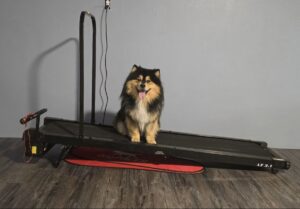
Walking up a slope loads the hind end on every step, and the dog can’t cheat it. Find a grass hill, walk up slowly on a short leash (slow is important; a trot up a hill lets the dog bounce instead of push), walk back down at an angle to protect the shoulders, repeat. Five to ten climbs of 20 to 40 yards is a full session for most dogs. The steeper the hill, the fewer reps. A treadmill on a 5 to 10 percent incline does the same job indoors; our treadmill training guide covers it.
Backing up
Walking backward uses the hamstrings and glutes in a way almost nothing else does, and most dogs have never done it. Stand in front of the dog, step toward it, reward the first step back, build to five or ten steps in a straight line. Doing it along a wall or between two chairs keeps the dog straight. Once it’s easy on flat ground, back the dog up a gentle slope or up a single step.
Paws up and stair climbs
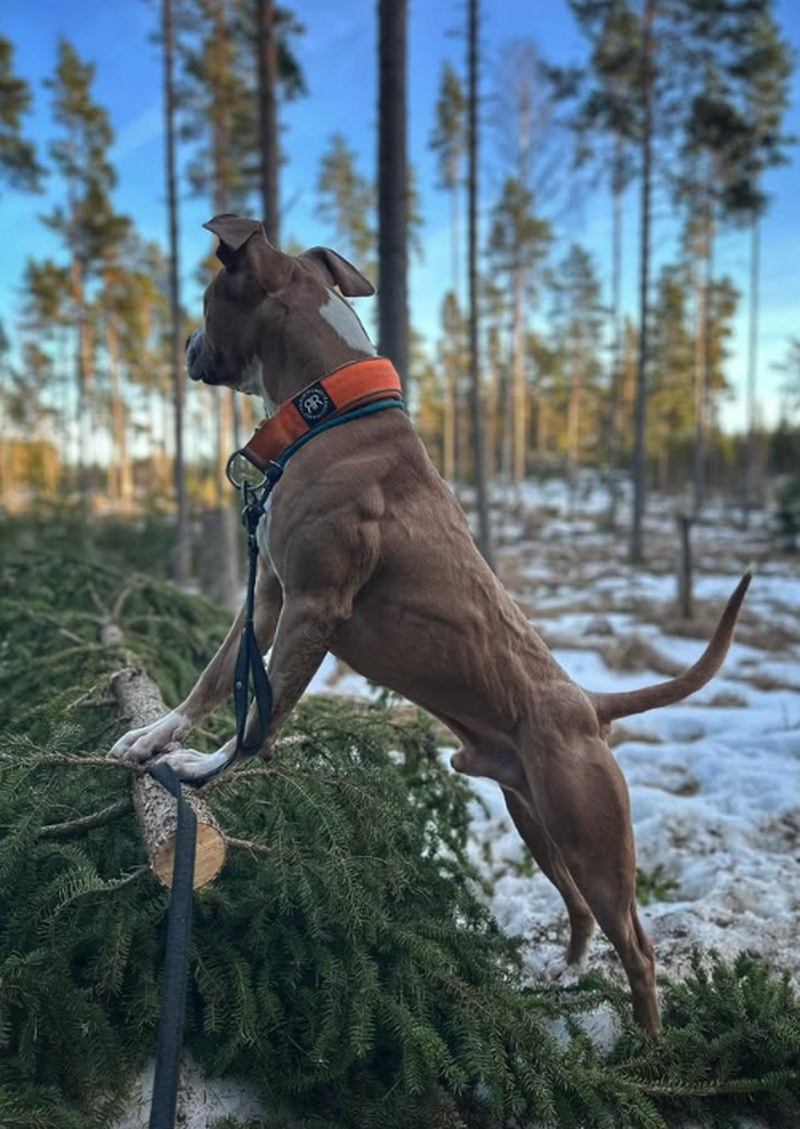
Front feet up on a step, a log, a curb or a box, hind feet on the ground, hold for ten seconds, step down, repeat. The hind legs carry most of the dog’s weight in that position and the core has to hold the spine level. Build to 30-second holds. Then stairs, walked slowly, one step at a time, up only; the dog comes back down a ramp or is carried if small. Stairs are excellent for the hind end and hard on the shoulders going down, so make the down the easy part.
Core exercises
A strong core is what connects a strong back end to the rest of the dog. It holds the spine, protects the back, and is the difference between a dog that moves as one piece and a dog that moves as two halves. The full set of exercises is in our core strength guide; these are the three that matter most for muscle.
Balance holds
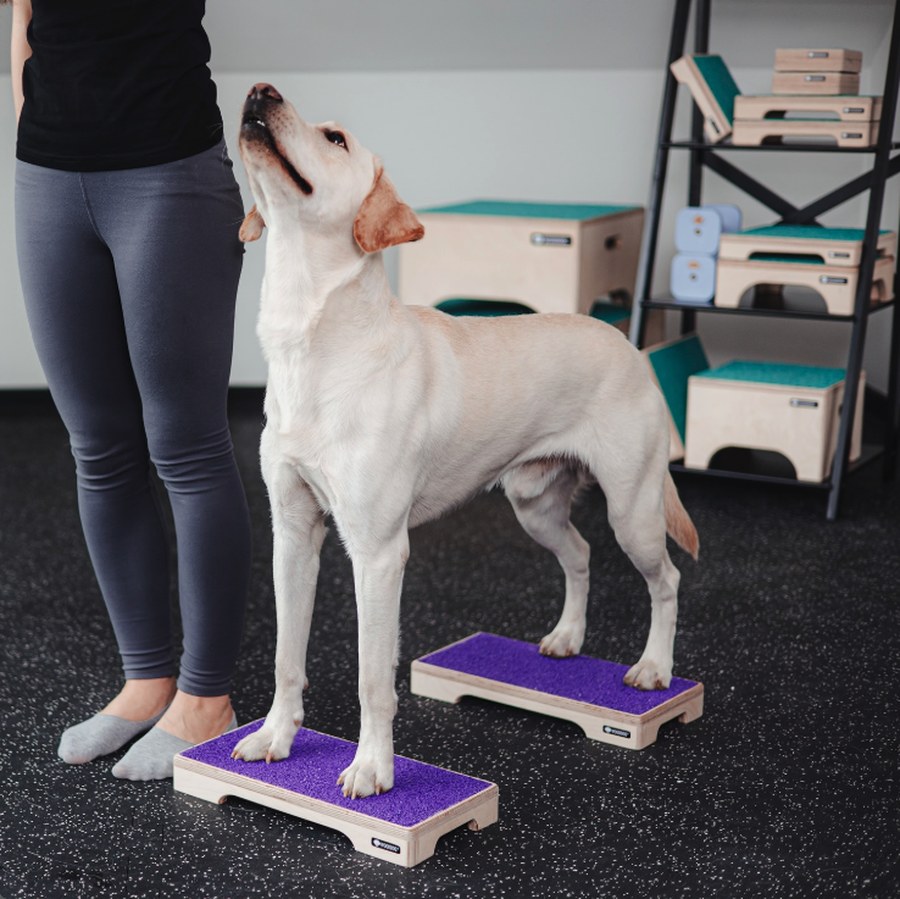
Standing still on something that moves (a balance disc, a cushion, a wobble board, a folded yoga mat) forces every stabilizing muscle in the body to fire at once. Front feet on the unstable surface first, then back feet, then all four. Hold 10 to 30 seconds. The Lab in the photo is doing the stable version on two platforms, which teaches the dog to load all four feet evenly; the unstable version comes next. See our balance guide for the progression.
Cookie stretches
With the dog standing, use a treat to bring its nose slowly around toward its hip, hold two seconds, then the other side, then down between the front feet, then up toward the sky. The dog bends through the spine without moving its feet, which works the deep core muscles that hold the back. Five each direction, slowly.
Planks for dogs
A stand-stay on four unstable surfaces (four cushions, or two balance discs) with the head level and the feet still is a plank. Build to 30 seconds. It’s harder than it looks and it’s the exercise that gives a dog a visibly tighter midsection.
Full-body work: tug, swimming and pulling
Tug
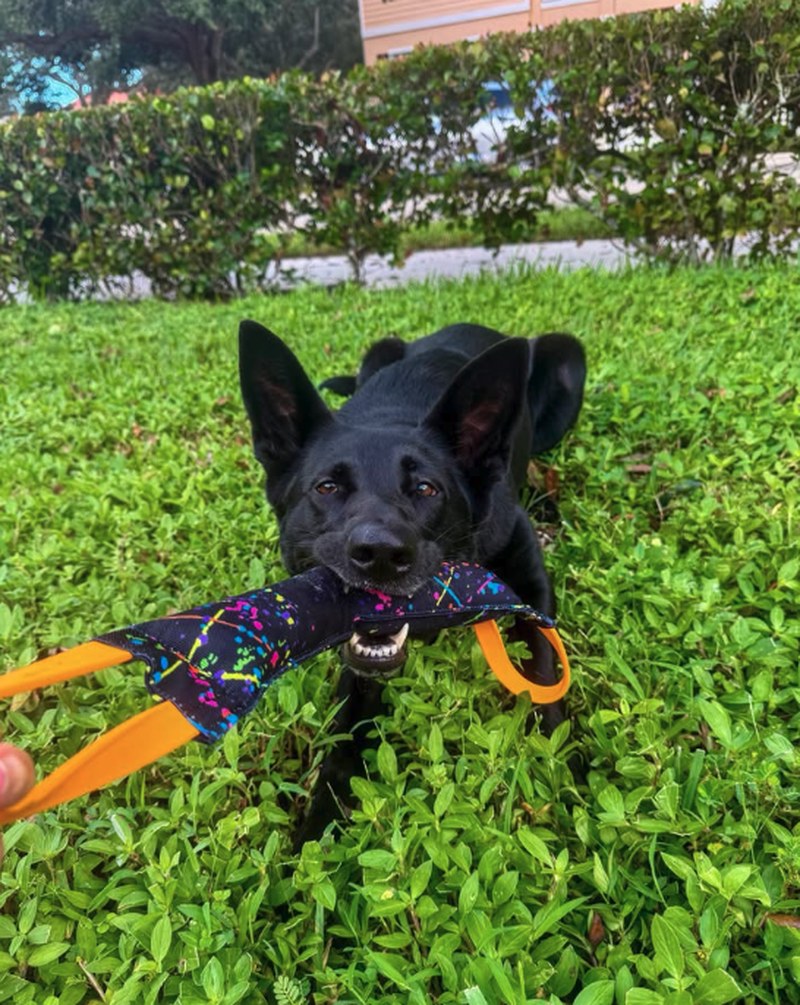
Tug is a full-body resistance exercise and the one most dogs will do until they drop. Keep the toy low (at the dog’s chest height or below, never above the head, which strains the neck and spine), let the dog pull backward with its hind legs rather than thrashing side to side, and keep rounds to 20 or 30 seconds with a release and a rest. A dog that digs its back feet in and pulls like the one in the photo is doing a loaded hind-leg exercise and a core exercise at the same time. Teach a solid “drop” first; tug is only a good exercise if you can end it.
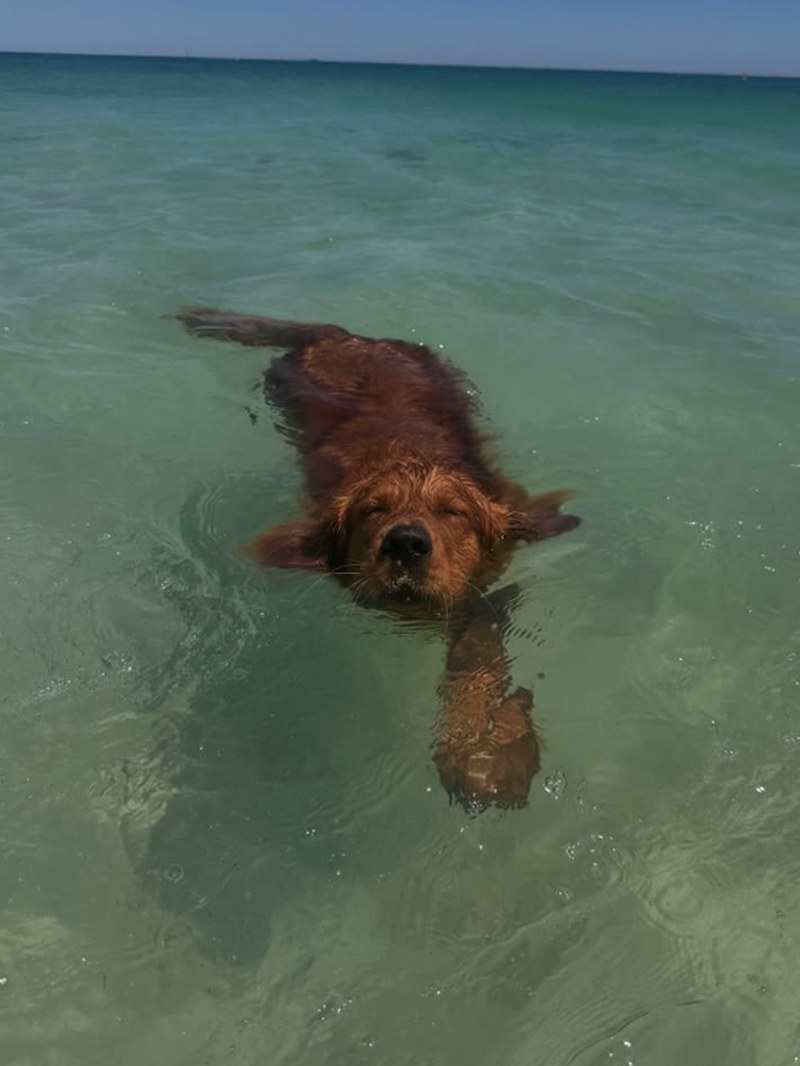
Swimming
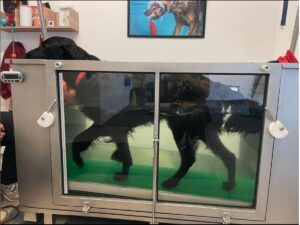
Water is resistance in every direction with none of the impact, which makes swimming the best full-body muscle builder for dogs with any joint concern and one of the best for everyone else. Five minutes of swimming is roughly equivalent to a 20-minute walk, and the hind legs, core and shoulders all work. Build up slowly (two or three minutes the first few times), use a dog life vest for anything but confident swimmers, keep sessions under 15 minutes, and rinse off chlorine or salt. Underwater treadmills at rehab clinics do the same thing in a controlled way for dogs that can’t swim.
Pulling and weight
Drag work (a sled, a tire on a rope, a wagon with a harness) is how sled dogs and weight-pull dogs build their hind ends, and a light version works for a pet dog: a properly fitted pulling harness, a light drag on grass, a short straight pull of 20 to 40 yards, walk back, repeat. Keep the weight light enough that the dog walks it easily; this is about reps, not a max effort. A weighted vest at 5 to 10 percent of the dog’s body weight on a slow walk is the simpler option, with the limits covered in our weight vest guide. Neither is for puppies, seniors or dogs with joint issues.
A weekly strength plan
| Day | Session | Time |
|---|---|---|
| Monday | Hind legs: warm-up walk, 3 sets of 10 sit-to-stands, 5 hill climbs or stair climbs, 10 steps backing up, 3 paws-up holds of 20 seconds. | 15 minutes plus the normal walk |
| Tuesday | Normal walk. No strength work. | As usual |
| Wednesday | Core and balance: warm-up walk, balance holds (3 x 20 seconds each position), cookie stretches, 2 planks of 20 seconds, 5 rounds of tug. | 15 minutes plus the normal walk |
| Thursday | Normal walk. | As usual |
| Friday | Full body: swim (5 to 15 minutes) or a light drag or vest walk, then 2 sets of 10 sit-to-stands with front feet up on a step. | 15 to 20 minutes |
| Weekend | One long sniff walk or hike with some hills. One full rest day. | Whatever the dog enjoys |
Each session starts with five minutes of walking and a few slow cookie stretches, and ends with a few minutes of walking. Add reps or hold time every two weeks, not weight or difficulty, until the dog is doing the full plan cleanly; then make individual exercises harder (steeper hill, front feet up on a step for the sit-to-stands, unstable surface for the holds). Measure progress by wrapping a tape around the widest part of each thigh every two weeks. Numbers go up slowly; a quarter inch a month is real.
Food: the protein question
You can’t build muscle on a dog without the raw material, and the raw material is protein. A healthy adult dog doing regular strength work does well on a diet that’s 25 to 30 percent protein on a dry-matter basis, from named animal sources (chicken, beef, fish, egg) rather than plant protein padding, and most good adult kibbles are in that range already. If the label is under 22 percent, switch. If the dog is eating a good food but not enough of it, which is common with dogs that are being kept lean, the fix is a little more of the same food, not a supplement. Our guide to the best food for active dogs covers protein, fat and omega-3s in detail, and the calorie guide shows how much to feed a dog that’s training.
Skip the muscle-building supplements marketed for dogs. Creatine, whey and “bulking” powders are sold hard to owners of bully breeds, and there’s no good evidence any of them do anything for a dog that’s eating a decent diet; some are just protein powder at ten times the price, and a few contain things a dog shouldn’t have. The exceptions are fish oil for joints and, for a dog on a raw or home-cooked diet, a vet-formulated balancer so the diet isn’t missing anything. Feed well, train consistently, and let time do the rest.
Who should wait, and who should modify
Puppies. Growth plates stay open until 12 months in most breeds and up to 18 in giant breeds, and loaded or repetitive strength work before then is how you build a dog with elbow and hip problems. Puppies get play, free movement, short sniff walks and simple body-awareness games (paw targets, cookie stretches, a step up and down); our puppy exercise guide covers what’s safe at each age. The muscle comes naturally once they’re grown.
Overweight dogs. Loading a heavy dog’s joints with hills and stairs before the weight comes off causes the injuries you’re trying to prevent. Do the diet first, with swimming, slow flat walks and the unloaded exercises (cookie stretches, balance holds, gentle sit-to-stands) alongside, and add the loaded work as the dog gets lean. The weight loss plan is the place to start.
Seniors. Older dogs can and should build muscle; it’s the thing that keeps them mobile. Lower the reps, skip the drag and vest work, keep hills gentle, lean on swimming and sit-to-stands, and expect progress to be slower. Our senior exercise guide has the adjusted version.
Dogs with joint problems. Arthritis, hip dysplasia, a cruciate repair, a back issue: strength work is part of the treatment, but the program comes from your vet or a rehab therapist, not from a general plan. The arthritis guide and hip dysplasia guide show what the modified versions look like.
Mistakes that get dogs hurt
Fetch and ball launchers as “exercise.” They build nothing and the stop-turn-leap pattern is the most common cause of cruciate tears in young dogs. Training every day with no recovery. Jumping into weighted vests or drag work before the dog has the base from bodyweight exercises. Skipping the warm-up. Letting the dog trot up hills instead of walk. Rewarding sloppy reps because the dog is enthusiastic. Doing strength work on slippery floors. And going too long: a 10-minute session done well, three times a week, beats a 40-minute session that ends with a tired dog doing bad reps.
What to expect, and when
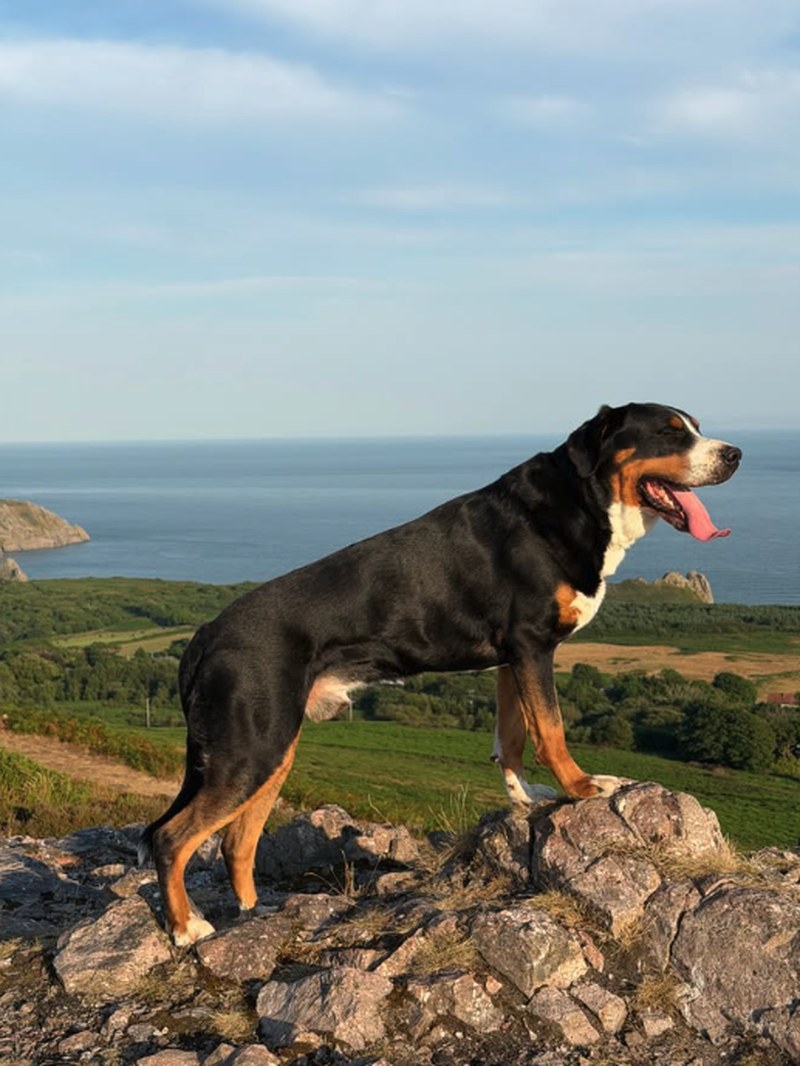
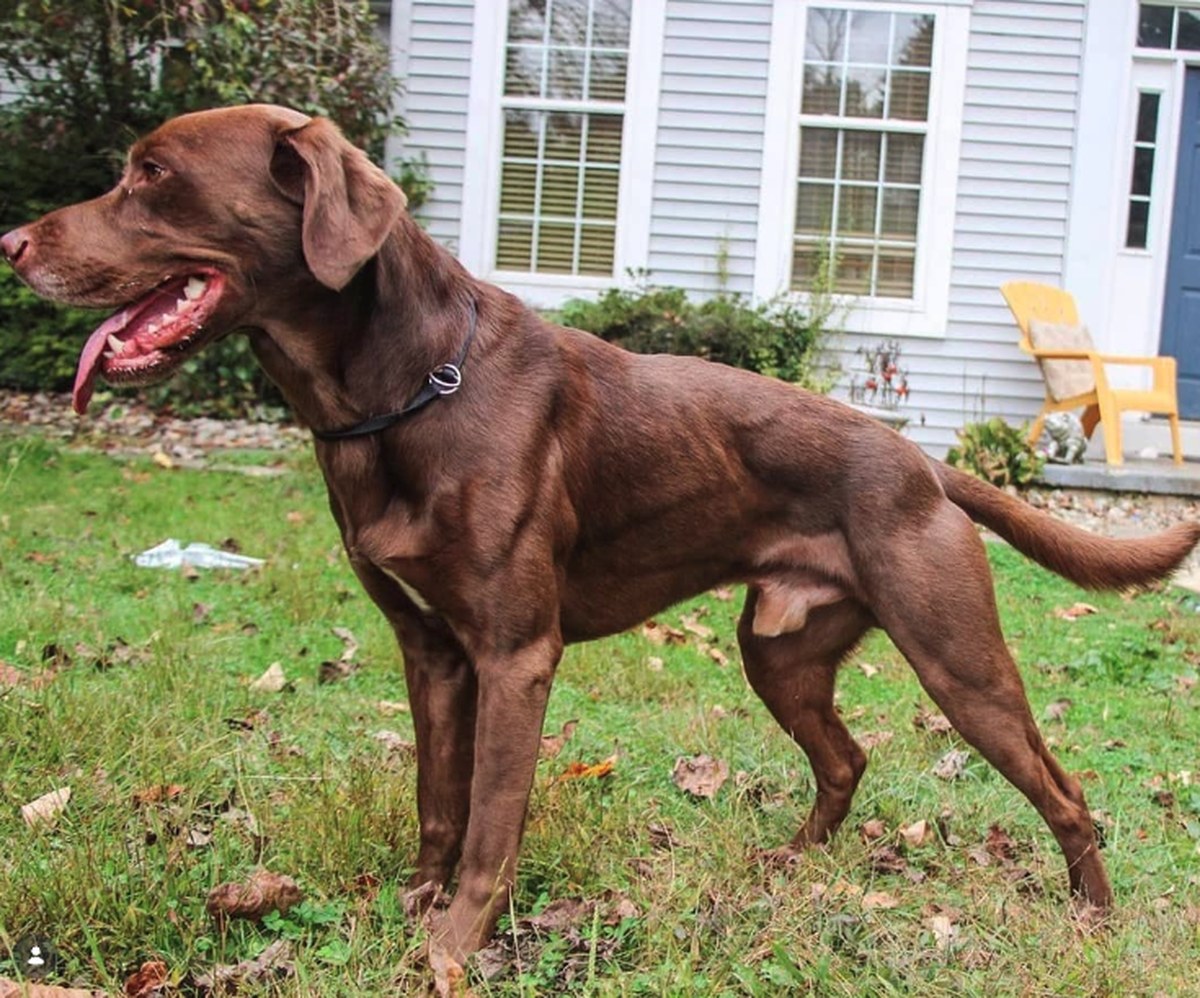
Dogs build muscle at about the rate people do. In the first two weeks you’ll see better form and a dog that finds the exercises easier; that’s the nervous system learning, not muscle yet. By six to eight weeks the thighs start to feel firmer and the tape measure moves. By three to four months a dog that started soft has a visibly different hind end, gets up off the floor differently, and moves with more drive. The Lab in the photo above is what a lean, well-conditioned pet dog looks like: not bulky, but every muscle group is there and defined. That’s the target, and it’s reachable for almost any healthy adult dog with two or three short sessions a week and the right food.
Frequently asked questions
How do I build muscle on my dog’s back legs?
Sit-to-stands, slow hill walks, backing up, paws-up holds and stair climbs, two or three times a week with rest days between. Add swimming if you can. Keep the reps slow and the form clean, and give it eight weeks before judging.
How long does it take to build muscle on a dog?
Firmer muscle in six to eight weeks, visible change in three to four months, with consistent training two or three times a week and enough protein. Faster than that usually means the dog was underweight and is filling out, not building muscle.
What food builds muscle in dogs?
A good adult food with 25 to 30 percent protein from named animal sources, fed in enough quantity to support the work. Most quality kibbles qualify. Supplements marketed for muscle aren’t needed and some aren’t safe; fish oil for joints is the one worth adding.
Is walking enough to build muscle on a dog?
No. Walking on flat ground is aerobic exercise and good for the dog, but it puts almost no load on the muscles that matter. Add hills, sit-to-stands, backing up and balance work and the walk becomes part of a program instead of the whole thing.
Can I use a weighted vest to build muscle on my dog?
Yes, for a healthy adult dog that already has a base of bodyweight strength: 5 to 10 percent of body weight, on slow walks, never on puppies, seniors, overweight dogs or dogs with joint problems. It’s a supplement to the exercises above, not a replacement.
Does tug of war build muscle?
Yes, it’s one of the best full-body resistance exercises a dog can do, as long as the toy stays low, the rounds stay short and the dog has a reliable drop. Keep the pulling backward rather than side to side.
Why is my dog losing muscle in its back legs?
If it’s a healthy adult that doesn’t get strength work, it’s disuse, and this guide fixes it. If it’s happening on one side, quickly, or in an older dog with other changes, it can be a joint, nerve or medical problem and needs a vet before any training. Our weak back legs guide covers how to tell the difference.
Can puppies do strength training?
Not loaded or repetitive strength work until growth plates close, around 12 months for most breeds and 18 for giants. Play, free running on soft ground, short sniff walks and simple body-awareness games are enough; the muscle comes with growth.
Where this fits in your dog’s plan
Strength is the piece most dog fitness plans leave out, and it’s the piece that protects everything else. A PetFitness plan builds it in: the right exercises for your dog’s age, size and starting point, in the right order, with the food to support it and the walks and play around it. If you’d like one built for your dog, start your dog’s plan here. If you’d rather start tonight: ask for a square sit, then a stand, then a sit, ten times, slowly. That’s the first set.