Written by the PetFitness team and reviewed by our Certified Canine Fitness Trainers. Last updated November 3, 2026.
Mental stimulation for dogs is the half of fitness most owners skip. A dog that gets two walks a day and still chews the baseboards, barks at nothing, paces at 8pm or can’t settle isn’t under-exercised, it’s under-worked. Dogs were bred for jobs that used their noses and their brains for hours a day, and a tired body with a bored mind is still a bored dog. The good news is that brain work is cheap, it fits in ten-minute slots, it works on rainy days and for dogs who can’t run, and it tires a dog out faster than people believe until they try it. This guide is 20 brain games and enrichment ideas you can do at home, most of them with things you already own, plus how much your dog actually needs, how to match games to your dog’s age and ability, and the mistakes that turn enrichment into frustration.
The short version
- How much: 15 to 30 minutes of brain work a day for most adult dogs, split into two or three short sessions. High-drive breeds need more, seniors and puppies need it in smaller doses.
- Nose first: scent games are the most tiring and the most natural. A snuffle mat, a scatter feed and a “find it” game are the three to start with.
- Feed through work: put at least one meal a day into a puzzle, a stuffed Kong or a scatter instead of a bowl. Zero extra calories, 20 minutes of effort.
- Train something: five minutes of learning a new trick is harder for a dog than a 20-minute walk.
- Rotate: the same puzzle every day stops being a puzzle in a week. Keep four or five options and swap them.
- Keep it winnable: a game the dog can’t solve isn’t enrichment, it’s stress. Start easy, make it harder slowly, and quit while the dog is still winning.
Why mental stimulation matters as much as exercise
A dog’s brain burns energy. Problem-solving, scent work and learning produce the same kind of satisfied, sleepy dog as a long hike, often in a third of the time, because thinking is harder for a dog than trotting. Working breeds in particular (herding dogs, retrievers, terriers, scent hounds, guardian breeds) were selected for hundreds of years to concentrate, search and make decisions, and most of them now live in homes where nothing is asked of them. The result is the familiar list: chewing, digging, barking, counter-surfing, pulling, pacing, “hyper” behavior that doesn’t respond to more running. More exercise often makes it worse, because you build a fitter dog with the same empty day. Brain work fills the day.
There are physical reasons too. Scent work lowers a dog’s heart rate and stress hormones; sniffing is calming in a way that running isn’t. Puzzle feeding slows down meals, which matters for fast eaters and for any dog on a weight loss plan, since a meal that takes 20 minutes to earn is far more satisfying than one that’s gone in 30 seconds. And for dogs who can’t exercise hard, which includes seniors, dogs in rehab after injury, dogs with arthritis and flat-faced breeds in summer, mental work is the main tool you have for keeping them content without loading the joints. Our guide to how much exercise a dog needs covers the physical side; this is the other half.
How much mental stimulation does a dog need?
For an average adult pet dog, aim for 15 to 30 minutes of deliberate brain work a day, in two or three sessions, on top of walks. That’s a puzzle-fed breakfast, a five-minute training session and a ten-minute scent game, and it’s enough to change most dogs’ behavior within a couple of weeks. High-drive working breeds (Border Collies, Malinois, German Shepherds, working-line Labs, Huskies, terriers) usually need double that, and respond best to games that involve a task rather than just food; our working breed exercise guide pairs well with this one. Puppies need brain work in two- to five-minute bursts several times a day, because their attention span is short and their bodies shouldn’t be doing much else yet (see our puppy exercise guide). Seniors benefit enormously from daily scent and puzzle work, which is also the best thing you can do for an aging brain, but keep sessions short and the puzzles easy.
The real measure isn’t minutes, it’s the dog. A dog that’s getting enough brain work settles easily in the evening, doesn’t invent its own jobs (your shoes, the garden, the cat) and sleeps well. If you’re doing 30 minutes and the dog is still restless, add more. If the dog is sleeping through the puzzles, you’re done.
Scent and nose games
Start here. A dog’s nose is its primary sense and scent work is the most natural, most tiring and most calming kind of enrichment there is. It also needs no skill from the dog, so it works for puppies, seniors, nervous dogs and dogs who’ve never done a puzzle.
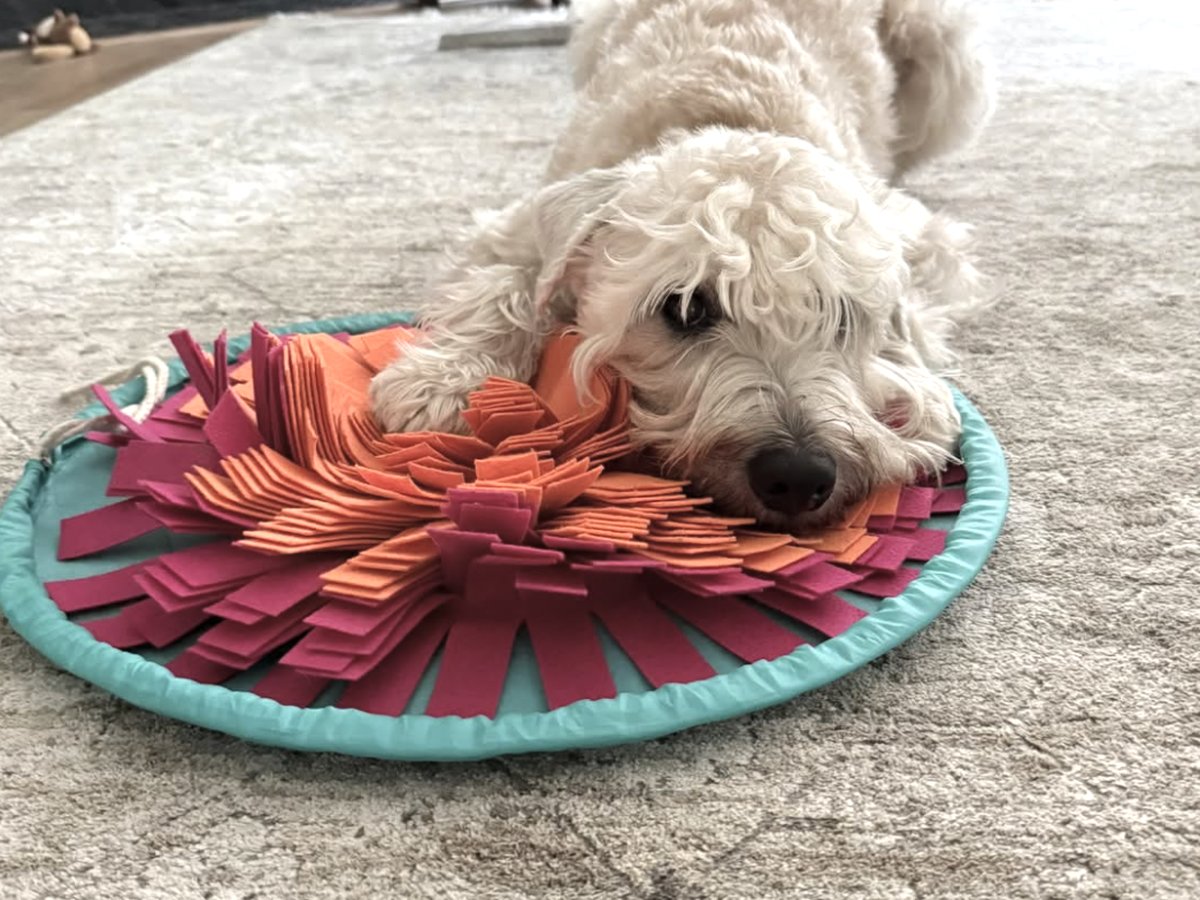
1. Snuffle mat
A mat of fabric strips you hide kibble or small treats in; the dog has to root through it with its nose. Ten minutes of concentrated sniffing from a handful of food. Use it for a meal, not extras. Start with food on top where the dog can see it, then bury it deeper as the dog gets the idea. The dog in the photo above is doing exactly what you want: nose down, calm, working. You can buy one or make one by tying fleece strips through a rubber sink mat.
2. Scatter feeding
Throw a meal’s worth of kibble across the lawn or a rug and let the dog hunt for it. Free, instant, and for a lot of dogs the single most effective calming activity there is. Grass is best because scent catches in it; indoors, a textured rug or a towel scrunched up works. Start with a small area and spread it wider over time.
3. Find it
Show the dog a treat, have them wait (or hold the collar), hide it in an obvious spot, release with “find it.” Make the hiding spots progressively harder: behind a chair leg, under a cushion edge, on a low shelf, in another room. Within a couple of weeks most dogs will search a whole house for one piece of cheese. This is the game to build toward real nose work.
4. The box game
Set out four or five cardboard boxes or plastic tubs, put a treat in one, let the dog search. Move the treat around, add boxes, close lids partly. It’s the beginner version of the scent detection sports dogs compete in, and it’s a cheap, endlessly scalable way to work a dog’s nose indoors.
5. Sniff walks
Not every walk needs to be exercise. Once or twice a week, take the dog on a long line to a park edge, a field or a quiet street and let them sniff wherever they want for 20 minutes, at their pace, no heeling, no hurrying. A sniff walk tires a dog more than a brisk walk of the same length and it’s often the best walk of the week for an anxious dog.
6. Scent trails
Drag a piece of cheese or a hot dog along the ground in a winding path, drop it at the end, and bring the dog to the start. Begin with a ten-foot trail in the yard and extend it. Older dogs and dogs on restricted exercise love this one because they can do it at a walk.
Food puzzles and feeding games
The rule for this section: feed at least one meal a day through work rather than a bowl. It costs nothing in calories, it slows fast eaters, and it turns the most boring part of a dog’s day into the most interesting.
7. Stuffed, frozen food toys
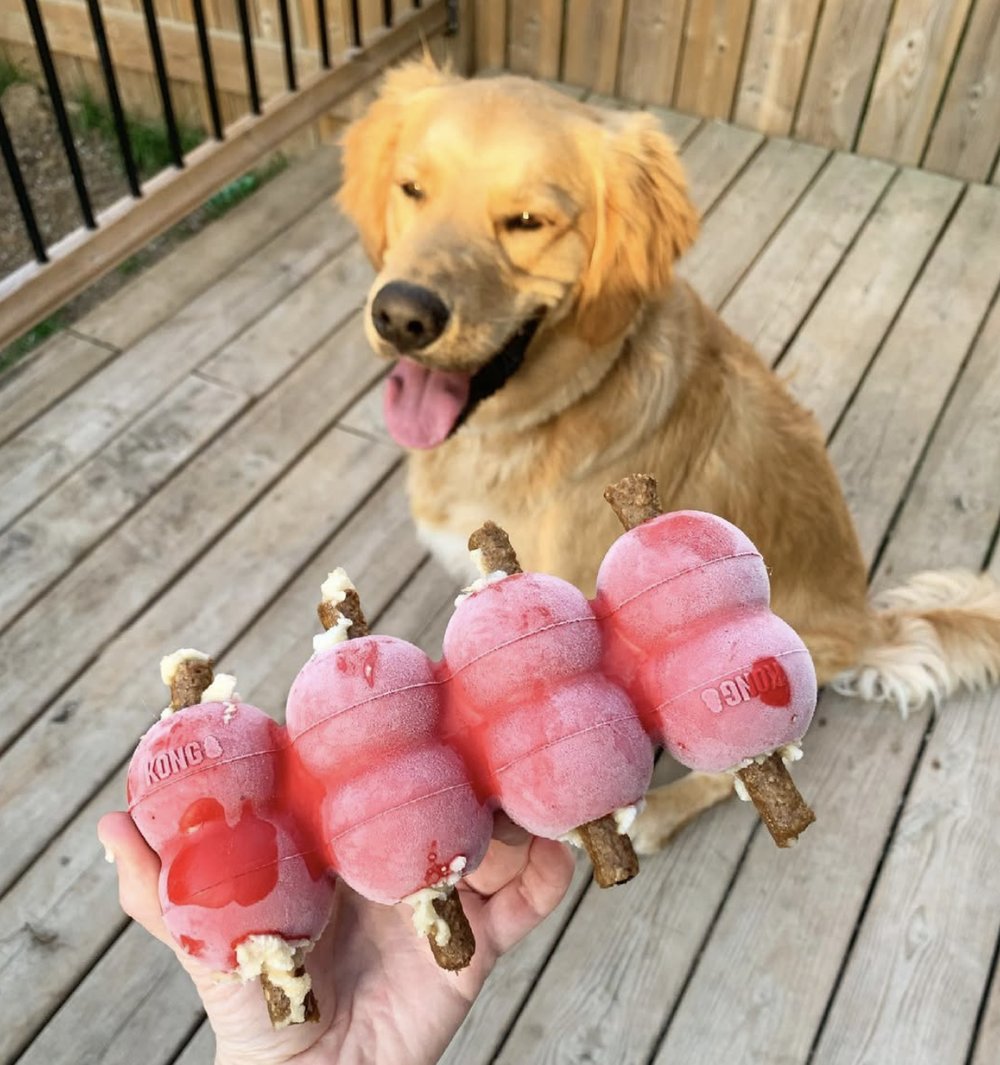
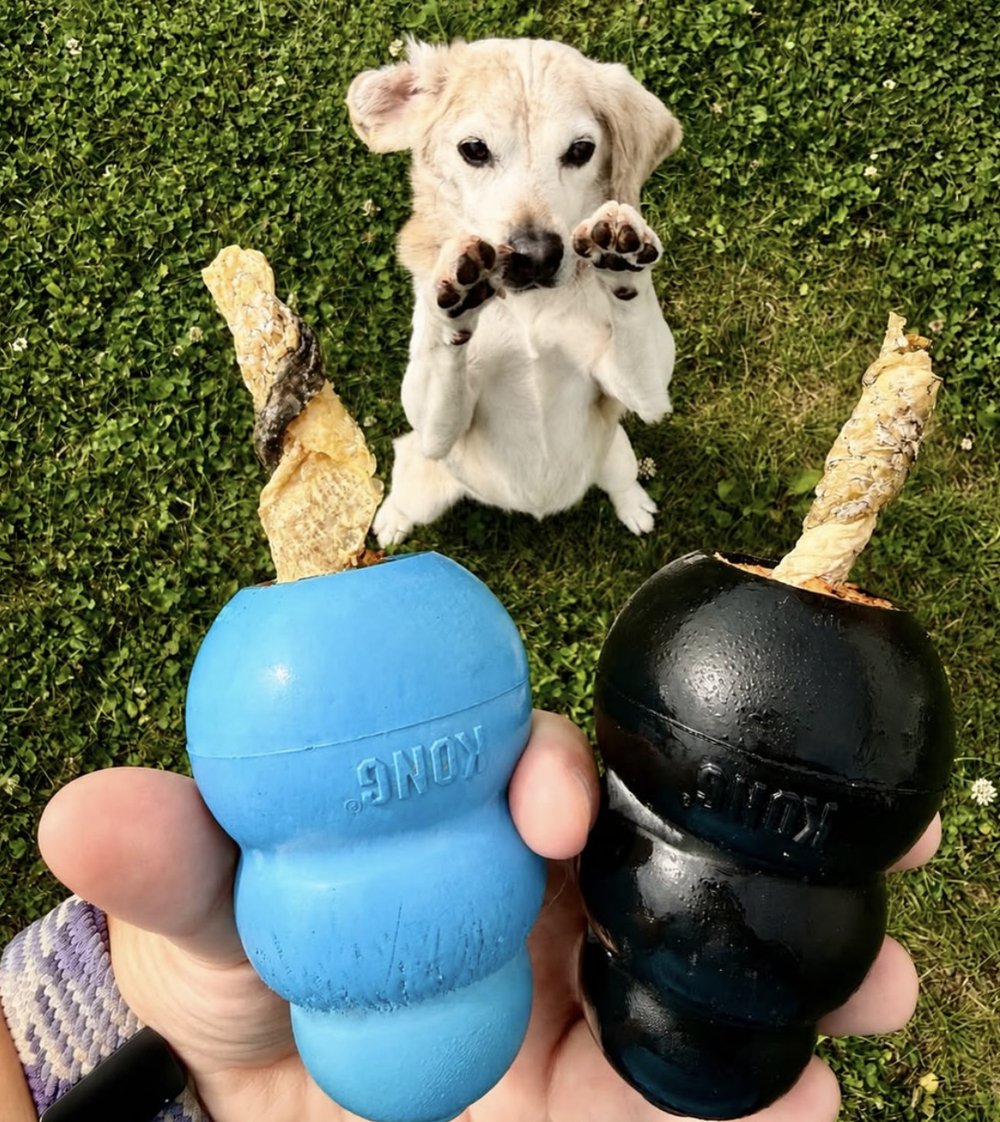
The classic. Pack a Kong or similar hollow toy with the dog’s own food (soaked kibble, a spoon of wet food, mashed banana, plain yogurt, a smear of peanut butter without xylitol) and freeze it. A frozen stuffed toy takes most dogs 20 to 40 minutes to finish and is the best tool there is for crate time, visitors, or a dog that needs to settle. Make a batch on Sunday and you have the week covered. Count the filling as part of the day’s food, not extra; if your dog is on a diet, use kibble and water or low-fat yogurt and see our low-calorie treat ideas.
8. Puzzle feeders
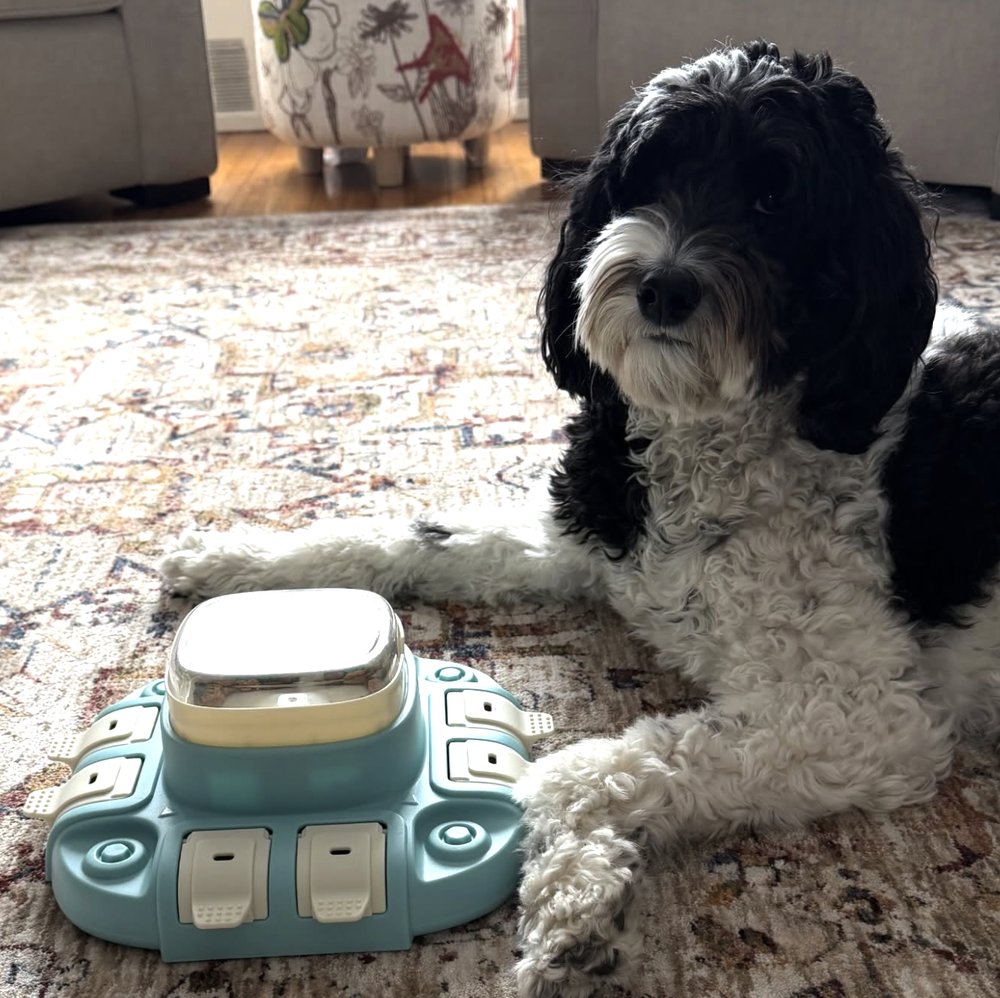
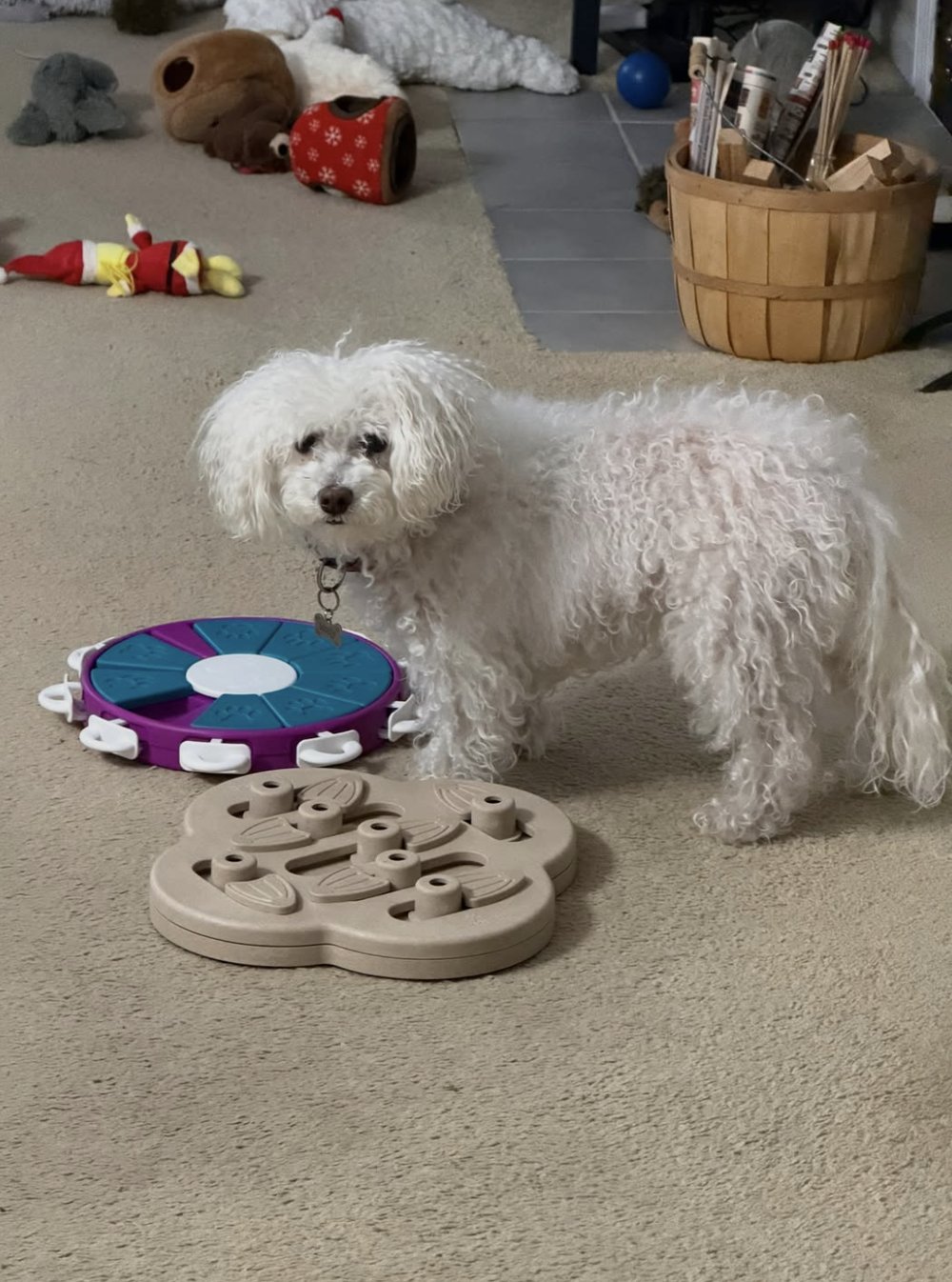
Sliding covers, flipping lids, spinning discs, drawers the dog has to nose or paw open. They come in levels. Start at level one even if your dog is clever, because the point is for the dog to learn that trying things works; a dog that fails its first puzzle often won’t try the second. Supervise so the dog solves it rather than chewing it open, and rotate between three or four so none of them gets memorized.
9. Slow feeders and lick mats
A maze bowl turns a one-minute meal into a ten-minute one. A lick mat (a textured silicone sheet you spread wet food on) gives 15 minutes of calm licking, which is soothing for dogs in the same way sniffing is; it’s a good choice for a nervous dog at the vet, a dog that struggles with being groomed, or bedtime. Neither is a puzzle exactly, but both buy you calm, slow eating for almost no effort.
10. The muffin tin game
Drop treats in a few cups of a muffin tin, cover every cup with a tennis ball, and let the dog figure out which balls to move. Free, five minutes to set up, and most dogs find it hard the first time. Make it tougher by only baiting one or two cups.
11. DIY puzzles
A towel rolled up with kibble inside and the ends tucked. A cardboard box stuffed with crumpled paper and a few treats. Kibble in an empty plastic bottle with the cap off (take it away once the dog starts chewing plastic). Treats in the cups of an egg carton, lid closed. All of these are one-use, free, and give a dog the thing it enjoys most, which is destroying something to get at food, in a way you’ve approved.
Training games
Learning is the hardest work a dog’s brain does. Five minutes of teaching something new tires most dogs more than a 20-minute walk, and it builds a dog that’s easier to live with at the same time. Keep sessions short, keep the treats tiny, and stop while the dog still wants more.
12. Learn a new trick every week
Spin, bow, paws up, touch (nose to hand), chin rest, back up, go to mat, roll over, wave. None of them are useful on their own; all of them are mental work, and a dog that knows ten tricks is a dog that has learned how to learn. Several of them, like paws up, back up and bow, double as core and balance exercises, so you’re building the body while you work the brain.
13. Name the toys
Dogs can learn the names of dozens of objects. Start with two toys that look nothing alike, say the name as you offer one, reward the dog for touching or bringing it, then put both down and ask for one by name. Add a toy every week or two. Within a few months you can send a dog to find “the duck” from the next room, which is a scent game and a memory game at once.
14. The shell game
Three cups upside down, a treat under one, shuffle them, let the dog pick. Start without shuffling. It teaches focus and patience, and dogs get noticeably better at it over time.
15. Impulse control games
“Wait” for the food bowl, “leave it” with a treat on the floor, “stay” while you walk out of sight, settle on a mat while you move around the kitchen. These are the games that fix real-life problems, and holding still against temptation is extremely hard mental work for a dog. Build in seconds, not minutes.
16. Free shaping with a box
Put a cardboard box on the floor and reward the dog for anything it does with the box: looking at it, sniffing it, one paw in, two paws in, sitting in it. No cues, no luring, the dog has to try things and work out what earns the treat. It’s the most mentally demanding game on this list and most dogs are exhausted after five minutes. Good for clever, bored dogs that have mastered everything else.
Environmental and everyday enrichment
17. Rotate the toys
Keep a third of the dog’s toys out and the rest in a cupboard. Swap every few days. A toy that disappears for a week comes back interesting; a toy that’s always on the floor is furniture. Same with puzzles.
18. New places
A different walking route, a hardware store that allows dogs, a friend’s garden, a parking lot at a quiet time, a train platform from a distance. Novelty is enrichment: a dog processing a new environment is working hard even standing still. For nervous dogs, keep it low-key and leave before they’ve had enough.
19. Dig pits and destruction boxes
If your dog digs, give it a sandbox or a corner of the garden where digging is allowed and bury toys there. If your dog shreds, give it a box of packing paper with treats in it once a week. Redirecting an instinct into an approved outlet is far more effective than trying to suppress it.
20. A job
Carry a backpack with a water bottle on walks (see our note on dog weight vests for the limits), help put toys in the basket, bring the mail in, find the kids in the garden, take part in a sport. Herding, retrieving, scent detection, agility and rally are all organized versions of this, and for a high-drive dog an hour of a real sport once a week does more than any amount of puzzles. For most pet dogs, a small daily job inside the house is enough.
Matching games to your dog
| Dog | Start with | Build toward | Keep in mind |
|---|---|---|---|
| Puppy | Scatter feeding, snuffle mat, frozen Kong, name games, two-minute trick sessions | Find it, box game, impulse control | Short bursts, many times a day. Brain work replaces the hard exercise a puppy shouldn’t be doing yet. |
| High-drive adult | Find it, scent trails, free shaping, trick a week | Real nose work, a sport, a daily job | Food puzzles alone won’t cut it. These dogs need tasks and learning, 30 to 60 minutes a day. |
| Overweight dog | All meals through puzzles, scatter or snuffle mat; sniff walks | Find it around the house, trick training with kibble | Everything from the daily food allowance, nothing extra. Slow eating is part of the plan. |
| Senior | Snuffle mat, lick mat, easy puzzles, scent trails at a walk | Find it in one room, gentle new tricks (chin rest, touch) | Daily scent work is the best thing for an aging brain. Keep puzzles easy and sessions short. Pairs with our senior exercise guide. |
| Dog on crate rest or in rehab | Frozen Kongs, lick mats, snuffle mat in the pen, name games from a down | Shell game, box game once allowed to walk | This is what keeps a confined dog sane. See our injury recovery guide for what’s allowed when. |
| Anxious dog | Sniff walks, scatter feeding, lick mats, snuffle mat | Find it, easy puzzles, touch and mat work | Sniffing and licking lower stress. Avoid timed, noisy or frustrating games until confidence builds. |
A simple daily routine
Morning: breakfast in a snuffle mat, a scatter or a puzzle feeder (10 minutes). Midday or after the walk: five minutes of training, one trick or one impulse-control game. Evening: dinner in a frozen Kong or a find-it game around the house (15 minutes), then the dog settles. That’s 30 minutes, it costs nothing beyond what you’d feed anyway, and it’s enough for most dogs. Swap in a sniff walk twice a week, the box game or free shaping on rainy days, and a new place on the weekend. Rotate the puzzles so nothing repeats more than two days running.
Mistakes that turn enrichment into frustration
Making it too hard too fast. A dog that can’t solve the puzzle doesn’t learn persistence, it learns to give up, and sometimes to bark or chew the puzzle instead. Start embarrassingly easy. Using treats on top of meals, so the dog gains weight while you fix its boredom; use the dog’s food. Doing the same thing every day until the dog can solve the puzzle on autopilot, at which point it’s a slow bowl, not a brain game. Leaving a dog alone with anything it could swallow pieces of. Running sessions long enough for the dog to get tired and sloppy; three five-minute sessions beat one fifteen-minute one. And expecting enrichment to replace walks: it’s the other half, not a substitute. The dog still needs to move, and our guides to indoor exercise and treadmills cover the days when walks aren’t possible.
Frequently asked questions
How much mental stimulation does a dog need per day?
Around 15 to 30 minutes of deliberate brain work for most adult dogs, split into short sessions. Working breeds often need 30 to 60. Judge by the dog: a dog that settles easily in the evening and isn’t inventing its own jobs is getting enough.
Is mental stimulation as tiring as physical exercise?
Often more so, minute for minute. Fifteen minutes of scent work or learning a new trick will leave most dogs more relaxed than a 30-minute walk. It doesn’t replace exercise, but it’s the missing piece for a lot of “hyper” dogs.
What is the best mental stimulation for dogs?
Scent work. A snuffle mat, scatter feeding and a find-it game are the three to start with because they need no training, suit any age, and are the most calming. Add training games once the dog is enjoying those.
How do I mentally stimulate my dog indoors?
Feed meals through puzzles or a snuffle mat, play find it around the house, do the muffin tin or box game, teach a trick, and freeze stuffed toys for settle time. All of that fits in a small apartment.
Can mental stimulation help with destructive behavior?
Usually, yes, because chewing, digging and shredding are mostly a dog making its own job. Give it an approved job (puzzles, destruction boxes, a dig pit, daily training) and the unapproved ones tend to fade within a few weeks. If it doesn’t, talk to a trainer; sometimes it’s anxiety rather than boredom.
Do puzzle toys work for every dog?
Most, if you start at the easiest level. Some dogs need to be shown the first few times (put the treat half-visible, nudge the cover). Dogs that chew the puzzle instead of solving it need supervision and an easier puzzle, not a tougher one.
Is mental stimulation good for senior dogs?
It’s one of the best things you can do for them. Daily scent work and easy puzzles keep an aging brain active and give a dog that can’t walk far something to look forward to. Keep sessions short and the puzzles simple.
Can I use treats for all of this without my dog gaining weight?
Use the dog’s regular food for most games and take any treats out of the daily allowance. A dog on a diet can do every game on this list with kibble and vegetables. Our calorie guide shows how to budget it.
Where this fits in your dog’s plan
A fit dog is a dog whose body and brain both get worked, and a PetFitness plan is built around both: the right amount of exercise for your dog’s age, breed and condition, the strength and balance work that protects the joints, and the daily enrichment that turns a restless dog into a settled one. If you’d like one built for your dog, start your dog’s plan here. If you’d rather start tonight: put dinner on the lawn or a towel instead of in the bowl, and watch what happens.