Written by the PetFitness team and reviewed by our Certified Canine Fitness Trainers. Last updated October 1, 2026.
Hip dysplasia can’t be exercised away, but the right exercise is the single biggest thing you control in how a dysplastic dog moves, how much pain it’s in, and how long it stays mobile. The hip joint is loose; muscle is what holds it together. Build the muscle around the hip and the joint gets more stable, the cartilage wears more slowly, and the dog stays active for years longer. Choose the wrong exercise and you get the opposite. This page covers which exercises help, which ones hurt, how to run a weekly program by stage, and how to tell when you’re doing too much. It’s the same approach we use for dysplastic dogs in the PetFitness program.
The short version
- What helps: swimming and water walking, controlled leash walks, sit-to-stand, backing up, balance work on a soft surface, and gentle hills. All of them build the muscles that stabilize the hip without pounding it.
- What hurts: fetch, jumping, hard turns, slippery floors, stairs at speed, and long weekend hikes after a week on the couch.
- The rule: little and often. Two or three short sessions a day beat one long one. The dog should finish each session moving as well as it started.
- Weight first: every extra pound loads the hip. Getting a dysplastic dog lean does more for its pain than any supplement. Use the body condition check and, if needed, the weight loss plan.
- Vet first: get a diagnosis and a pain management plan before you start. Exercise works alongside treatment, not instead of it.
What hip dysplasia is and why exercise matters
In a normal hip, the ball at the top of the femur sits deep in the socket of the pelvis and the two surfaces glide. In a dysplastic hip, the socket is too shallow or the ball doesn’t fit, so the joint is loose. Every step lets the ball shift and rub, which wears the cartilage, inflames the joint, and over time causes arthritis. It’s genetic, most common in large and giant breeds (German Shepherds, Labradors, Golden Retrievers, Rottweilers, Saint Bernards, Newfoundlands, Bulldogs), and shows up anywhere from a few months old to middle age.
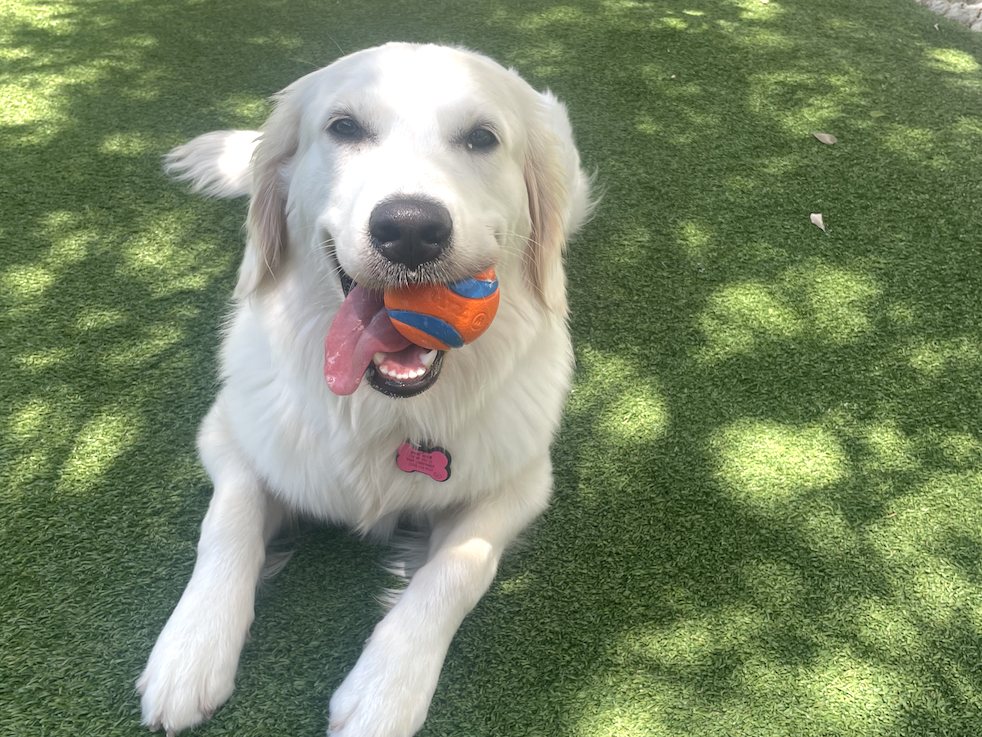
Exercise matters because of what’s around the joint. The gluteal and thigh muscles act like straps across the hip. When they’re strong, they hold the ball in the socket and absorb load before it reaches the cartilage. When they’re weak, the joint takes everything. Dysplastic dogs tend to lose exactly these muscles, because moving hurts, so they move less, so the muscles shrink, so the joint gets looser. The cycle runs the other way too. A study at the University of Pennsylvania following Labradors over their lifetimes found that keeping dogs lean delayed the onset of hip arthritis by years, and physical therapy studies consistently show that dogs on structured low-impact programs gain muscle mass in the hind limbs and use the affected leg more. The goal of every exercise below is more muscle around the hip with less load through it.
The rules before any exercise
Get the diagnosis. Limping, bunny-hopping with the back legs together, a swaying walk, trouble getting up, or reluctance to climb stairs can all be hip dysplasia, or a torn cruciate ligament, or a spinal problem, and the exercise plans are different. Your vet needs X-rays to tell you which. Ask for a pain management plan at the same time; a dog in pain won’t build muscle because it won’t use the leg.
Warm up and cool down. Five minutes of slow leash walking before any session and five after. Cold joints are stiff joints, and warm muscle protects the hip better than cold muscle.
Surfaces matter. Grass, dirt, rubber matting, carpet. Never wet tile, hardwood, or ice. A slip on a dysplastic hip can set the dog back weeks. Put runners down on slippery floors at home.
Watch the next morning. The test of whether yesterday’s session was right is how the dog gets up today. Stiffer than usual, slower to rise, or limping means too much; cut the next session in half. Same as yesterday or better means hold or build.
No forced exercise. Let the dog set the pace on walks. A dysplastic dog that wants to stop usually has a reason.
The 8 best exercises for dogs with hip dysplasia
1. Swimming
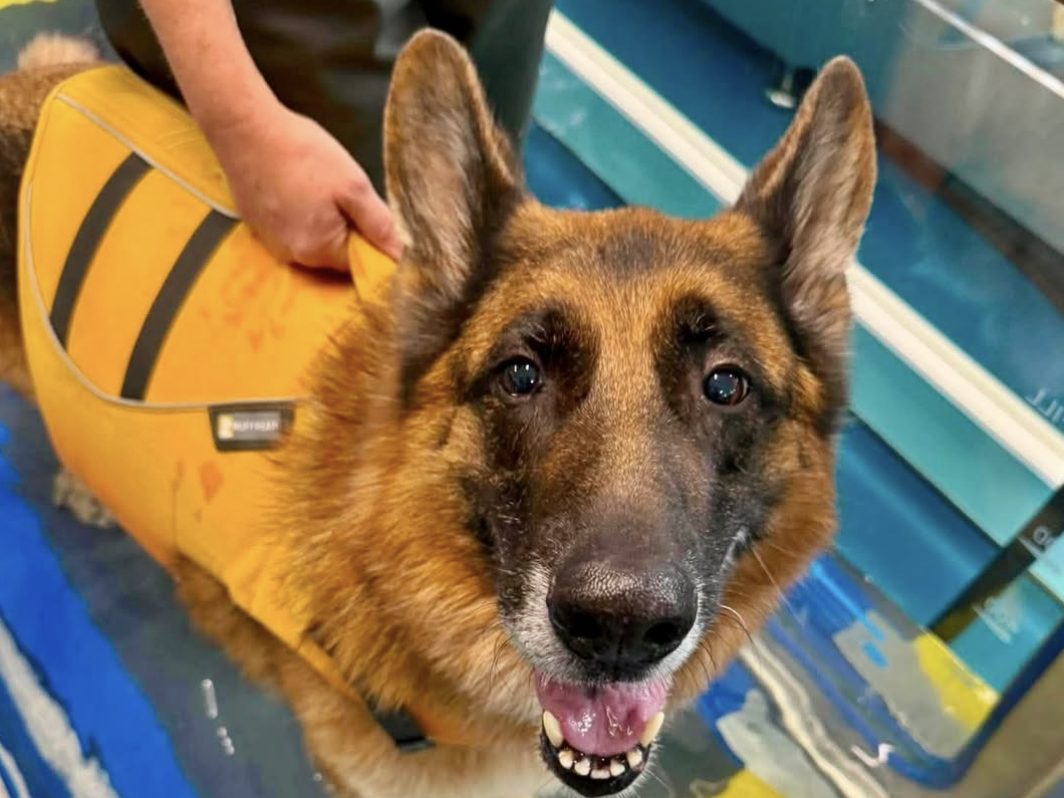
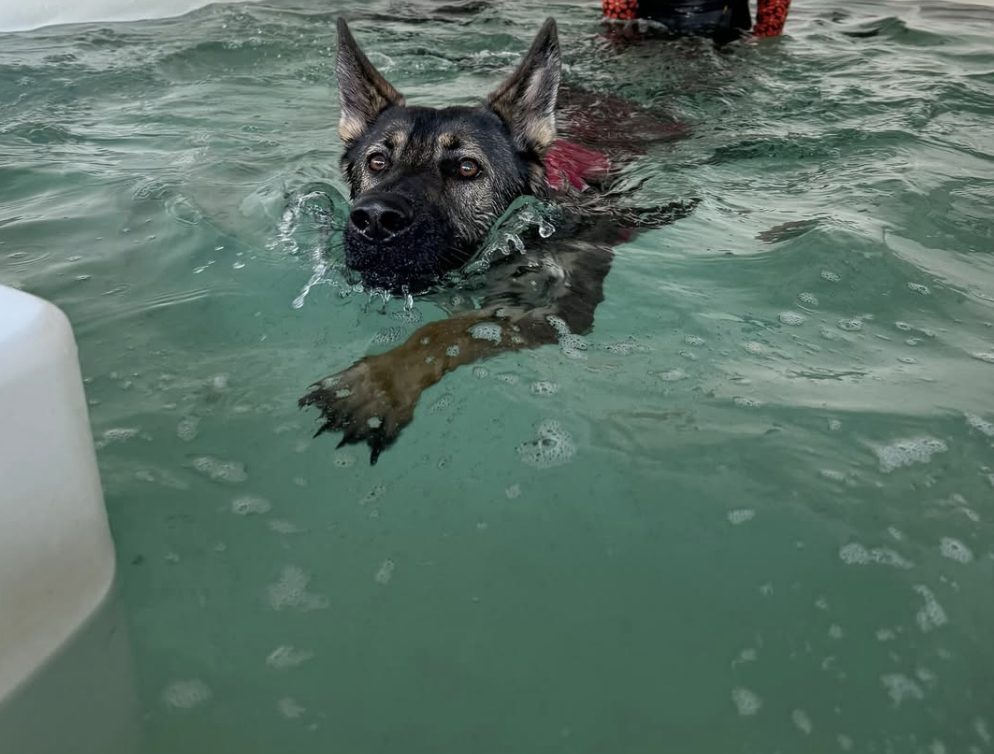
The best exercise there is for a dysplastic dog. In water, buoyancy takes most of the dog’s weight off the hips while the resistance works every muscle in the hind end harder than walking does. Dogs that can barely walk on land often swim comfortably. Start with 2 to 5 minutes of actual swimming and build to 15 to 20 over several weeks. Use a dog life jacket for the first few sessions and for any dog that’s nervous, old, or heavy; it keeps the back end up so the dog swims level instead of paddling with the front legs and dragging the hips. Warm water (a heated pool or hydrotherapy tank) is better than a cold lake, since cold stiffens the joint. Walk the dog in and out on a ramp or shallow steps, not a jump from the side. Our guide to swimming for dogs covers introducing a dog to water safely.
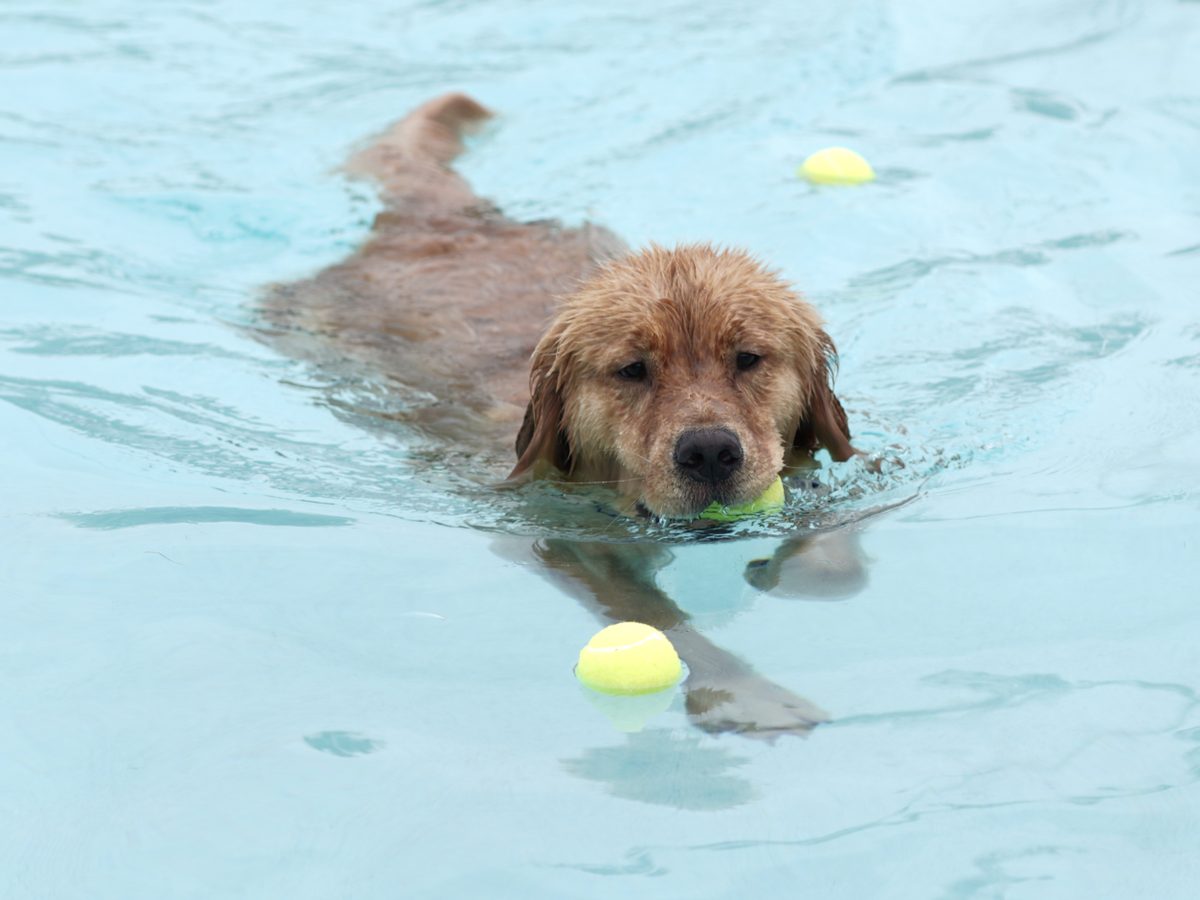
2. Underwater treadmill and water walking
If there’s a canine rehab facility near you, the underwater treadmill is the gold standard. The dog walks on a belt in a tank with water up to its hips or shoulders; the water takes the weight, and walking (rather than swimming) makes the dog use the full normal stride, which builds the exact muscles it needs for walking on land. Sessions are usually 10 to 20 minutes, once or twice a week, with a therapist adjusting depth and speed. It’s the fastest way we know to put muscle back on a weak hind end. Without a facility, walking a dog slowly through water that’s chest-deep at a calm beach or shallow lake does a reasonable version of the same thing.
3. Short, controlled leash walks
The foundation of every day. Walking on a leash at a steady pace on a soft, flat surface builds hind-end muscle, keeps the joint lubricated, and keeps the dog’s weight down. The mistake is the long weekend walk after a quiet week. Dysplastic hips want the same amount every day, in short pieces. Start with two or three walks of 10 minutes, build by no more than 5 minutes a week, and cap most dogs at 20 to 30 minutes per walk. Keep the dog beside you at a walk, not pulling or trotting; a steady walk makes the dog place each hind foot deliberately and bear weight evenly, which is where the muscle-building happens. Sniffing stops are fine and good for the dog.
4. Sit-to-stand
The single most useful strength exercise for the hips, and you can do it in your kitchen. Ask the dog to sit, then to stand, then to sit again, slowly, with a treat held at nose height so it doesn’t lunge. The push up from a sit is a squat for the hind legs; it works the glutes, hamstrings, and quads directly. Do it on carpet or a rubber mat, never a slick floor. Start with 3 to 5 reps once a day and build to 10 to 15 reps twice a day over a month. Watch that the dog sits square with both hind legs tucked, not flopped to one side; a dog that sits crooked is avoiding the sore hip and won’t get the benefit. If it can’t sit square, do fewer reps and stop before it starts cheating.
5. Backing up
Walking backward loads the hind legs in a way forward walking doesn’t and makes the dog lift each hind foot high and place it deliberately. Stand in front of the dog with a treat at its chest and step toward it so it steps back; reward every two or three steps. Start with 3 to 5 steps and build to 10 to 15, two or three times a day. Do it along a wall or in a hallway so the dog backs straight. Most dogs learn it in a few sessions.
6. Balance work on a soft surface
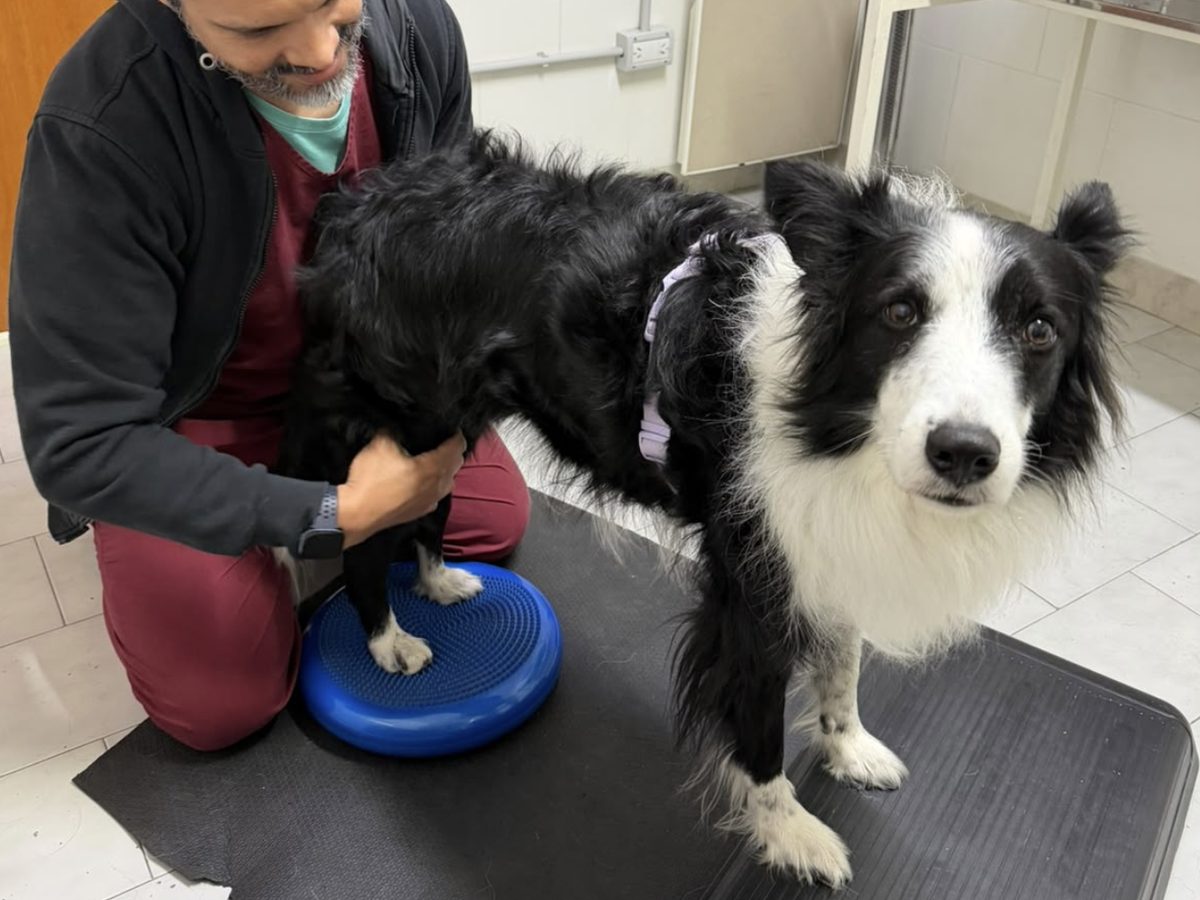
Standing still on something unstable, like a couch cushion, folded blanket, air mattress, or an inflatable balance disc, makes every small stabilizing muscle around the hips and spine fire continuously. It’s the exercise that improves the “wobbly back end” dysplastic dogs develop. Start with the dog standing with all four feet on the soft surface for 15 to 30 seconds, then rest. Build to a minute, then progress to putting only the front feet on the cushion (which shifts weight to the hind legs) and, later, only the hind feet. Steady the dog with a hand under the belly at first if it’s unsure. Three to five holds a day is plenty. Our guide to improving your dog’s balance has the full progression.
7. Gentle hills
Walking slowly up a gentle slope shifts the dog’s weight onto its hind legs and makes them push, which is a strength exercise disguised as a walk. Find a grassy slope with a mild grade (a gradual park hill, not a steep bank), walk up slowly, and walk back down at an angle or zigzag, since straight downhill loads the front end and jars the hips. Start with two or three slow ascents of 20 to 30 yards at the end of a walk and build from there. Skip this one entirely in the painful phase and come back to it once the dog is walking comfortably for 20 minutes.
8. Cavaletti walk-overs
Walking slowly over a row of low poles on the ground (broom handles, pool noodles, or cavaletti rails set a stride apart and no higher than the dog’s wrist) makes the dog lift and place each foot with control, which builds hind-leg flexion and awareness of where the feet are. It’s for dogs that are already walking well, not for the painful phase. Four to six poles, walked over slowly three or four times, two or three days a week. Never trot or jump them.
What to avoid
Fetch and chasing. The sprints, skids, and hard turns of a fetch game put more shearing force through the hip than anything else a pet dog does. Dogs love it and will do it until they can’t, and the damage is done before you see it. Replace it with scent games, a flirt pole moved slowly at ground level, or short retrieves of a rolled (not thrown) toy.
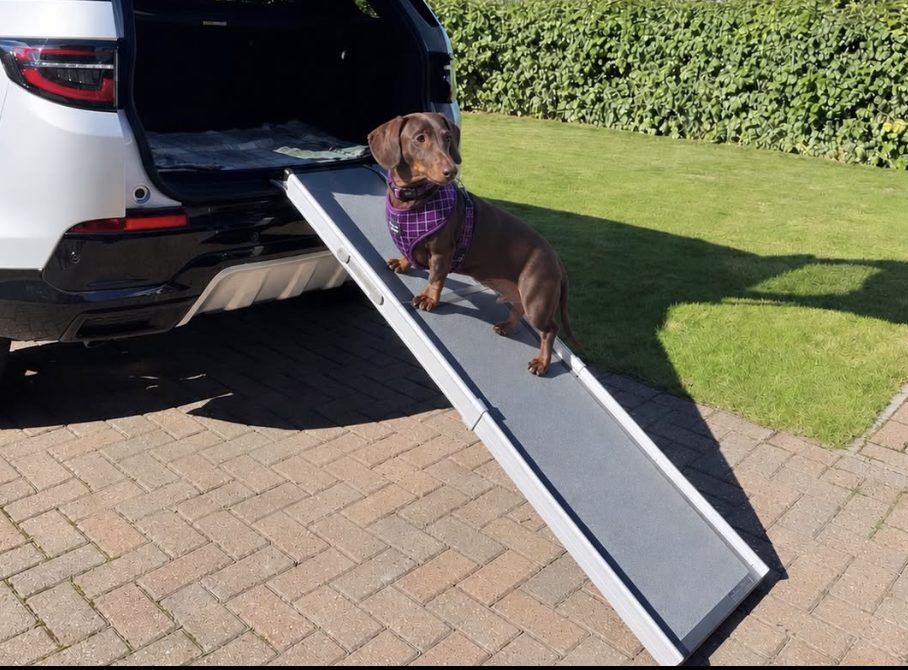
Jumping. Onto the couch, into the car, over anything. Every landing drives the ball into the shallow socket. Use ramps and steps for furniture and the car; it’s the single home change that makes the biggest difference.
Stairs at speed. A dog that barrels down stairs is loading its hips on every step. Slow stairs on a leash are fine for most dogs; racing isn’t. Baby-gate the stairs if needed.
Slippery floors. Splaying on tile or hardwood is a hip injury waiting to happen. Rugs, runners, and yoga mats in the places the dog walks and gets up.
Rough play with other dogs. Body slams and wrestling are uncontrolled impact. Calm walks with other dogs are fine; dog park free-for-alls aren’t.
Weekend warrior exercise. Nothing all week, then a two-hour hike. The dog won’t stop itself. Keep every day roughly the same.
A weekly program by stage
Where your dog starts depends on how much pain it’s in and how much muscle it’s lost. Move to the next stage when the dog has handled the current one for two weeks without next-morning stiffness.
| Stage | Who it’s for | Daily | 2 to 3 days a week | Total per day |
|---|---|---|---|---|
| 1: Painful | Newly diagnosed, limping, stiff on rising, or just started pain medication | Three 5 to 10 minute leash walks on flat grass. Sit-to-stand 3 to 5 reps once a day if the dog can sit square. | Swimming or water walking 5 minutes, or underwater treadmill with a therapist | 20 to 30 min |
| 2: Rebuilding | Pain controlled, walking comfortably for 10 minutes, still weak or wobbly behind | Two or three 15-minute walks. Sit-to-stand 8 to 10 reps twice a day. Backing up 5 to 10 steps twice a day. Balance holds 30 seconds, 3 times. | Swimming 10 to 15 minutes, or underwater treadmill | 40 to 50 min |
| 3: Maintaining | Moving well, muscle visibly back on the thighs, no stiffness most mornings | Two 20 to 30 minute walks with gentle hills. Sit-to-stand 10 to 15 reps twice a day. Backing up 10 to 15 steps. Balance holds 1 minute, front feet up. | Swimming 15 to 20 minutes; cavaletti walk-overs 3 to 4 passes | 50 to 70 min |
| Flare-up | Any stage, when the dog is suddenly stiffer, limping, or reluctant | Back to Stage 1 for a week. Short flat walks only, no strength work, call the vet if it lasts more than 3 days. | Water work only if the dog is comfortable | 15 to 25 min |
Stage 3 is where most dogs live long-term. It’s not a finish line; a dysplastic dog that stops the strength work loses the muscle in a few months and the symptoms come back. Think of it as the dog’s permanent routine, adjusted down as it ages.
Weight: the exercise that isn’t exercise
If your dysplastic dog is carrying extra weight, losing it will do more for the hip than everything else on this page combined. The hip takes a multiple of body weight on every stride, so 10 pounds of extra fat is 20 or 30 pounds of extra force through a joint that’s already loose. Studies in overweight dogs with arthritis have found that weight loss alone, with no other treatment, produces measurable improvement in lameness, and the effect starts at around 6 percent of body weight lost. Check the dog against the body condition scale; a dysplastic dog should sit at a 4 out of 9, slightly leaner than the standard ideal, because every pound off the joint matters. If it’s heavier than that, the 12-week weight loss plan is built to work alongside the exercise program here, with the water-based options standing in for the land exercise.
Puppies and young dogs with hip dysplasia
Hip dysplasia is often diagnosed between 4 and 12 months, and puppies need a different approach because their joints are still forming. The good news is that a puppy’s hips can genuinely improve with the right management, since the socket is still developing. The bad news is that the wrong exercise does lasting damage.
For a dysplastic puppy: keep it lean (slightly leaner than you’d like, on a large-breed puppy food that controls growth rate), walk it on leash on soft ground for about 5 minutes per month of age at a time, swim it if you can, and do gentle sit-to-stand and balance work. No jumping, no fetch, no stairs, no rough play with bigger dogs, and no forced running until the growth plates close at 14 to 18 months. If the vet suggests a juvenile surgical option, those have deadlines (some only work before 5 months), so don’t delay the conversation. Our guide to exercise for puppies covers safe amounts by age.
Senior dogs with hip dysplasia
By the time a dysplastic dog is old, the hip is usually arthritic and the muscle has been slipping for years. The program is the same, scaled down and run with more patience. Sessions get shorter and more frequent (five 5-minute walks beat one 25-minute one), water work takes over from hills and cavaletti, balance holds stay short, and sit-to-stand drops to whatever the dog can do square. Warm the dog up longer, keep it warm after (a dry coat after swimming, a bed off cold floors), and expect good days and bad days. The aim in an old dog isn’t more muscle, it’s keeping the muscle it has, because that’s what keeps it able to stand up on its own. Our guides to exercise for dogs with arthritis and low impact exercise for senior dogs go deeper on this stage.
After hip surgery
If your dog has had a femoral head ostectomy (FHO), a total hip replacement, or a juvenile procedure, the surgeon’s rehab protocol overrides anything here. The general shape is similar: strict rest and leash-only toilet breaks for the first two weeks, then very short controlled walks, then the strength and water work from Stage 1 and 2 above, usually starting around week 4 to 6 and building over three to four months. FHO dogs in particular need early, consistent movement, because the surgery relies on muscle to form a false joint. Ask the surgeon for a written week-by-week plan and a referral to a canine rehab therapist; the underwater treadmill is used in almost every post-surgical protocol for a reason. Our guide to exercise for dogs recovering from injury covers the general recovery principles.
Signs you’re doing too much
Stiffness or slowness getting up the next morning. Limping or a shortened stride on the affected side during or after a session. The dog lying down mid-walk, or stopping and refusing to continue. Bunny-hopping with both hind legs together when it was walking normally before. Licking or chewing at the hip. Reluctance to do an exercise it did happily last week. Any of these means drop back a stage for a few days. Pain that lasts more than two or three days, a sudden worsening, or a dog that won’t bear weight on a leg at all means a vet visit, not a rest day.
Frequently asked questions
Can exercise cure hip dysplasia?
No. The joint shape doesn’t change. What exercise does is build the muscle that stabilizes the joint, slow the arthritis, keep the dog’s weight down, and keep it mobile and comfortable for far longer than it would be otherwise. For most dogs that’s the difference between a normal life and an early decline.
Is walking good for a dog with hip dysplasia?
Yes, in the right dose. Short, steady leash walks on soft ground, two or three times a day, are the foundation of the program. Long walks, hikes, and off-leash running are not. Build the length slowly and keep every day about the same.
How much exercise should a dog with hip dysplasia get?
Most dogs do well on 30 to 60 minutes a day total, split into two or three sessions, with a mix of walking, strength work, and water work. The stage table above gives starting points. The right amount is whatever the dog can do without being stiffer the next morning.
Is swimming good for hip dysplasia in dogs?
It’s the best single exercise. Buoyancy takes the weight off the hip while the water’s resistance builds hind-end muscle. Start short, use a life jacket at first, prefer warm water, and get the dog in and out on a ramp, never a jump.
Should a dog with hip dysplasia climb stairs?
Slowly, on a leash, and only if it’s not painful, yes. Stairs at speed, no. For dogs that struggle, a ramp or a baby gate is better than making them do it.
Can a dog with hip dysplasia play fetch?
Not the usual kind. The sprinting, skidding, and turning in a fetch game is the hardest thing a pet dog does to its hips. Roll the ball a short distance instead, or switch to scent games and a slow flirt pole.
How long does it take to see improvement?
Most owners notice the dog getting up more easily within three to four weeks of consistent work, and visible muscle on the thighs by two to three months. Dogs that are overweight improve faster once the weight starts coming off.
Does my dog need a physical therapist?
Not necessarily, but a few sessions with a certified canine rehab therapist (CCRT or CCRP) are worth it if you can get them, especially after surgery or if the dog is in a lot of pain. They’ll assess the dog, set the right starting stage, and show you the exercises in person. The underwater treadmill alone justifies the visit for most dysplastic dogs.
Where this fits in your dog’s plan
A PetFitness plan for a dog with hip dysplasia starts from the stage the dog is actually at, builds the strength and water work in at the right pace, adjusts the land exercise around the joint, and runs the weight side alongside if the dog needs it. If you’d like the plan built for your dog, build your dog’s plan here. If you’d rather start on your own: pick the stage from the table, start the sit-to-stands tonight on a rug, put ramps where the dog jumps, and find the nearest place to swim.
About the author. Richie Allen is the founder of PetFitness. Every exercise in the PetFitness program is tested on real dogs before it goes into a plan.
Reviewed by the PetFitness training team. Our Certified Canine Fitness Trainers checked the exercise selection, the stage program, and the puppy, senior, and post-surgical guidance on this page against the standards used in the PetFitness program. This page is general guidance for dogs with a vet-diagnosed condition; your vet or a certified canine rehab therapist should confirm the starting stage and any changes for your dog.
Related guides: Exercises for dogs with arthritis · How to help a dog with weak back legs · How to improve dog mobility naturally · Dog core strength exercises · Improve your dog’s balance · Exercises after ACL surgery · Dog weight loss plan