Written by the PetFitness team and reviewed by our Certified Canine Fitness Trainers. Last updated September 25, 2026.
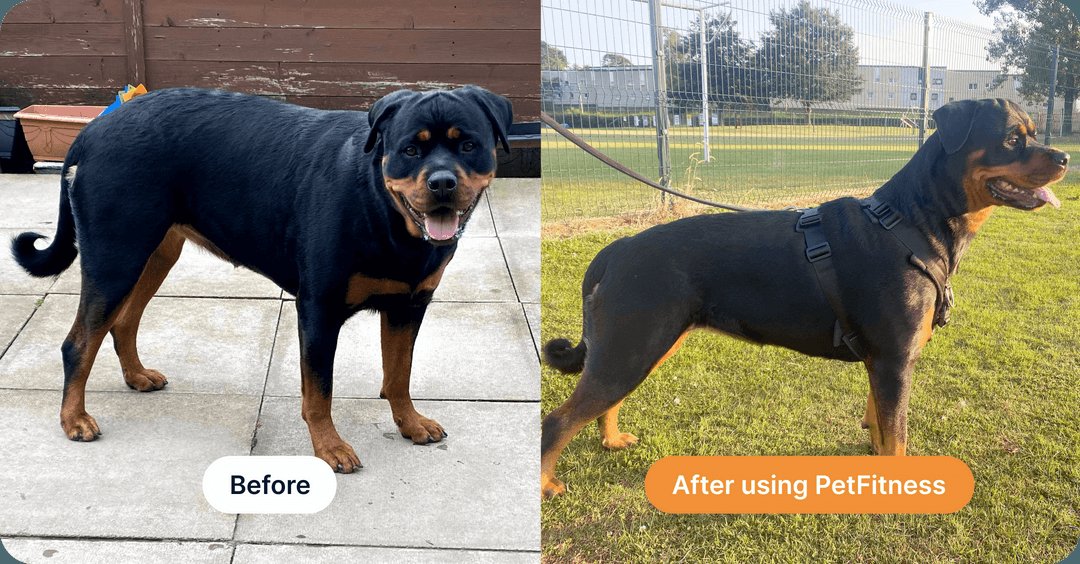
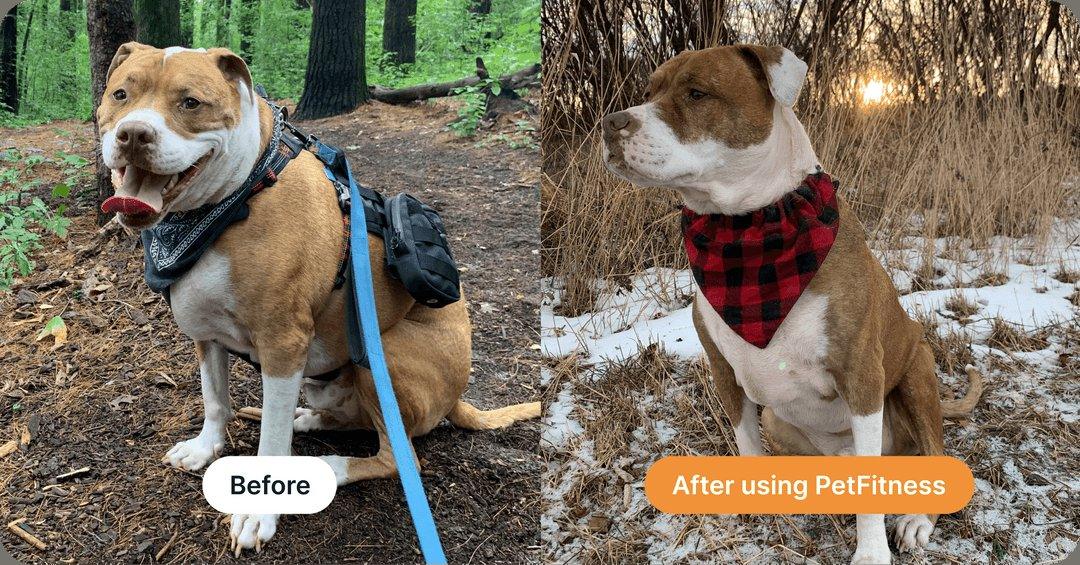
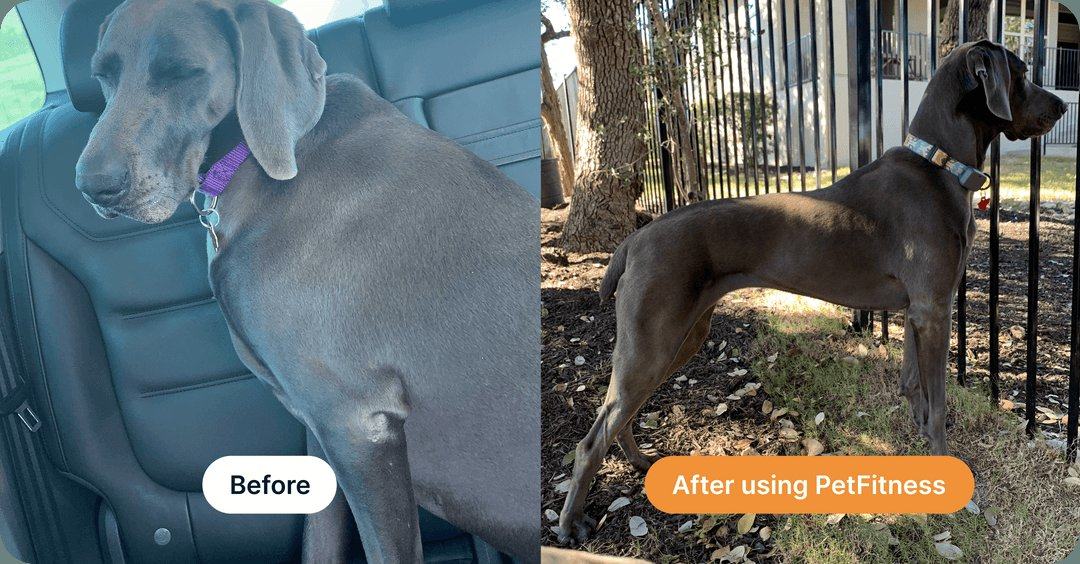
A dog weight loss plan that works has three parts: fewer calories in, more calories out, and a weekly weigh-in that tells you whether the first two are working. That’s it. The reason most dogs don’t lose weight isn’t a lack of information, it’s that the plan was never written down, the food was never measured, and nobody weighed the dog. This page fixes that. It gives you a 12-week program with the calorie math, the exercise ramp, the weekly targets, and what to do when the scale stops moving. It’s the same structure we use to build weight loss plans in the PetFitness program, and the before and after photos on this page are real PetFitness dogs.
The short version
- Target: lose 1 to 2 percent of body weight per week. For an 80-pound dog that’s 0.8 to 1.6 pounds a week, and about 13 pounds over 12 weeks.
- Calories: feed for the weight your dog should be, not the weight it is. The table below gives the number. Treats count and are capped at 10 percent of the total.
- Exercise: start with two short walks a day and build to 60 minutes of mixed activity by week 8. Overweight dogs start slow and low impact, always.
- Tracking: weigh weekly on the same scale at the same time. Two weeks with no loss means cut calories another 10 percent, not “wait and see.”
- Vet first: get a target weight and a quick check before you start, especially for dogs over 7, dogs that gained weight fast, and any dog with a heart, joint, or thyroid history.
Is your dog actually overweight?
Most owners of overweight dogs don’t think their dog is overweight. Surveys by the Association for Pet Obesity Prevention put well over half of US dogs above a healthy weight, and the same surveys find most of those owners rate their dog as “about right.” So check before you plan. Stand over your dog and look down: you should see a waist behind the ribs. Look from the side: the belly should tuck up toward the hind legs, not run flat or sag. Run your hands over the ribcage with light pressure: you should feel each rib easily, like the back of your hand, without pushing through a layer of fat.
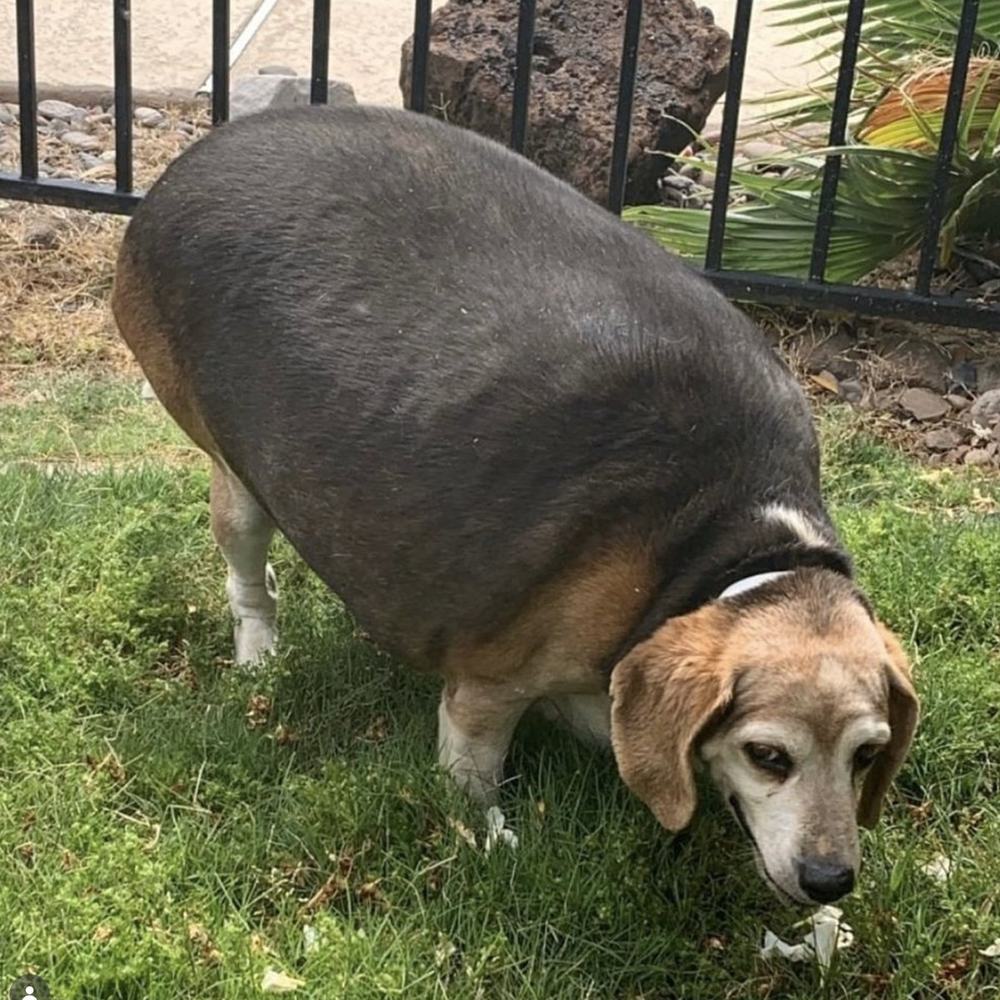
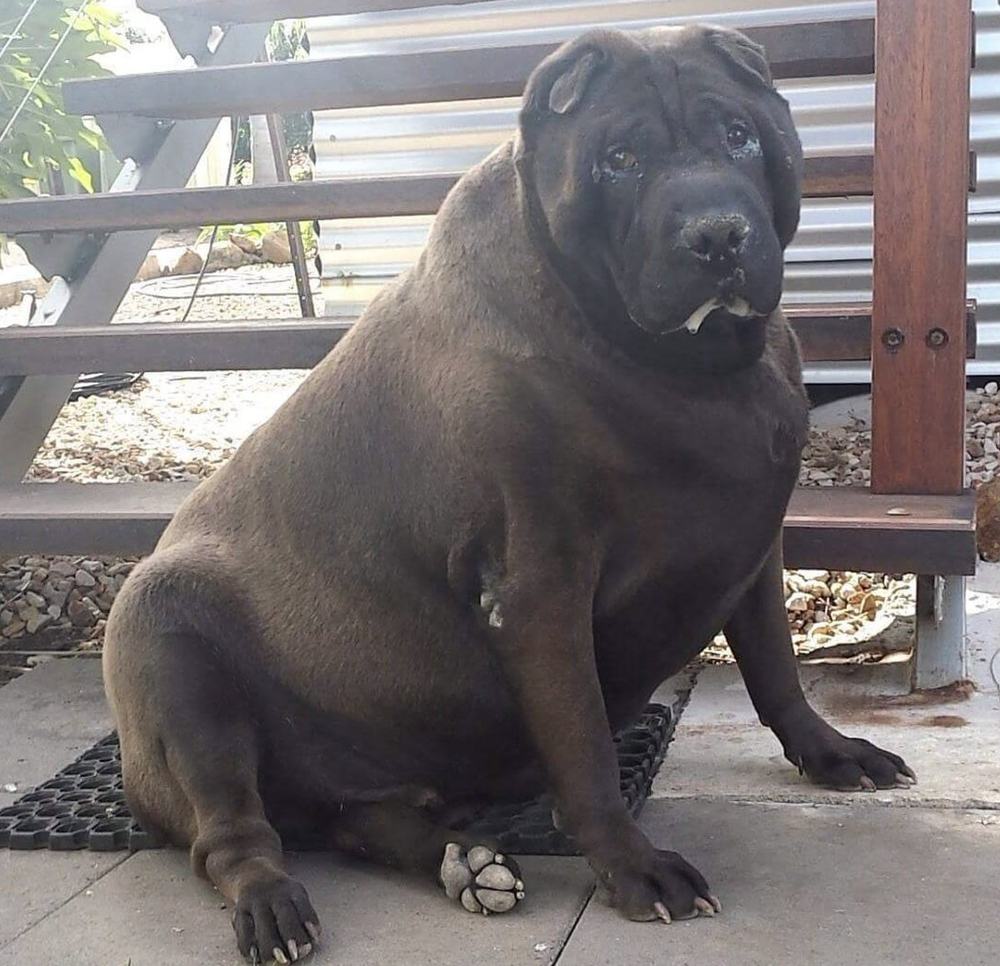
If you can’t find ribs, there’s no waist from above, and the belly is flat or rounded from the side, your dog is carrying extra weight and probably a lot of it. The beagle above is a clear case: no waist, no tuck, and ribs you’d have to dig for. For the full 9-point body condition score with photos for each level, use our guide on how to tell if your dog is overweight. If you’re unsure, your vet will score the dog in about 30 seconds.
Why it’s worth doing
The best long-term data on this comes from a 14-year Purina study of Labrador Retrievers, where dogs kept lean lived a median of almost two years longer than their littermates fed 25 percent more, and developed arthritis and other chronic conditions years later. Extra weight loads joints that are already working hard, makes breathing harder for flat-faced breeds, and raises the risk of diabetes, pancreatitis, and some cancers. The good news is that the process runs in reverse. Dogs that lose weight move more, sleep less during the day, and often come off pain medication. You’ll usually see the change in energy before you see it on the scale.
Step 1: Get a starting weight and a target weight
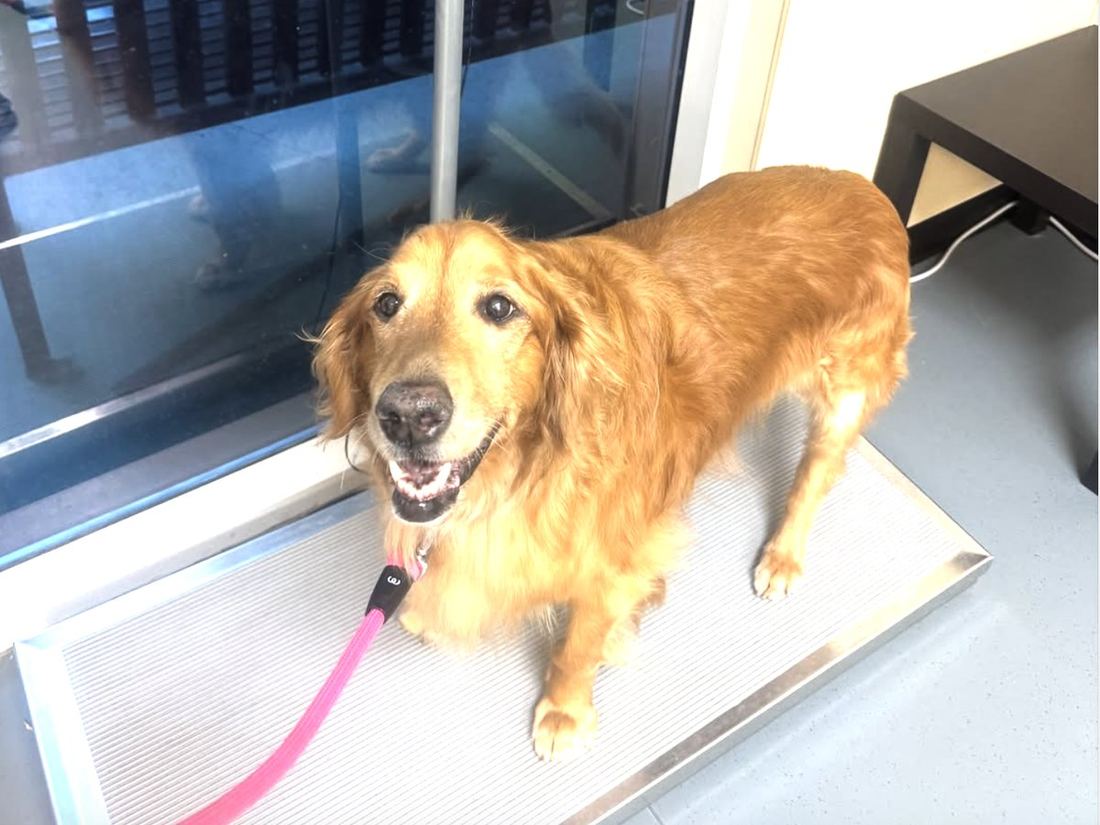
Everything in the plan is built from two numbers: what your dog weighs now and what it should weigh. Get the first one on a real scale. A vet’s walk-on scale is best, and most clinics will let you use it for free without an appointment. For small dogs, weigh yourself holding the dog and subtract. Bathroom scales are fine for tracking as long as you use the same one every time.
The target weight comes from body condition, not from breed charts. A useful rule vets use: each point above 5 on the 9-point body condition scale is roughly 10 to 15 percent over ideal weight. A dog scored 7 out of 9 is carrying about 20 to 30 percent extra. So an 80-pound dog at 7/9 has an ideal weight somewhere around 62 to 67 pounds. Ask your vet to score the dog and set the target with you. If the dog is more than 30 percent over, set an interim target first (the first 15 percent) and reassess when you get there.
While you’re at the vet, ask for a quick check. Hypothyroidism and Cushing’s disease both cause weight gain that diet alone won’t fix, and a dog that’s been gaining despite eating normally should be tested before you cut its food. Our guide on why dogs gain weight covers the medical causes in more detail.
Step 2: Set the daily calories
This is where most plans go wrong, because “feed a little less” isn’t a number. Here’s the math. A dog’s resting energy requirement (RER) in calories is 70 times its body weight in kilograms raised to the power of 0.75. For weight loss, most veterinary nutritionists start dogs at 100 percent of RER calculated at the target weight, not the current weight. Some go as low as 80 percent for dogs that don’t respond. Feeding at target-weight RER creates a real deficit, because the dog is currently burning far more than that just carrying itself around.
We’ve done the math for common target weights below. Find the weight your dog should be, and that’s the daily calorie number to start with, including treats.
| Target weight | Starting daily calories (100% RER) | If no loss after 2 weeks (90%) | Treat budget (10%) |
|---|---|---|---|
| 10 lb (4.5 kg) | 220 | 195 | 20 |
| 15 lb (6.8 kg) | 295 | 265 | 30 |
| 20 lb (9.1 kg) | 365 | 330 | 35 |
| 30 lb (13.6 kg) | 495 | 445 | 50 |
| 40 lb (18.1 kg) | 615 | 555 | 60 |
| 50 lb (22.7 kg) | 725 | 655 | 70 |
| 60 lb (27.2 kg) | 835 | 750 | 85 |
| 70 lb (31.8 kg) | 935 | 840 | 95 |
| 80 lb (36.3 kg) | 1,035 | 930 | 105 |
| 100 lb (45.4 kg) | 1,225 | 1,100 | 120 |
Two things to do with that number. First, compare it to what your dog eats now. Look at the calories per cup on your food bag (it’s printed as kcal/cup, usually 300 to 450), multiply by the cups you actually feed, and add every treat, chew, and table scrap. Most owners find the dog is eating 30 to 50 percent more than the target, and a good chunk of it isn’t in the bowl. Second, don’t go below the 90 percent line without a vet involved. Below about 80 percent of target RER a dog on regular food can fall short on protein and micronutrients, which is the point where a prescription weight loss diet, which is formulated to be nutritionally complete at low calories, earns its price. Our dog calories per day guide walks through the full calculation for any weight.
What to feed
You don’t have to change foods. Feeding less of the current food works for mild cases, and it’s the simplest change to stick with. Two things make it easier. Higher protein keeps muscle on the dog while fat comes off, and higher fiber keeps a dog on a smaller portion from acting starved. Foods labeled “weight management” or “healthy weight” are usually 10 to 20 percent lower in calories per cup than the regular formula and do both. If your dog needs to lose more than 20 percent of its body weight, ask your vet about a therapeutic weight loss diet; those are built to keep nutrition complete at large deficits, and they let you cut harder safely. Our roundup of the best foods for keeping a dog in shape covers what to look for on a label.
Step 3: Measure every meal, every time
A scoop is not a measurement. Studies of owners asked to measure “one cup” of kibble find portions ranging from 50 percent under to more than 80 percent over. A kitchen scale fixes this completely: weigh the food in grams, once, and you’re done guessing. If you’re going to use a cup, use an actual 8-ounce measuring cup and level it. Split the daily amount into two meals, or three for small dogs and dogs that beg hard; smaller, more frequent meals do a slightly better job keeping a dog satisfied on the same calories.
Then close the other doors. Write the daily amount on the food bin. Tell everyone in the house, including the kids and whoever comes over to walk the dog. If more than one person feeds the dog, use a whiteboard or an app so the dog doesn’t get breakfast twice. Pick up any bowl that’s free-fed. If you have more than one dog, feed them separately and pick up bowls after 15 minutes so the overweight dog can’t finish the other one’s food.
Treats, chews, and the 10 percent rule
Treats are where most weight loss plans die. A single dental chew can be 70 to 100 calories, a pig ear is over 200, and a slice of cheese is about 100, which for a 20-pound dog with a 365-calorie budget is close to a third of the day. Cap treats and chews at 10 percent of the daily total (the last column in the table above), and count them. The easiest swaps: use the dog’s own kibble from the day’s ration as training treats, break commercial treats into pea-sized pieces, and use green beans, baby carrots, cucumber, or blueberries for high-volume, low-calorie rewards. Our list of low calorie dog treats has the numbers for common options.
Step 4: Build the exercise up over 12 weeks
Exercise alone rarely takes weight off a dog, because a 20-minute walk burns fewer calories than one dental chew. But exercise does three things diet can’t. It keeps muscle on the dog while fat comes off, so the “after” dog is fit instead of just smaller. It raises daily energy expenditure enough to keep the loss going when the diet alone stalls. And it’s the part of the plan that keeps the weight off once the diet ends, because an active dog can eat more without regaining. So the exercise ramp matters. It just has to start where the dog is, not where you want it to be.
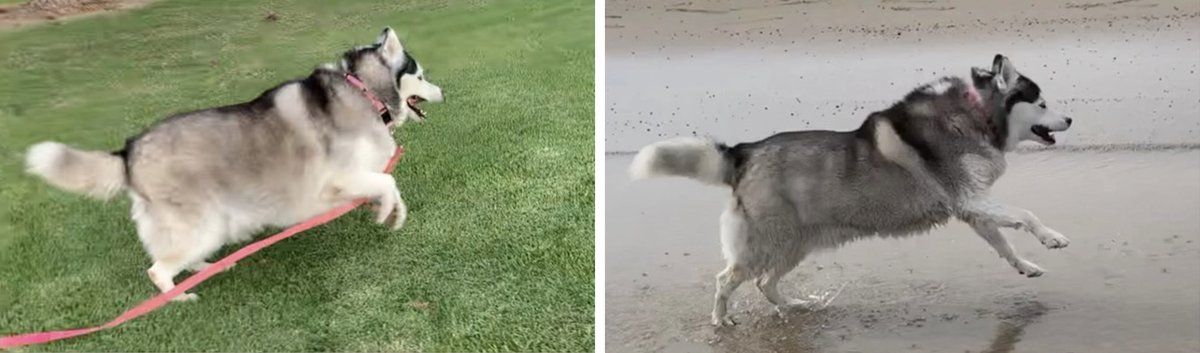
Overweight dogs overheat faster, tire faster, and carry extra load on every joint, so the first weeks are short, slow, and low impact. Walking and swimming are the base. Nothing with jumping or hard turns until the dog is within about 10 percent of target and moving well. Here’s the ramp we use in PetFitness weight loss plans for a typical adult dog. Adjust the minutes down for small, flat-faced, or senior dogs and up for young sporting or working breeds.
| Weeks | Walks | Add on top | Daily total |
|---|---|---|---|
| 1 to 2 | Two walks of 10 to 15 minutes, easy pace, flat ground | Nothing. Learn the dog’s limits. | 20 to 30 min |
| 3 to 4 | Two walks of 15 to 20 minutes, brisk for the middle 5 | One 10-minute session of sit-to-stand and slow leash figure-eights, 3 days a week | 30 to 45 min |
| 5 to 6 | Two walks of 20 minutes, brisk for half | Swimming or slow treadmill walking, 10 to 15 min, 2 to 3 days a week | 45 to 55 min |
| 7 to 8 | Two walks of 20 to 25 minutes, mostly brisk, add gentle hills | Strength work (sit-to-stand, backing up, cavaletti walk-overs) 10 min, 3 days; swimming or treadmill 15 min, 2 days | 55 to 65 min |
| 9 to 10 | Two walks of 25 to 30 minutes, brisk, with hills | Same, plus short fetch or off-leash play 10 min, 2 days, if the dog moves well | 60 to 70 min |
| 11 to 12 | Two walks of 30 minutes, one with a short jog segment for fit dogs | Full conditioning session 15 to 20 min, 3 days; swimming or play the other days | 70 to 80 min |
The rule for every step up: the dog should finish each session looking like it could do a bit more. Heavy panting that lasts more than 10 minutes after stopping, lying down mid-walk, or stiffness the next morning means you moved too fast; drop back a week and hold. Walk in the cool part of the day, carry water, and skip the hard sessions when it’s above 80°F. For dogs with sore joints, do the “walks” in water or on a treadmill, and see our guide to low impact exercises for the full list of options.
What each type of exercise does for a weight loss dog
Walking is the foundation because it’s free, daily, and the dog can do it at any weight. A brisk pace, about 3 to 4 miles an hour for a medium dog, burns roughly twice what a sniffing amble does. Swimming is the best exercise for a very overweight dog: full-body work with no joint load, and it burns more per minute than walking. See our guide to swimming for dogs before the first session. Treadmill walking gives you exact control over pace and time and works when the weather doesn’t; our treadmill training guide has the 4-week introduction. Strength work like sit-to-stand, backing up, and cavaletti walk-overs is what keeps muscle on the dog through the deficit and is where most of the “looks fit, not just thinner” result comes from; our dog conditioning guide and core strength guide cover the exercises. Fetch and off-leash play burn the most per minute, but they load joints hard, so they come last in the ramp and only for dogs that are moving well.
Step 5: Weigh weekly and hit the target rate
Weigh the dog once a week, same scale, same time of day, before a meal. Write it down. The target is a loss of 1 to 2 percent of body weight per week. Slower than 0.5 percent and the plan needs adjusting. Faster than 2 percent, sustained, means the dog is losing muscle too, and you should add calories back. Here’s what the target rate looks like for an 80-pound dog losing 1.5 percent a week toward a 66-pound goal.
| Week | Weight (lb) | Week | Weight (lb) |
|---|---|---|---|
| Start | 80.0 | 7 | 72.0 |
| 1 | 78.8 | 8 | 70.9 |
| 2 | 77.6 | 9 | 69.8 |
| 3 | 76.5 | 10 | 68.8 |
| 4 | 75.3 | 11 | 67.7 |
| 5 | 74.2 | 12 | 66.7 |
| 6 | 73.1 | Goal | 66.0 |
Two takeaways from that table. Twelve weeks at a safe rate takes off about 15 to 20 percent of starting weight, so a dog that needs to lose more than that is on a 5 or 6-month plan, and that’s fine. And the weekly loss is small enough that you won’t see it day to day, which is exactly why the weekly weigh-in matters. Take a photo from above and from the side on day one and every four weeks; the waist coming back is often more motivating than the number.
The 12-week dog weight loss plan at a glance
| Week | Food | Exercise | Check |
|---|---|---|---|
| 0 | Vet visit, target weight, calorie number from the table. Buy a kitchen scale. | None yet | Starting weight, photos from above and side |
| 1 to 2 | Switch to the target calories, weighed. Treats from the ration only. | Two easy walks, 10 to 15 min | Weekly weigh-in. Expect 1 to 2% per week. |
| 3 to 4 | Same. If no loss by end of week 2, cut to the 90% column. | Walks to 15 to 20 min, add short strength session 3 days | Weigh-in. Photos at week 4. |
| 5 to 6 | Same. Recheck that everyone in the house is on plan. | Walks to 20 min, add swimming or treadmill 2 to 3 days | Weigh-in. Rib check: should be getting easier to feel. |
| 7 to 8 | If loss has slowed below 0.5%, cut another 10% or move to a weight loss diet. | Walks to 25 min with hills, strength 3 days, water or treadmill 2 days | Weigh-in. Photos at week 8. Vet recheck if available. |
| 9 to 10 | Same. Don’t add food back yet even if the dog looks good. | Walks to 30 min, add short fetch or play if moving well | Weigh-in. Waist visible from above? |
| 11 to 12 | Same until goal. At goal, add calories back 10% at a time until weight holds. | Full 60 to 80 min mixed routine | Weigh-in. Photos at week 12. Set the next target or the maintenance plan. |
Why isn’t my dog losing weight?
If two weekly weigh-ins in a row show no loss, work through this list in order. Almost every stalled plan is one of the first four.
- The food isn’t measured. Go back to weighing it in grams for a week. “About a cup” drifts up over time without anyone noticing.
- Someone else is feeding the dog. The most common one. Ask directly. Check whether the dog is finishing the cat’s food, getting scraps from the kids, or being treated by a neighbor or dog walker.
- Treats and chews weren’t counted. Add up a full day, including dental chews, pill pockets, and anything used in training. If it’s over 10 percent of the total, that’s the problem.
- The calorie number was set from current weight. Recalculate from target weight. A dog fed for the weight it is will stay the weight it is.
- The dog has adapted. After 4 to 6 weeks on a deficit, metabolism drops a little and the dog weighs less, so it needs less. Cut another 10 percent (the third column in the table) and hold for two more weeks.
- The exercise isn’t enough to matter yet. Two 10-minute walks are a start, not a program. Move up the ramp if the dog is handling it.
- It’s medical. If the food is truly measured and the dog still isn’t losing, ask your vet to test for hypothyroidism and Cushing’s. Both are common in middle-aged dogs and both block weight loss until treated.
Adjusting the plan for different dogs
Senior dogs
Older dogs lose weight more slowly, and the exercise side needs more care. Keep the calorie side of the plan but aim for the lower end of the target rate, around 1 percent a week, and prioritize protein so the dog doesn’t lose the muscle it needs to get up off the floor. On the exercise side, walks stay short and frequent (three 15-minute walks beat one 45-minute one), water work replaces hills, and strength work is gentle sit-to-stand and slow weight shifts rather than anything that loads the joints. Most senior dogs on a weight loss plan move noticeably better within a month simply because there’s less to carry. Our guides to exercise for dogs with arthritis and improving mobility naturally fit alongside this plan.
Dogs with joint problems
Weight loss is the single most effective treatment for arthritis and hip dysplasia in dogs, so it’s worth doing even when exercise is limited. Run the food side exactly as written. For exercise, swap every land session for water walking or swimming where you can, keep leash walks on soft, flat surfaces, and skip fetch entirely. Our hip dysplasia exercise guide covers what’s safe. Expect the loss to come mostly from diet, which is fine; the exercise here is about keeping muscle, not burning calories.
Flat-faced breeds
Bulldogs, Pugs, and Frenchies overheat and struggle to breathe at a lower effort than other dogs, and extra weight makes it worse. Keep all exercise in cool conditions, cap walks at 15 to 20 minutes even at the end of the ramp, use a harness rather than a collar, and never push through noisy breathing. Swimming only with a life jacket and close supervision. Our guide to exercise for flat-faced dogs has the full set of precautions.
Small dogs
Small dogs gain weight from tiny amounts of food, so the treat rule matters more here than anywhere. A 10-pound dog on 220 calories a day has a treat budget of about 20 calories, which is one small biscuit. Weigh the dog at home on a kitchen or baby scale so you can catch small changes, and measure food in grams, since a tablespoon too much twice a day is a 15 percent overfeed.
Puppies
Puppies under a year shouldn’t be put on a weight loss plan without a vet, because they need calories to grow. If a puppy is getting heavy, cut treats, stop free feeding, feed a measured amount of a puppy food, and increase play; don’t restrict below the food bag’s recommendation. See our guide to exercise for puppies for what’s safe at each age.
Common dog weight loss mistakes
Cutting food in half on day one. A big sudden cut makes a dog frantic, tempts everyone to give in, and can cause nutrient shortfalls. A 20 to 30 percent cut from current intake to the target-weight number is usually plenty, and it’s a level you can hold for months.
Starting with hard exercise. An overweight dog taken on a long hike or a fetch session in week one ends up sore, overheated, or injured, and then does nothing for two weeks. Start with the ramp.
Trusting the food bag. Feeding guides on bags are set for active dogs at ideal weight and tend to run high. Use them as a ceiling, not a target.
Declaring victory early. Dogs that look better at week 6 often get their food quietly increased and are back where they started by week 12. Hold the plan until the scale hits the target, then add calories back 10 percent at a time.
Ending the plan instead of switching to maintenance. The weight came on because the old routine was too many calories for too little movement. Going back to it puts the weight back. At goal, keep the weighed portions and the exercise, find the calorie level where weight holds, and keep weighing monthly.
Frequently asked questions
How fast should a dog lose weight?
One to two percent of body weight per week. For a 50-pound dog that’s half a pound to one pound a week. Faster than that over several weeks means the dog is losing muscle, not just fat, and the calories should go up slightly.
How long does it take for a dog to lose weight?
At a safe rate, about 12 weeks to lose 15 to 20 percent of starting weight. A dog that’s 10 percent over needs about 6 to 8 weeks; a dog that’s 30 percent over needs 5 to 6 months. Most owners see a visible waist return at around week 6 to 8.
How much should my dog eat to lose weight?
Roughly 70 times the target weight in kilograms to the power of 0.75, in calories per day, including treats. The table on this page has it worked out for common weights. An 80-pound dog with a 66-pound target starts around 935 calories a day.
Can a dog lose weight just by walking?
Slowly, and usually not enough on its own. Walking burns fewer calories than most people expect, so the diet side does most of the work. Walking still matters because it keeps muscle, raises daily burn, and is what keeps the weight off afterward.
Should I switch to weight loss dog food?
Not necessarily. Feeding a measured, smaller amount of the current food works for dogs that are mildly overweight. Weight management foods help when the dog is very hungry on smaller portions, and prescription weight loss diets are worth it for dogs that need to lose more than about 20 percent, because they stay nutritionally complete at a large deficit.
What’s the best exercise for an overweight dog?
Brisk leash walking, built up gradually, plus swimming if you have access to water. Both are low impact and can be done at any weight. Add strength work as the dog gets fitter and leave fetch and jumping for the end of the plan.
Why is my dog still hungry on the diet?
Some hunger is normal in the first two weeks and settles. To take the edge off, split the daily amount into three meals, add green beans or plain canned pumpkin for volume, use a slow feeder or puzzle bowl, and switch to a higher-fiber weight management food if it continues. Don’t add calories back unless the dog is losing faster than 2 percent a week.
How do I know the plan is working?
The weekly weigh-in shows 1 to 2 percent loss, the ribs get easier to feel, and a waist appears from above, in roughly that order. Energy usually picks up in the first month, before the visual change is obvious.
Where this fits in your dog’s plan
The plan on this page is the general version. A PetFitness weight loss plan takes your dog’s current weight, target weight, breed, age, and joint history and produces the exact daily calories, the exercise ramp adjusted for how the dog is moving, and weekly targets to check against, then adjusts as the weigh-ins come in. The dogs in the photos on this page did it that way. If you want it built for your dog, build your dog’s plan here. If you’d rather start on your own, weigh the dog this week, pick the calorie number from the table, buy a kitchen scale, and start the walks. That’s week one.
About the author. Richie Allen is the founder of PetFitness. Every exercise in the PetFitness program is tested on real dogs before it goes into a plan.
Reviewed by the PetFitness training team. Our Certified Canine Fitness Trainers checked the calorie tables, the exercise ramp, and the senior, joint, and flat-faced adjustments on this page against the standards used in the PetFitness program. Calorie targets are starting points; your vet sets the target weight and should be involved in any plan for a dog with a medical condition.
Related guides: How to tell if your dog is overweight · Why is my dog gaining weight · Dog calories per day · Low calorie dog treats · How much exercise does a dog need · Dog conditioning guide