Written by the PetFitness team and reviewed by our Certified Canine Fitness Trainers. Last updated November 7, 2026.
Dog hydrotherapy is exercise in water under the supervision of a trained therapist, usually on an underwater treadmill or in a heated pool, and it has gone from a niche service at referral hospitals to something most mid-sized towns now have within driving distance. Vets recommend it after orthopedic surgery, for arthritis, for overweight dogs that can’t manage land exercise, for neurological conditions, and increasingly for fit dogs that just need conditioning without impact. Owners usually arrive with the same questions: what actually happens in a session, what it treats, whether it works, what it costs, and whether swimming in the lake is the same thing. This guide answers all of that, and ends with what you can safely do in water at home between sessions, or instead of them.
The short version
- Two main types: the underwater treadmill (a glass tank that fills with warm water while the dog walks on a belt) and the hydrotherapy pool (swimming, usually in a vest, with a therapist in the water).
- What it does: water takes weight off the joints (a dog chest-deep carries about 40 percent of its body weight) while adding resistance in every direction, so the dog works hard without impact.
- Best for: recovery after cruciate, hip or spinal surgery; arthritis and hip dysplasia; weight loss in dogs too heavy to walk far; neurological conditions; seniors losing muscle; conditioning for sport dogs.
- Cost: roughly $40 to $80 for a treadmill session and $35 to $75 for a pool session in the US. Most dogs need 1 or 2 a week for 6 to 12 weeks. Some pet insurance covers it with a vet referral.
- Not the same as swimming: free swimming in a lake or ocean is good exercise for a healthy dog but it isn’t rehab. The therapist, the warm water, the controlled depth and speed are the treatment.
- At home: shoreline wading, controlled swimming in a vest, and a kiddie pool for small dogs are the safe options, with the rules at the end of this guide.
What dog hydrotherapy actually is
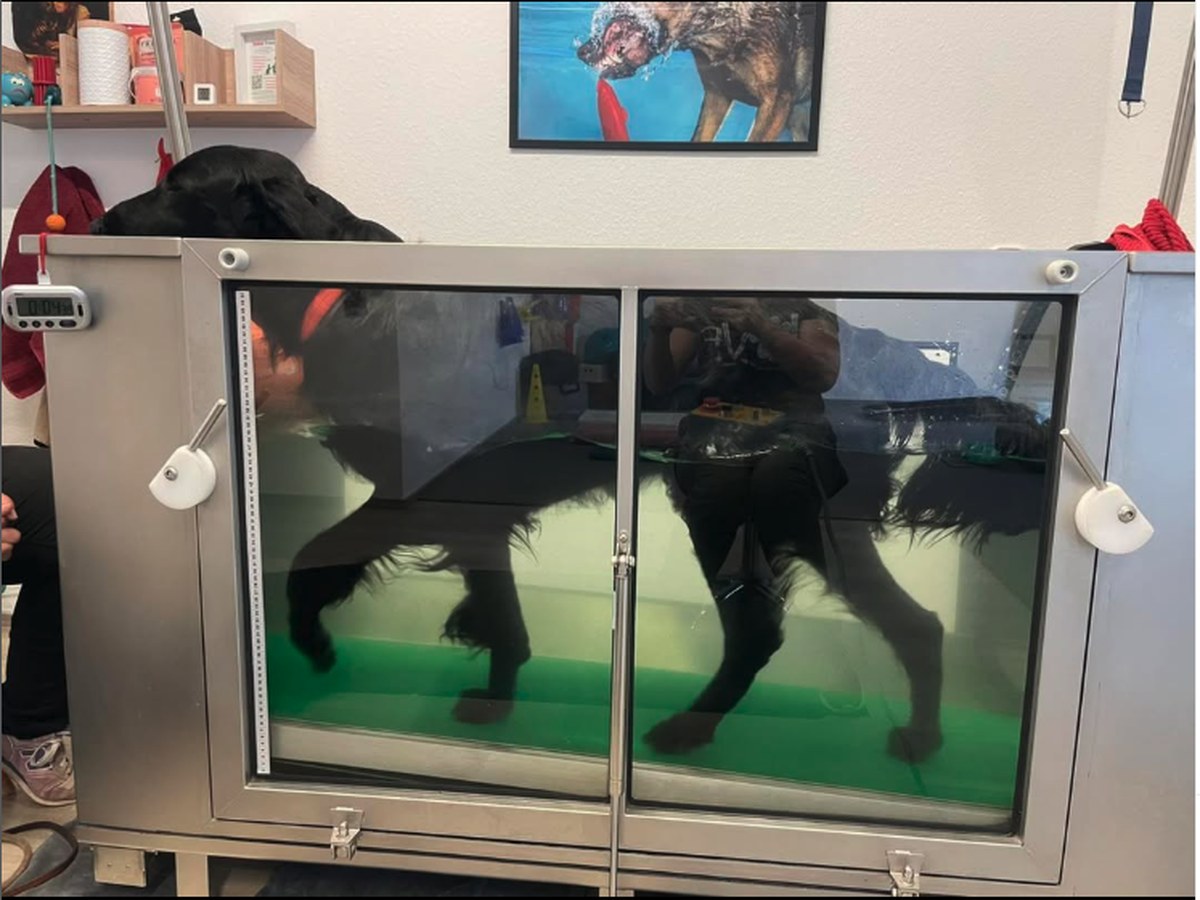
Hydrotherapy works because of three properties of water. Buoyancy takes the dog’s weight off its joints: a dog standing in water to the hip carries about 60 percent of its body weight, to the chest about 40 percent, and to the shoulder about 10 percent, which means a dog that can’t bear weight on a repaired knee on land can walk on it in water, loading it gently and safely. Resistance makes every movement harder, so the dog builds muscle while moving slowly, with none of the pounding of land work. And hydrostatic pressure, the squeeze of water on the body, reduces swelling and improves circulation, which is why dogs often come out of a session with less fluid around a surgical site than they went in with. Add warm water (usually 82 to 90 degrees Fahrenheit), which loosens stiff joints and relaxes muscle, and you have the ideal environment for a dog that needs to move but can’t take impact.
The key word is therapy. A session is planned by a trained canine rehabilitation therapist (in the US, usually a vet or vet tech with a CCRP or CCRT certification, or a physical therapist with a canine qualification) who sets the water depth, the speed, the duration and the exercises to match the dog’s condition, watches the gait the whole time, and adjusts. That’s the difference between hydrotherapy and letting your dog swim at the lake, and it’s what you’re paying for.
The two types: underwater treadmill and pool
Underwater treadmill
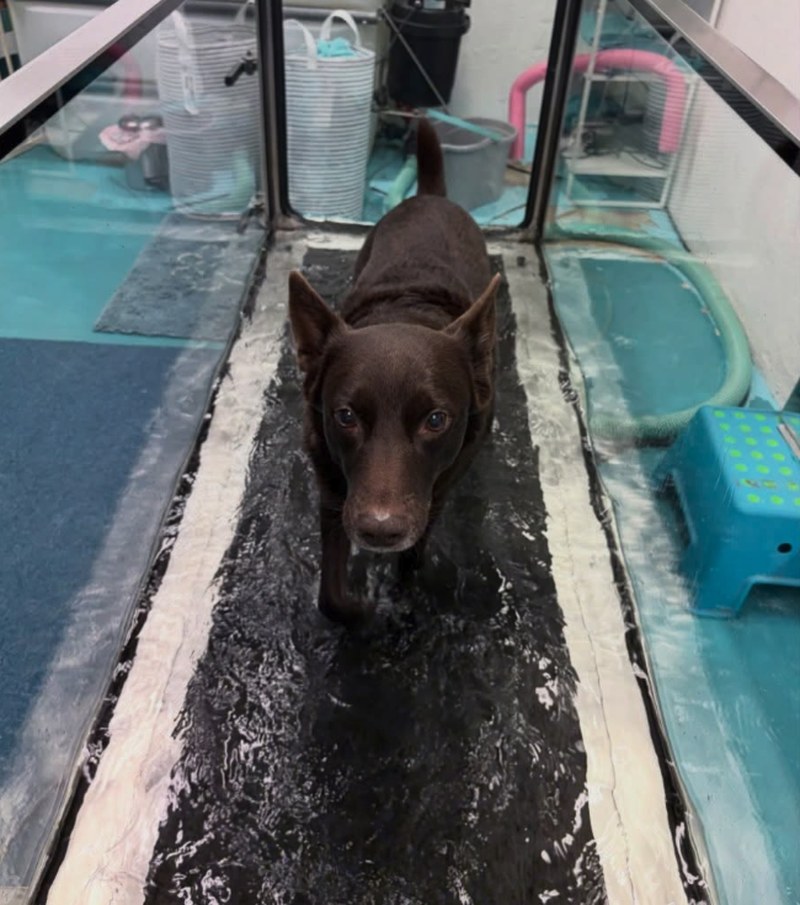
A glass-sided tank with a treadmill belt in the floor. The dog walks in through a door, the door seals, the tank fills with warm water to whatever depth the therapist chooses, and the belt starts, slowly. The therapist stands beside or behind the dog (the tanks are built for it) and can adjust depth and speed on the fly, support a hind end with a hand or a sling, and watch each leg through the glass. Sessions run 5 to 20 minutes of walking, often in intervals, inside a 30 to 45 minute appointment. This is the workhorse of rehab: it produces a normal walking pattern, which is exactly what a dog recovering from surgery needs to relearn, and the therapist controls every variable. It’s the right choice for post-surgical recovery, neurological cases, dogs that can’t swim or hate it, and dogs that need to rebuild a specific gait.
Hydrotherapy pool
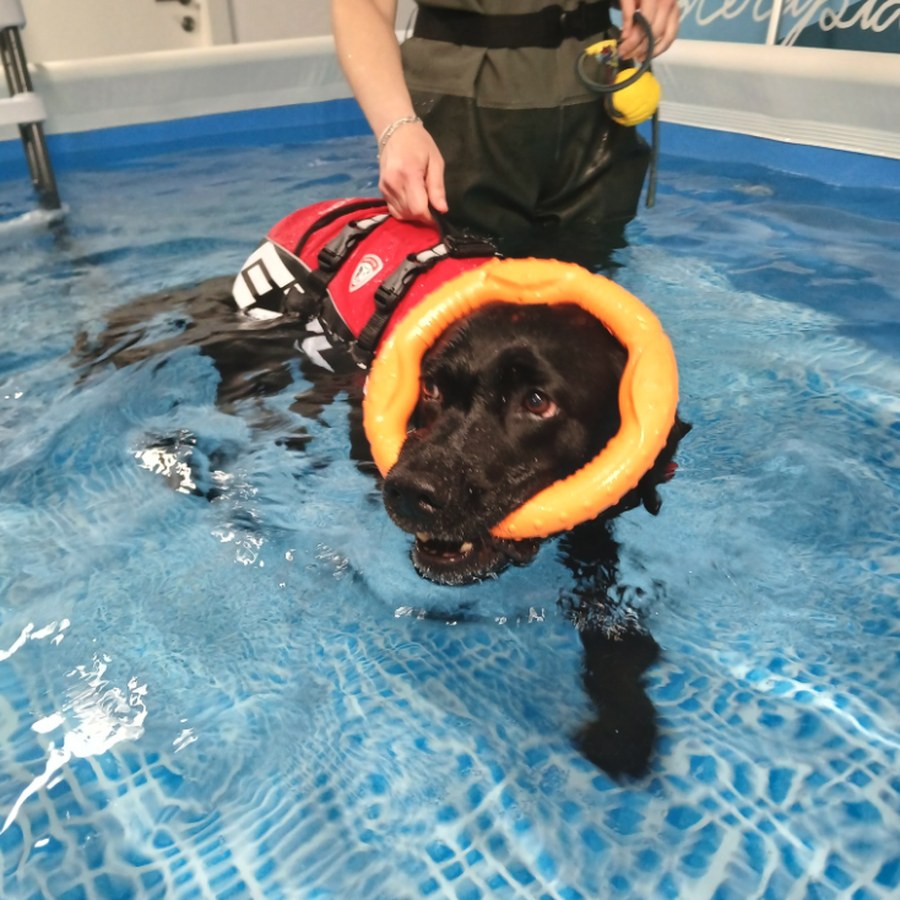
A heated pool, sometimes with jets for added resistance, where the dog swims in a flotation vest with a therapist in the water guiding it. Swimming works the whole body harder than the treadmill, with the front end and core doing more, and it’s fully non-weight-bearing, which suits dogs in the early stages after some surgeries and dogs with severe arthritis. It’s also the better option for conditioning a fit dog and for weight loss, because it burns more. The trade-off is that swimming isn’t a walking pattern, so it’s less useful for retraining a limb, and some dogs panic in deep water. Therapists often use both: pool early for non-weight-bearing work, treadmill later to rebuild the walk.
What hydrotherapy treats
| Condition | What it does | Typical course |
|---|---|---|
| After cruciate (ACL) surgery | Rebuilds weight-bearing and muscle on the repaired leg without loading the implant. Usually starts 2 to 3 weeks after surgery once the incision has healed. Also used for dogs managing a torn ACL without surgery. | 1 to 2 a week for 8 to 12 weeks |
| Hip or elbow dysplasia | Builds the muscle that supports a loose joint, keeps range of motion, reduces pain. Often ongoing at lower frequency. | Weekly for 6 to 8 weeks, then every 2 to 4 weeks |
| Arthritis | Warm water eases stiffness, movement keeps joints lubricated, muscle gain takes load off cartilage. One of the best-supported uses. | Weekly or every 2 weeks, long term |
| Obesity | Lets a dog too heavy for land exercise burn calories and build muscle safely while the diet does the main work. | 1 to 2 a week until the dog can walk normally |
| Spinal surgery, IVDD, neurological conditions | Retrains walking patterns, keeps muscle on legs the dog isn’t using properly (see our guide to weak back legs), supports nerve recovery. Treadmill almost always, with support. | 2 to 3 a week early, tapering over months |
| Senior muscle loss | Rebuilds hind-end muscle in dogs that can’t do hills or stairs anymore. Often the thing that keeps an old dog mobile another year or two. | Weekly, ongoing |
| Fracture recovery, after cast removal | Restores range of motion and muscle in a limb that’s been immobilized. | 1 to 2 a week for 4 to 8 weeks |
| Conditioning (sport, working, show dogs) | Cardio and muscle without impact. Common in agility, flyball and field dogs between seasons or during injury-prevention programs. | Weekly or as part of a program |
Does it work? For post-surgical recovery, arthritis and obesity, the evidence from veterinary studies and from rehab clinics is consistent: dogs that do hydrotherapy regain muscle and function faster than dogs that rest and walk alone, and arthritic dogs that do it regularly move better and need less pain medication. For neurological cases the picture is more individual, but it’s standard practice at referral hospitals for a reason. Where it’s oversold is as a cure on its own; it’s one part of a plan that also includes land exercises, weight control, pain management and whatever the vet has prescribed. Our guides to ACL surgery recovery, arthritis exercise and hip dysplasia exercise show where it fits alongside the land work for each, and the injury recovery guide covers the phases of a rehab program in general.
Who shouldn’t do it
Dogs with open wounds or incisions that haven’t healed (usually 10 to 14 days after surgery, once stitches are out and the vet clears it). Dogs with uncontrolled heart disease, breathing problems or a recent respiratory infection, because warm water and exertion stress both. Dogs with skin infections, ear infections or diarrhea, for hygiene and for their own comfort. Dogs with severe water fear that hasn’t been worked through; a panicking dog in a tank is dangerous and the therapist will stop. Flat-faced breeds can do it but need shallower water, shorter sessions and a therapist experienced with them, because their airways sit close to the waterline. Unspayed females in season are usually turned away for hygiene. And any dog needs a vet’s okay first; a good clinic won’t take a dog without one.
What a session looks like
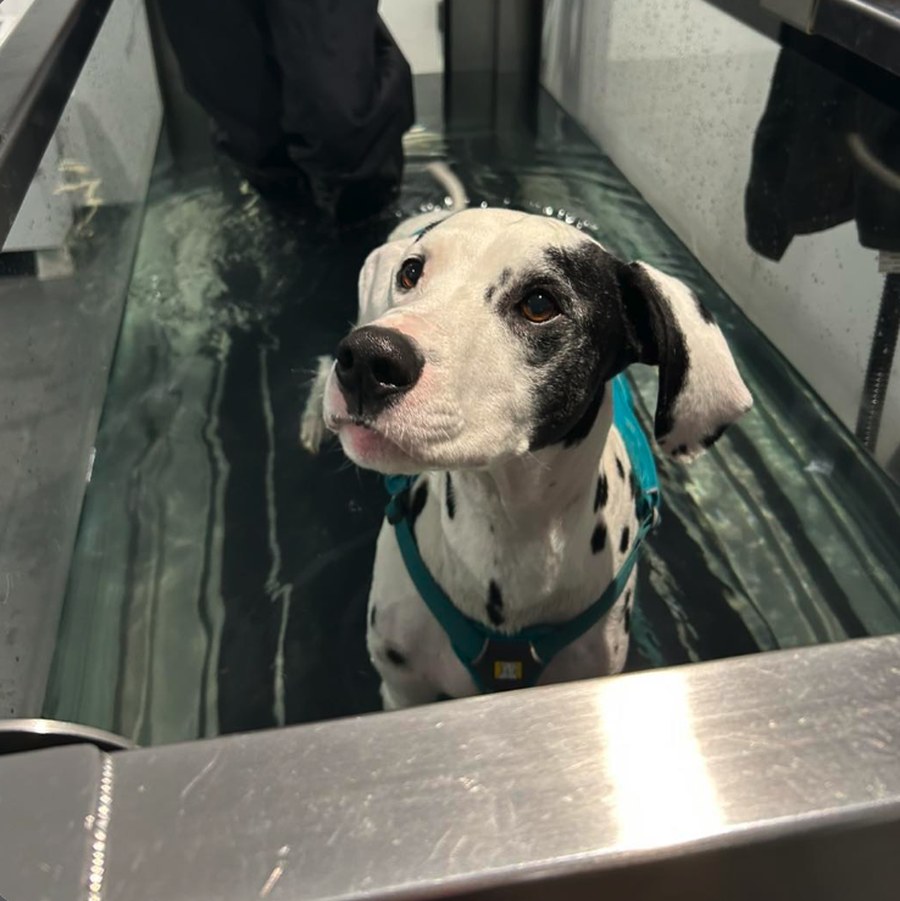
The first appointment is an assessment: the therapist watches the dog walk, feels the joints and muscles, measures thigh circumference and range of motion, reads the vet’s notes, and sets a plan. Then the dog goes in. On the treadmill, the tank fills slowly with the dog standing on a dry belt, which is the moment most nervous dogs need patience, and the therapist starts the belt at a crawl, 0.3 to 0.5 mph, and builds. Early sessions are two or three minutes of walking, a rest, two or three more. By the fourth or fifth session a dog is usually doing 10 to 15 minutes in intervals. The therapist adjusts the water depth to change how much weight the dog carries and may add a hand under the belly, a sling, or resistance jets. In the pool, the dog wears a vest, the therapist gets in with it, and swims are short, 30 seconds to two minutes, with rests, often with a toy to give the dog a reason to go. Both finish with a rinse, a dry (many clinics have a blow-dryer; bring a towel anyway) and a quiet ten minutes before the car.
Most dogs are tired that evening and move better the next day. A few are stiff the morning after the first session or two; that settles. If a dog is noticeably worse 24 hours after a session, the therapist needs to know, because the dose was too high.
Do dogs like it?
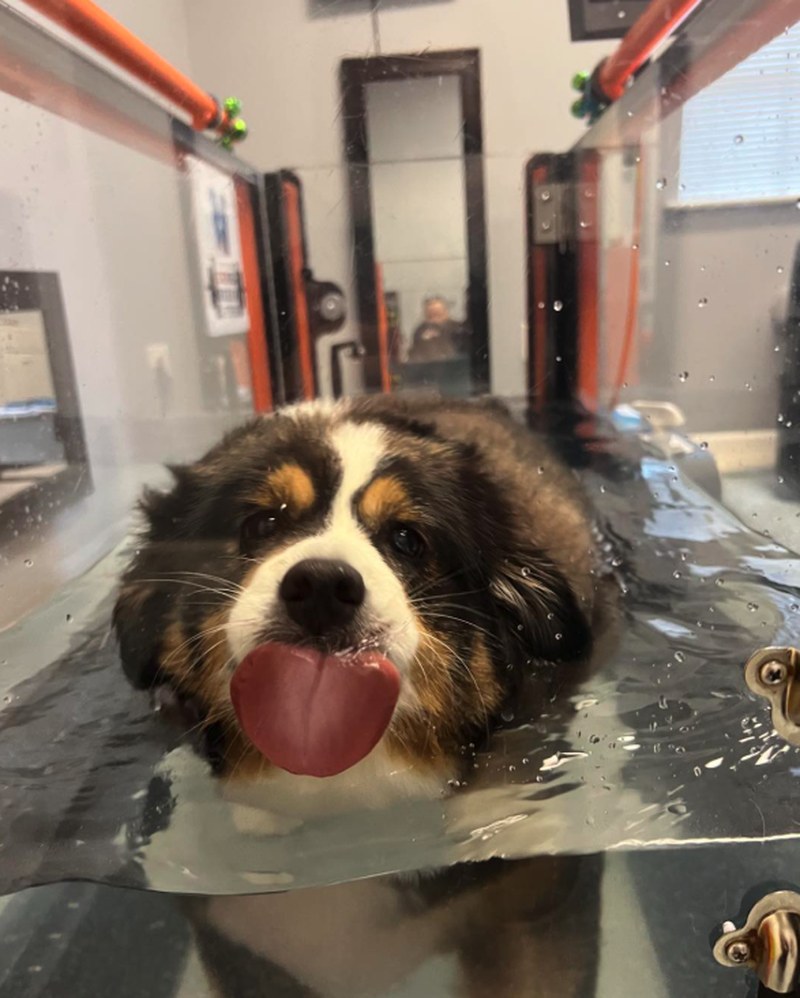
Most do, after the first session or two. Water dogs (Labs, Goldens, Newfies, spaniels) usually take to the pool immediately and need to be calmed down rather than encouraged. Dogs that have never swum are often worried by the tank filling and by the belt starting, and a good therapist spends the first session doing almost nothing: letting the dog stand in shallow water, treating, draining, done. Within three sessions nearly every dog walks in on its own. The dogs that never settle are rare, and for them the therapist will usually say so and switch to land-based rehab. Watch your dog’s face in the waiting room on the third visit; that tells you.
What dog hydrotherapy costs
In the US, an underwater treadmill session runs roughly $40 to $80, a pool session $35 to $75, and the initial assessment $75 to $150. Prices are higher in big cities and at university or specialty hospitals, lower at independent rehab clinics, and most places sell packages of 5 or 10 sessions at a discount. A typical post-surgery course of 10 sessions lands around $500 to $800 all in. For an arthritic senior on a maintenance schedule of two sessions a month, budget $100 to $150 a month. Some pet insurance plans cover hydrotherapy when a vet prescribes it as part of treatment for a covered condition; check the policy wording for “alternative” or “rehabilitation” therapy and get the referral in writing before you start. Prices vary a lot by region, so treat these as bands and ask the clinic for a written plan with a session count before committing.
How to find a good clinic
Ask your vet first; most have a rehab clinic they refer to. Otherwise search for “canine rehabilitation” plus your area rather than “dog hydrotherapy,” since the good places call themselves rehab clinics and hydrotherapy is one of their tools. When you call, ask who runs the sessions and what their qualification is (CCRP, CCRT, or a vet or physical therapist with canine rehab training are the ones to look for), whether they require a vet referral (they should), whether the water is heated and how the tank is cleaned, and whether you can watch. Avoid places that offer “doggy swimming” with no assessment, no vet involvement and no qualified staff; that’s a pool, not therapy, and for a dog recovering from surgery it can do harm. A clinic that also does land-based rehab, laser, massage and home exercise plans is a sign you’re in the right place, because hydrotherapy works best as part of a program.
Hydrotherapy for senior dogs
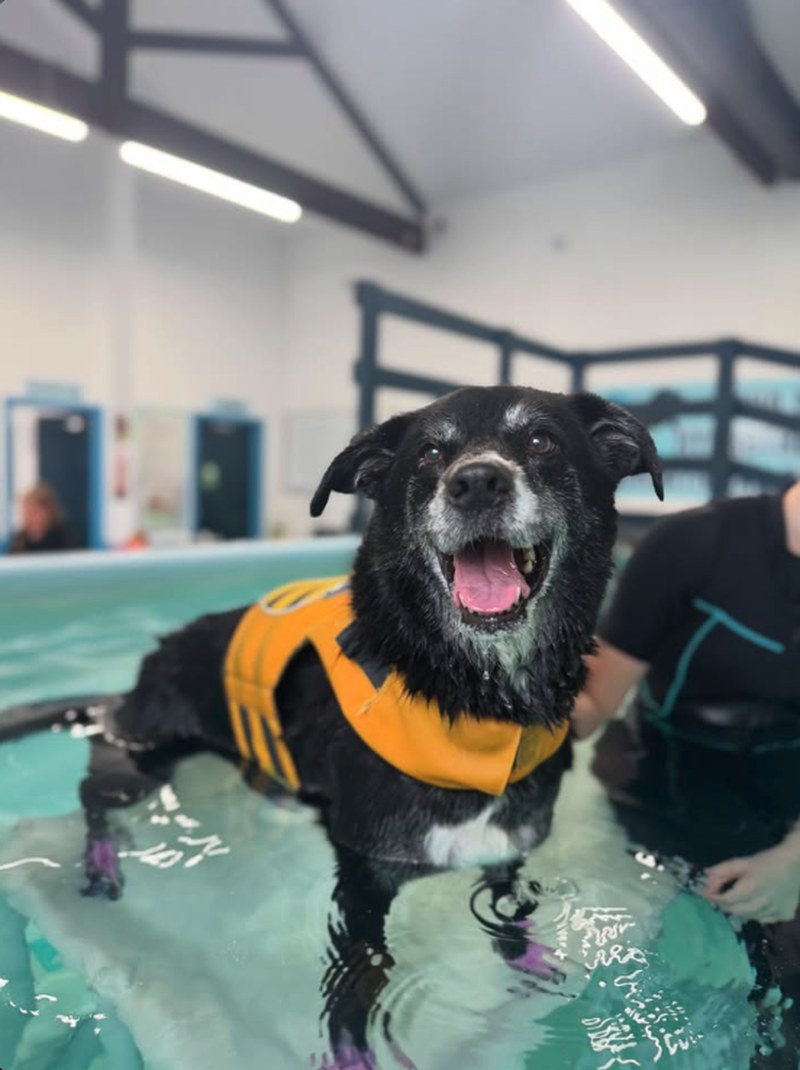
If there’s one group hydrotherapy changes lives for, it’s old dogs. A 12-year-old Lab with arthritic hips can’t do hills or sit-to-stands anymore, so it loses muscle, which makes the hips worse, which means less movement, and the spiral ends with a dog that can’t get up. In warm water that dog can walk or swim for ten minutes, build muscle, loosen its joints and feel like itself, with no impact at all. Owners regularly report that a senior dog on weekly hydrotherapy gets up more easily, goes further on walks and needs less pain medication within a month. It’s not cheap on an ongoing basis, but for many owners it’s the best money they spend on an old dog. Pair it with the gentle land work in our senior exercise guide.
Water exercise at home
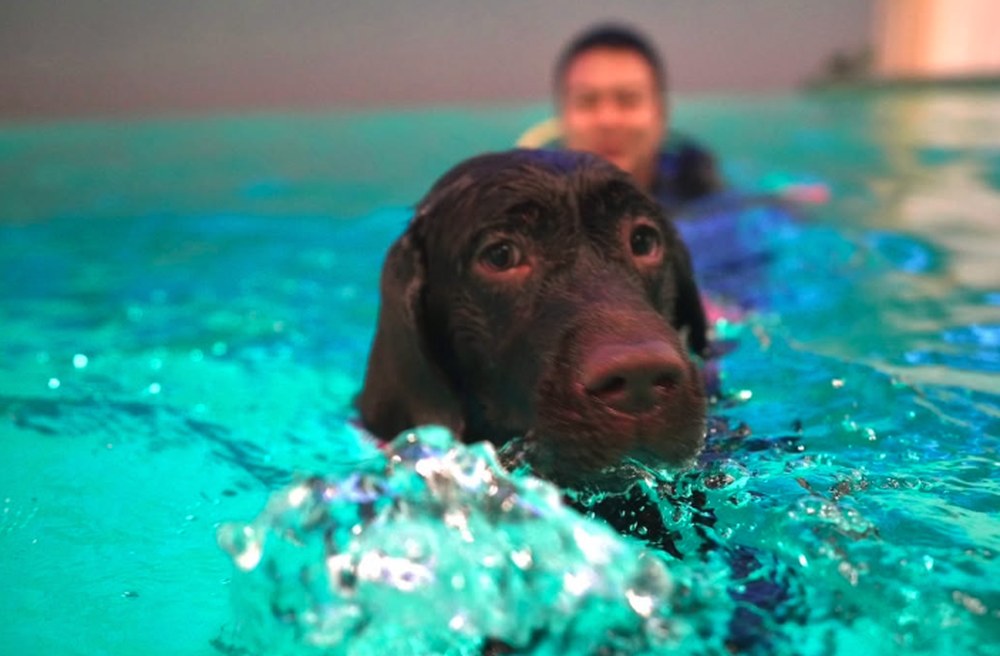
Home water work is not a substitute for hydrotherapy in a dog recovering from surgery or managing a serious condition, because you can’t control depth, temperature or load the way a therapist can, and cold lake water on a stiff arthritic dog does the opposite of what warm water does. But for a healthy dog, an overweight dog cleared for exercise, or a senior between clinic sessions, water is still the best low-impact exercise there is. These are the safe versions.
Shoreline wading. Walk the dog on leash along a beach or lake edge in water to the elbow or chest, slowly, for 5 to 15 minutes. The resistance works the legs, the buoyancy spares the joints, and the dog never has to swim. It’s the closest thing to an underwater treadmill you can do for free, and it’s excellent for seniors and heavy dogs. Firm sand or smooth bottom only, no rocks, no current.
Controlled swimming. Short swims of 30 seconds to two minutes, in a flotation vest, in calm water, with rests between, building to 10 or 15 minutes total over a few weeks. Retrieving a floating toy a short distance is the easiest way to structure it. Swimming builds the full body and is covered in our muscle-building guide. Never throw a dog in, never let a tired dog keep going, and stay within reach.
Kiddie pool. For small dogs and for seniors, a hard plastic kiddie pool filled to the elbow with lukewarm water, in the shade, lets a dog wade, splash and do slow laps. Treats scattered on the surface or a floating toy keep it moving. Five to ten minutes.
The rules. Vet’s okay first for any dog with a condition. Warm or at least mild water; skip it below about 60 degrees Fahrenheit. A vest for any dog that isn’t a strong swimmer and for every senior. Rinse off chlorine, salt or lake water afterward and dry the ears well, since ear infections are the most common side effect of water exercise. Stop at the first sign of a dog that’s struggling, shivering, or coughing. And no water work for two weeks after any surgery, or until the vet clears it.
Frequently asked questions
How much does dog hydrotherapy cost?
Roughly $40 to $80 per underwater treadmill session and $35 to $75 per pool session in the US, plus an initial assessment of $75 to $150. A typical post-surgery course of 10 sessions runs $500 to $800. Packages bring it down, and some pet insurance covers it with a vet referral.
How many hydrotherapy sessions does a dog need?
Post-surgery: usually 8 to 12 sessions over 6 to 12 weeks. Arthritis and senior maintenance: weekly or every two weeks, ongoing. Weight loss: one or two a week until the dog can exercise on land. The therapist sets the plan at the assessment and adjusts as the dog progresses.
Is hydrotherapy the same as swimming?
No. Swimming is good exercise for a healthy dog. Hydrotherapy is a planned treatment in warm water with a qualified therapist controlling depth, speed, duration and support, often on a treadmill rather than swimming at all. For a dog recovering from surgery or managing arthritis, the difference matters.
When can a dog start hydrotherapy after surgery?
Usually 10 to 14 days after surgery, once the incision has healed and stitches are out, with the surgeon’s okay. Some clinics start treadmill work at two weeks after a TPLO; the surgeon’s timeline overrides everything.
Is an underwater treadmill better than a pool?
Different jobs. The treadmill retrains a normal walking pattern with controlled weight-bearing, which is what post-surgical and neurological dogs need. The pool is fully non-weight-bearing and works the whole body harder, which suits early recovery, severe arthritis, conditioning and weight loss. Many dogs do both at different stages.
Can I do hydrotherapy at home?
Not the clinic version; you can’t control temperature, depth and load. You can do safe water exercise: shoreline wading, short controlled swims in a vest, and a kiddie pool for small or senior dogs, with the vet’s okay and the rules above.
Is hydrotherapy good for older dogs?
It’s one of the best things available for them. Warm water lets an arthritic senior move, build muscle and loosen up with no impact, and regular sessions often mean easier rising, longer walks and less pain medication.
What if my dog is scared of water?
Tell the clinic. A good therapist will spend the first session just standing in shallow water with treats and will build from there. Most nervous dogs are walking in happily by the third visit. The rare dog that never settles should do land-based rehab instead, and a good clinic will say so.
Where this fits in your dog’s plan
Hydrotherapy is the piece a rehab plan is built around when a dog can’t take impact, and the land exercises, the weight control and the long-term strength work are what carry the gains forward between sessions and after the course ends. A PetFitness plan puts those together for your dog’s condition, with the exercises in the right order and at the right dose. If you’d like one built, start your dog’s plan here. If you’d rather start tonight: call your vet and ask which rehab clinic they refer to. That one call is usually the hardest step.