
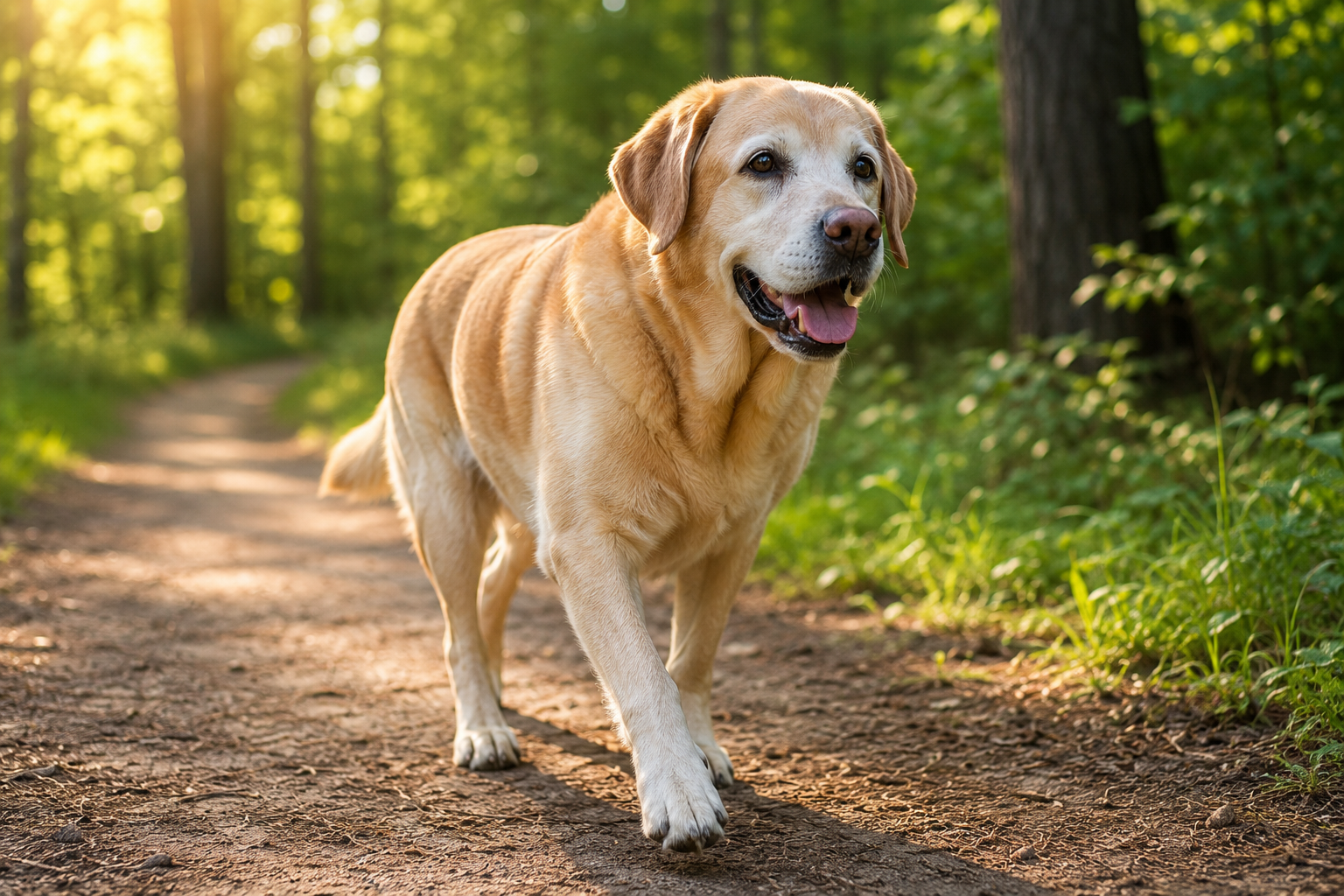
Healthy mobility helps dogs enjoy everyday activities like walking, climbing stairs, playing, and exploring. While mobility may naturally change with age or certain health conditions, regular movement and healthy habits can help many dogs stay active and comfortable for longer.
If your dog has specific mobility challenges, you may also find our guide on How to Help a Dog With Weak Back Legs helpful.
What Affects a Dog’s Mobility?
Many factors influence how easily a dog moves, including:
- age
- muscle strength
- joint health
- body weight
- daily activity level
- previous injuries
Maintaining mobility often involves supporting several of these areas together.
1. Keep Your Dog Moving Every Day
Regular low-impact movement helps keep joints flexible while encouraging healthy muscle use.
Daily activity may include:
- walking
- gentle play
- sniff walks
- light hiking
Consistency is usually more beneficial than occasional intense exercise.
2. Build Strength Gradually
Strong muscles help support joints and improve overall stability.
Simple strengthening exercises include:
- sit-to-stand repetitions
- balance exercises
- core strengthening
- controlled hill walking
Learn more in Dog Core Strength Exercises.
3. Maintain a Healthy Weight
Extra body weight increases stress on joints and may make movement more difficult.
Maintaining a healthy weight can help improve:
- comfort
- endurance
- joint function
- overall mobility
4. Practice Balance Exercises
Balance training helps improve coordination and body awareness while strengthening the muscles responsible for stability.
Simple exercises may include:
- weight shifting
- balance cushions
- cavaletti poles
- figure-eight walking
See Best Balance Exercises for Dogs for additional ideas.
5. Protect the Joints
Choose low-impact activities whenever possible, especially for older dogs or dogs recovering from injury.
Examples include:
- walking
- swimming
- controlled play
- gentle stretching recommended by your veterinarian
6. Watch for Changes
Contact your veterinarian if your dog develops:
- limping
- difficulty standing
- dragging a leg
- stiffness that worsens
- reluctance to exercise
Early intervention often provides more treatment options.
Related Articles
- Dog Core Strength Exercises
- Best Balance Exercises for Dogs
- How to Help a Dog With Weak Back Legs
- Exercises for Dogs With Arthritis
- Best Low-Impact Exercises for Senior Dogs
Final Thoughts
Improving mobility is often about small, consistent habits rather than one specific exercise. Regular movement, strength training, balance work, and maintaining a healthy weight can all help support your dog’s ability to stay active throughout life.
Want a Personalized Plan for Your Dog?
PetFitness creates structured exercise plans based on your dog’s breed, age, mobility, and conditioning level.