Written by the PetFitness team and reviewed by our Certified Canine Fitness Trainers. Last updated September 19, 2026.
Most dogs get exercise. Very few get conditioning. Exercise is the walk, the fetch, the dog park. Conditioning is the deliberate work that builds the strength, balance, flexibility, and stamina underneath it, so the dog can do all of that for fifteen years instead of eight. It’s what sport dog handlers, working dog trainers, and rehab vets have done for decades, and it takes a pet dog about 20 minutes, three or four times a week. This is the complete guide: the five components, the twelve exercises we build every PetFitness plan from, the equipment, a weekly template for every type of dog, and an eight-week program to start on.
The short version
- What it is: structured strength, balance, flexibility, and stamina work, added on top of normal daily exercise. Not a replacement for walks.
- Who it’s for: every dog over 12 months. Pet dogs, sport dogs, seniors, overweight dogs, and dogs coming back from injury all do a version of it.
- Time: 15 to 25 minutes, 3 to 4 sessions a week. Results show in 6 to 8 weeks.
- Equipment: none to start. A couch cushion, a step, and a broomstick get you through the first month. About $100 of gear after that.
- The one rule: progress one variable at a time (reps, hold time, height, or surface), never two in the same week.
What dog conditioning actually means
A dog that walks an hour a day and plays fetch is aerobically fit and not much else. Its big movers (quads, hamstrings, shoulders) are fine. Its stabilizers, the small muscles around the hips, knees, and spine that catch a bad landing, are weak, because nothing in a walk or a fetch session loads them. Its core is weak for the same reason. And its flexibility is whatever it was born with, gradually shrinking.
That gap is where injuries come from. Most cruciate ligament tears in dogs happen on a turn or a landing, not a straight run. Most senior dogs lose their back end because the hip and thigh muscles wasted quietly for years before anyone noticed. Conditioning targets exactly the things a walk doesn’t: it loads the stabilizers, builds the core, keeps the joints moving through their full range, and raises the dog’s ceiling for work.
The payoff for a pet dog is a straighter back, cleaner movement, fewer slips on the kitchen floor, a longer working life for the hips and knees, and, for a lot of high-energy dogs, a calmer evening. Ten minutes of balance work tires a dog’s brain in a way thirty minutes of fetch doesn’t.
The five components of a conditioning program
Every PetFitness plan is built from the same five pieces. The mix changes with the dog; the pieces don’t.
| Component | What it builds | Examples | How often |
|---|---|---|---|
| Walking base | Aerobic fitness, joint health, weight control, mental health | Daily walks, hill walks, treadmill | Daily |
| Strength | Muscle in the hind end, shoulders, and core; joint protection | Sit-to-stand, backing up, step-ups, cavaletti, core work | 2 to 3 sessions a week |
| Balance | Stabilizer muscles, body awareness, injury prevention | Cushion stands, balance discs and pods, paw lifts | 2 to 4 sessions a week |
| Flexibility | Range of motion, stride length, recovery | Cookie stretches, play bows, post-workout stretching | After every session |
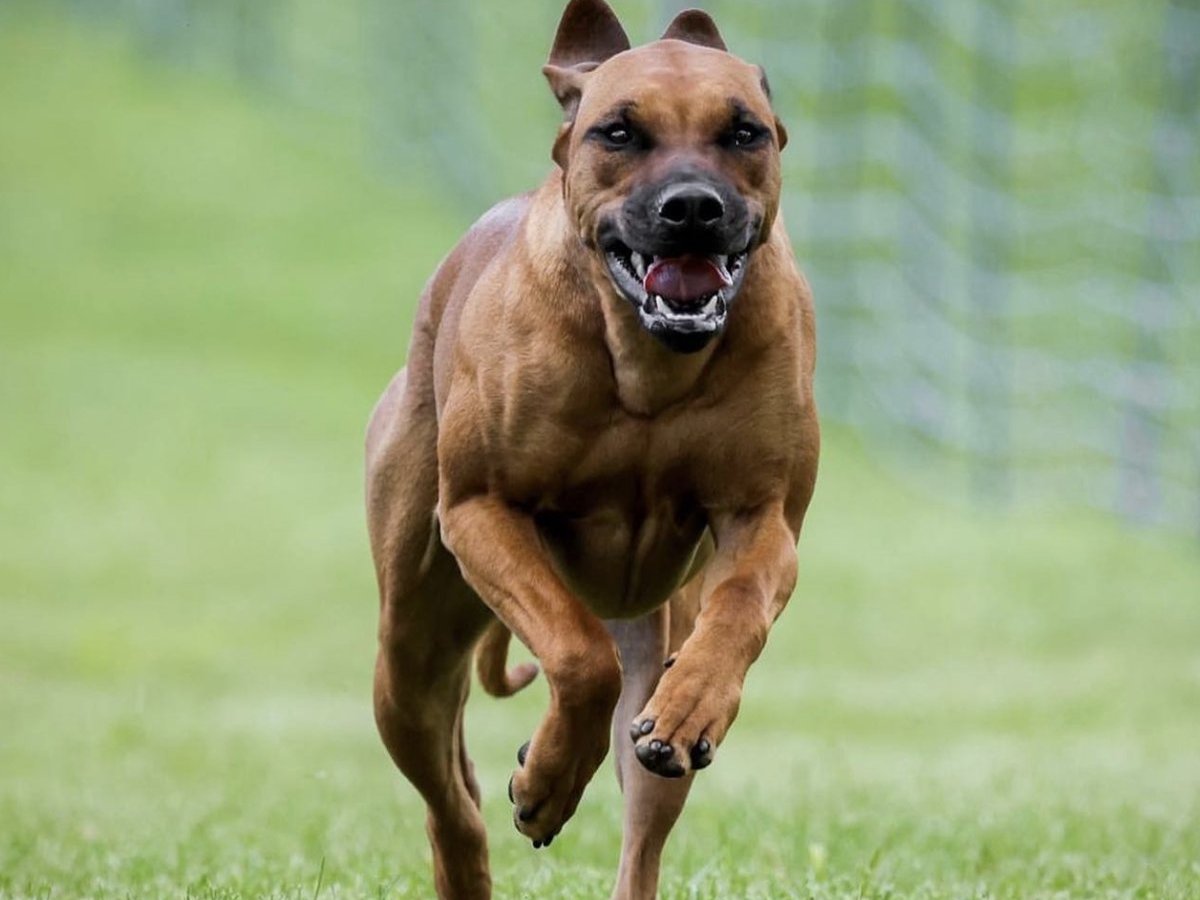
| Stamina | Work capacity, recovery speed, heat tolerance | Trotting intervals, hill repeats, swimming, stamina building | 1 to 2 sessions a week, fit dogs only |
Two things about the table. Walking is the base, not optional, and if your dog isn’t getting its daily exercise requirement, fix that before adding anything else. And stamina work is last for a reason: it’s the component most owners want first and the one that hurts an unconditioned dog fastest. Build the other four for two months, then add it.
Before you start: three checks
Age. Dogs under 12 months (18 for giant breeds) have open growth plates and get a different program. See puppy exercise instead. Everything on this page assumes a skeletally mature dog.
Body condition. Run your hands over the ribs. If you can’t feel them without pressing, the dog is carrying extra weight and every exercise below is harder on its joints than it should be. Check with our body condition guide, and if the dog is overweight, start conditioning anyway but pair it with a weight loss plan. The two work together.
Soundness. Watch the dog trot away from you and back on a flat surface. Any head bob, hip hike, or short stride on one side means a vet visit before conditioning, not after. Same for a dog that is stiff getting up in the morning, has had a cruciate or hip diagnosis, or is a senior that hasn’t been checked for arthritis. Those dogs still condition, often more than healthy ones, but the program comes from a rehab vet. Our guides on hip dysplasia exercises, exercise after ACL surgery, and arthritis exercises cover what usually goes into it.
The 12 exercises we build every plan from
These are in rough order of difficulty. A healthy adult dog can start with the first six today with nothing but a cushion and a step. Each one lists the dose we use for a beginner; the progression rules further down tell you how to move it up.
1. Sit-to-stand
The squat of dog fitness. Ask for a sit, then a stand, with the front feet staying planted so the dog pushes up with the rear. On a non-slip surface. Start with 5 reps, 2 sets. Progress to 10 reps, 3 sets, then do it with the front feet on a low step, which loads the hind end harder. Builds quads, hamstrings, and glutes, the muscles that go first in senior dogs.
2. Down-to-stand
Same idea, bigger range. From a sphinx down to a full stand without walking forward. 5 reps, 2 sets. This one works the core and the shoulders as well as the rear. If the dog creeps forward or stands with the front first, lure straight up with a treat above the nose.
3. Backing up
Walking backward loads the hind end in a way nothing else does and builds body awareness in the rear feet. Lure the dog back with a treat at chest height, or walk into it gently. 5 to 10 steps, 3 reps. Progress to backing up a gentle slope or a hallway with a mat down. Most dogs find this hard for the first week; that’s the point.
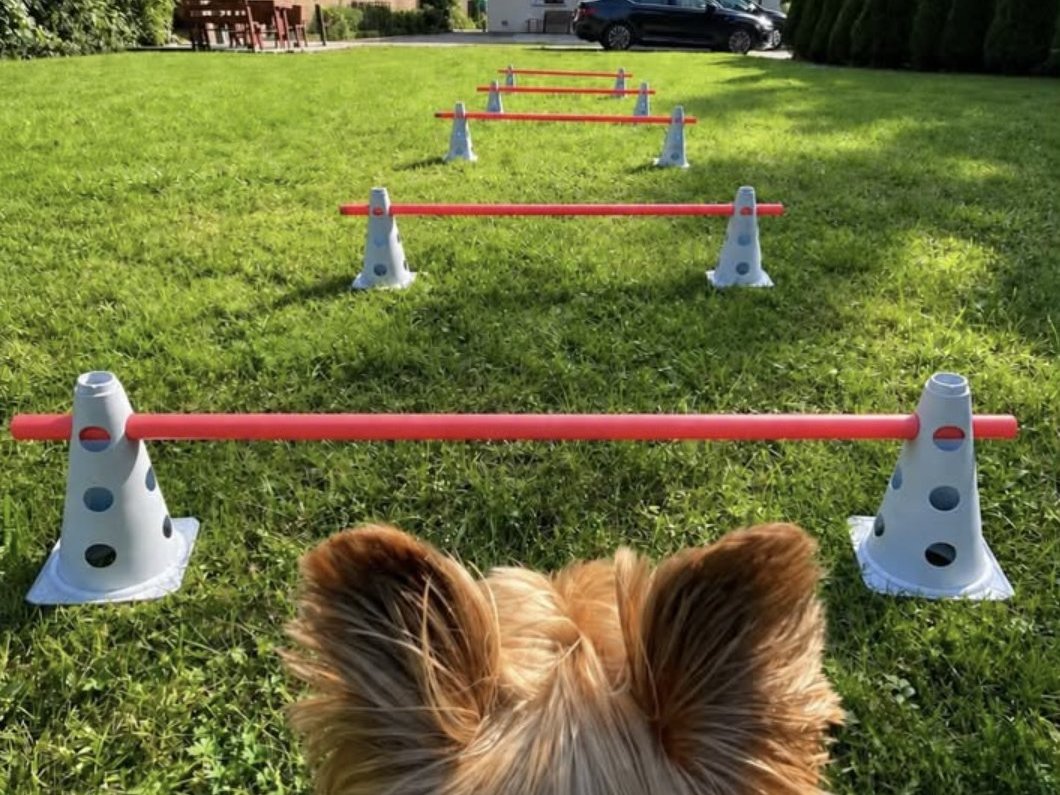
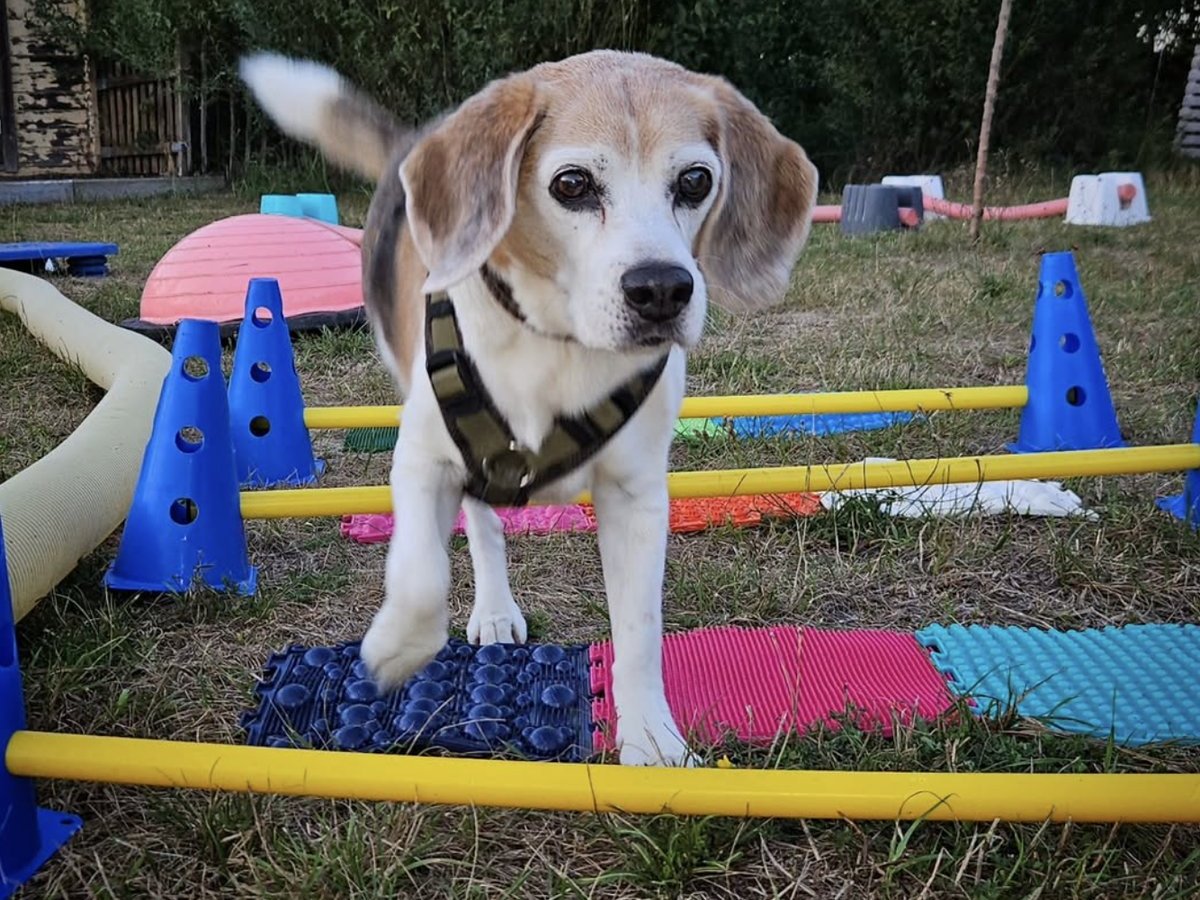
4. Cavaletti
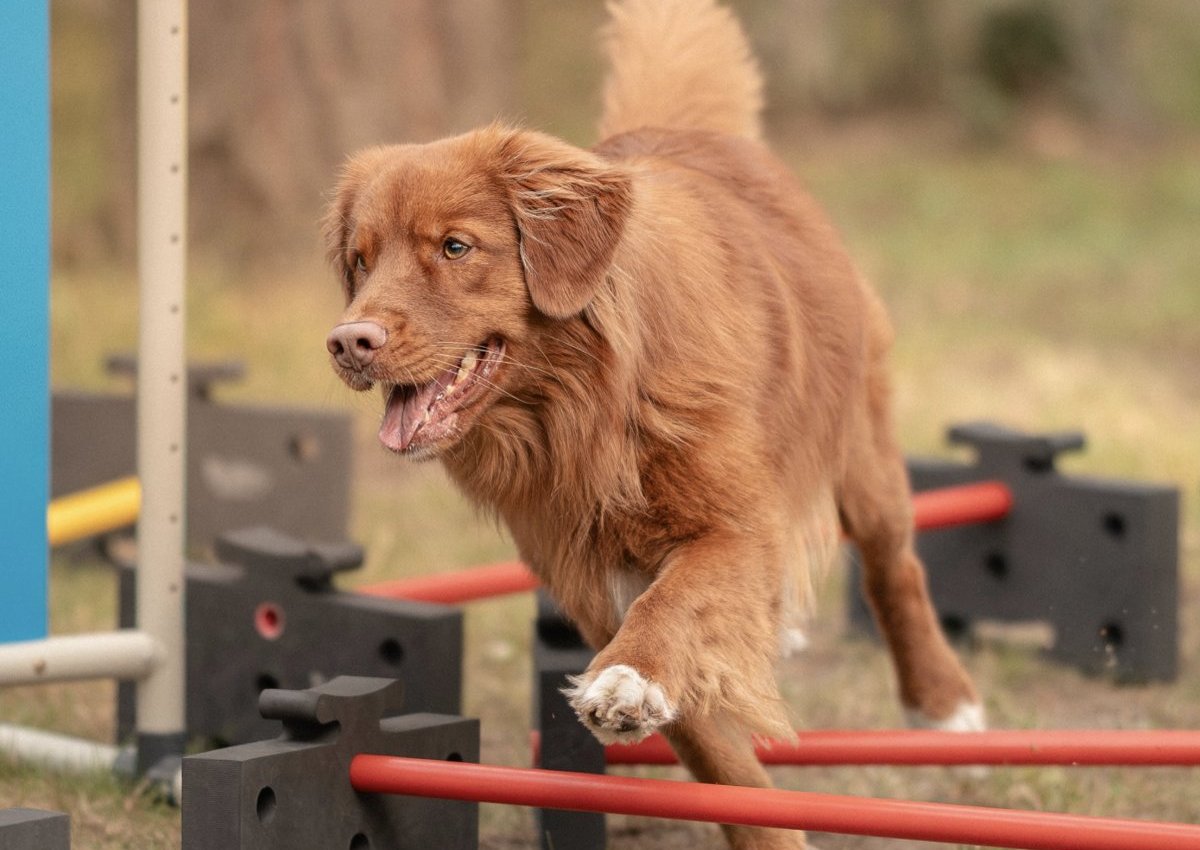
A row of poles the dog walks or trots over. It lengthens stride, teaches the dog to pick its feet up, strengthens the flexor muscles, and builds coordination. Start with 4 to 6 poles on the ground, spaced at the dog’s shoulder height, walked at a slow pace. 4 to 6 passes. Progress by raising the poles to wrist height (never above the elbow), then by trotting. Broomsticks on paint cans work as well as the branded kit.
5. Paw targeting
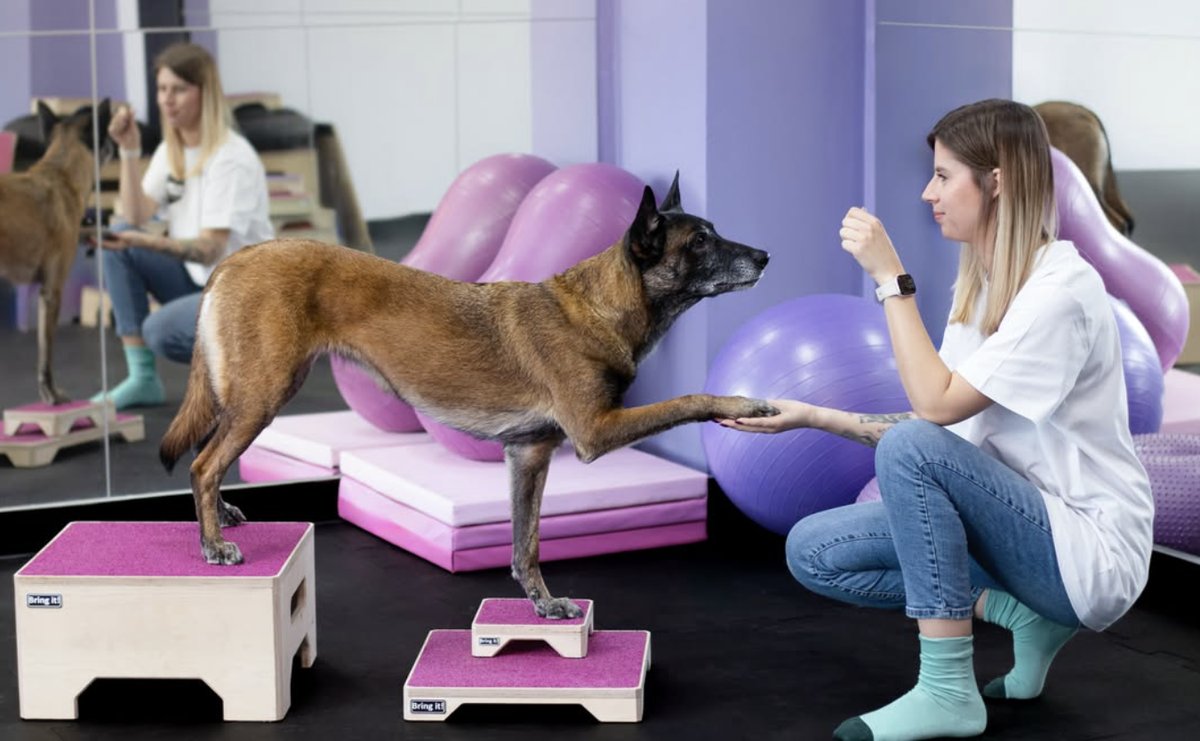
Front feet on a low platform, then ask for one paw up (a shake) while the other three hold. Then the other paw. That’s a three-leg stand, and it’s a full-body stabilizer exercise disguised as a trick. 3 to 5 second holds, 5 reps per side. Progress to rear feet on the platform, then to an unstable surface.
6. Plank (stand on platforms)
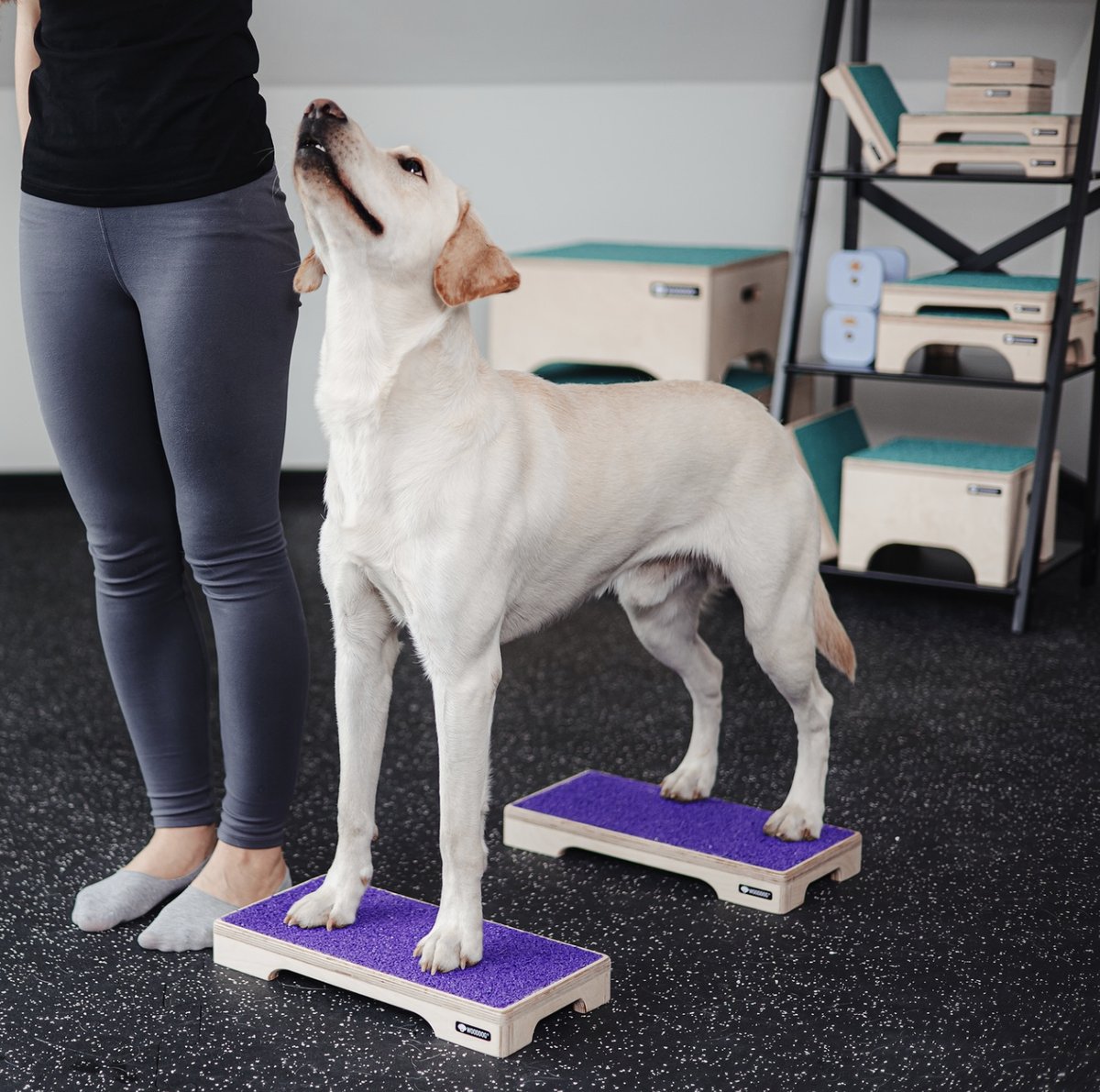
Four feet on two platforms, square stance, nose level, and hold. Sounds like nothing; a dog holding a perfect square stand for 30 seconds is working every stabilizer it has. 10 second holds building to 30, 3 reps. The picture of a correct plank is a dog with its feet directly under its hips and shoulders and its back flat. Progress by narrowing the platforms or moving one of them onto a cushion.
7. Cushion and pod stands
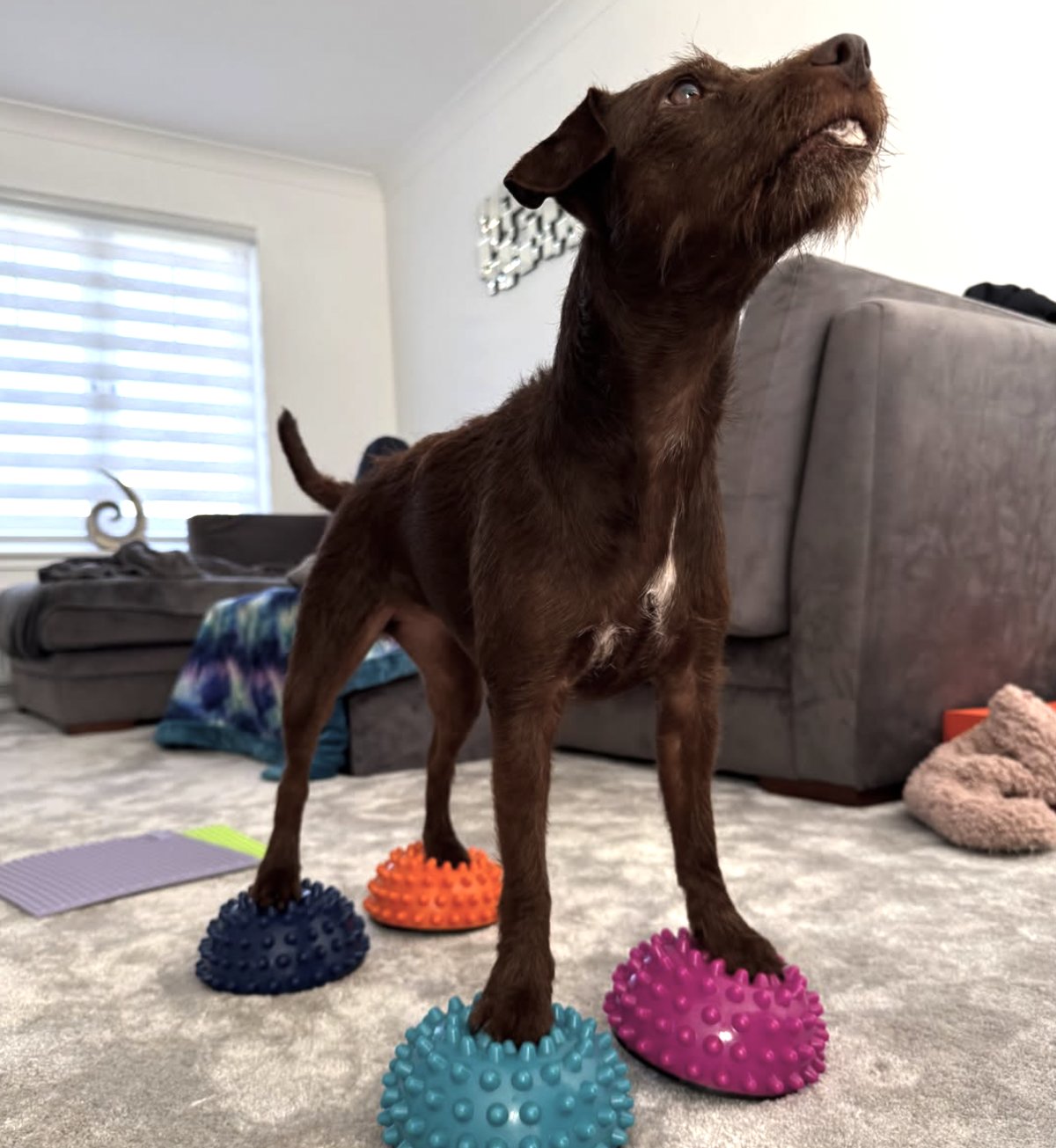
The same stand, on something that moves. Start with front feet on a couch cushion, then all four, then a balance disc, then one pod per foot as in the photo. 10 to 20 second holds, 3 to 5 reps. This is the core of balance training and our balance exercises guide takes it through ten progressions.
8. Step-ups
Front feet up onto a step, then back down. Then rear feet up (harder, and the one that matters for the hind end). 8 to 10 reps, 2 sets. Progress by raising the step to the dog’s wrist, then elbow, height. Never let the dog jump; it steps.
9. Weight shifts
Dog standing square, you gently press one hip or shoulder so it shifts weight and pushes back. Hold two seconds, release. 5 per corner. This is what rehab vets start with after surgery and it’s how a stiff senior dog rebuilds without moving much. Pairs with the weak back legs program.
10. Tug
Real exercise if you do it right: dog in a stable, four-feet-planted stance, pulling straight back with its rear, not thrashing. 20 to 30 second pulls, 3 to 5 reps, with a release cue. Builds the neck, shoulders, core, and rear all at once. Keep the toy at the dog’s chest height, never above, to protect the neck.
11. Hill walks
The most underrated strength exercise there is. Walking up a moderate slope loads the hind end; walking down it loads the front and teaches control. 5 to 10 minutes of hills inside a normal walk, twice a week. Progress to zigzagging the slope, then to trotting up. No hills? A treadmill at 3 to 5 percent incline does the same job.
12. Cookie stretches
Not strength, but the piece that holds the rest together. Dog standing, lure the nose to the shoulder, the hip, between the front legs, and up. Hold each 3 to 5 seconds. Do it after every session, once the dog is warm. Full instructions in the stretching guide.
Equipment: what’s worth buying and when
| Stage | What you need | Cost |
|---|---|---|
| Weeks 1 to 4 | Couch cushion, a sturdy step or low box, 4 to 6 broomsticks or PVC pipes, a non-slip mat, treats | $0 to $30 |
| Weeks 5 to 12 | Balance disc or pad, cone-and-pole cavaletti set, two low platforms | $80 to $150 |
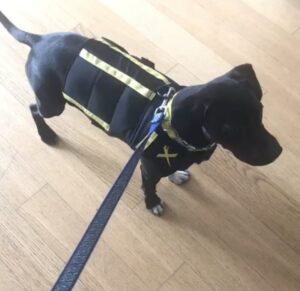
| Month 3 onward | Balance pods, peanut ball, weighted vest for fit adults, treadmill if weather or space demands it | $100 to $600, depending on the treadmill |
Don’t buy the second tier until the dog has done four weeks with the first. Half the equipment sold as “canine conditioning equipment” ends up in a closet because the dog was never taught to use a cushion first. Our dog fitness equipment guide covers what’s worth the money in each category.
Weekly template by type of dog
Sessions are 15 to 25 minutes. “Strength” means 3 to 4 exercises from the list above, “balance” means 2 to 3 balance progressions, and both end with stretches. Walks happen every day regardless.
| Dog | Weekly structure | Notes |
|---|---|---|
| Healthy pet dog | 2 strength, 2 balance, 1 hill walk, 2 rest days (walks only) | This is the default. Add stamina intervals after month two if the dog wants more. |
| Sport or working dog | 3 strength, 2 balance, 2 stamina, stretches daily | Strength on days away from sport training. Balance can go on sport days. See working breed exercises. |
| Senior dog (8+) | 2 to 3 short strength and balance sessions (10 min), daily short walks, no stamina | Weight shifts, sit-to-stand, cushion stands, low cavaletti. Vet check first. See low-impact senior exercises. |
| Overweight dog | 2 strength, 2 balance, walking built up gradually, diet adjusted | Sit-to-stand, backing up, cushion stands. No jumping, no stamina work until the weight is down. Pair with the weight loss plan. |
| Dog in rehab | Whatever the rehab vet prescribes, usually daily short sessions | Weight shifts, controlled stands, and slow cavaletti are the usual starting point. See exercises for dogs recovering from injury. |
| Flat-faced breeds | Same as pet dog, sessions kept to 10 to 15 min in a cool room, no stamina work in heat | Strength and balance are ideal for these dogs because they don’t raise breathing rate much. See flat-faced breed exercises. |
The 8-week starter program
For a healthy adult pet dog with no conditioning history. Three sessions a week, 15 to 20 minutes each, plus daily walks. Every session ends with cookie stretches.
| Weeks | Strength (2 sessions) | Balance (1 session) | Walks |
|---|---|---|---|
| 1 to 2 | Sit-to-stand 5 x 2, backing up 5 steps x 3, ground cavaletti 4 passes | Front feet on cushion 10 s x 3, weight shifts 5 per corner | Normal |
| 3 to 4 | Sit-to-stand 8 x 2, down-to-stand 5 x 2, backing up 8 steps x 3, cavaletti 6 passes, step-ups front 8 x 2 | All four feet on cushion 15 s x 3, paw targeting 3 s holds x 5 per side | Add 5 min of hills to one walk |
| 5 to 6 | Sit-to-stand front feet on step 8 x 2, down-to-stand 8 x 2, cavaletti raised to wrist 6 passes, step-ups rear 6 x 2, tug 20 s x 3 | Platform plank 20 s x 3, front feet on balance disc 15 s x 3, three-leg stand 5 s x 5 per side | 10 min of hills, twice a week |
| 7 to 8 | Sit-to-stand on step 10 x 3, down-to-stand 10 x 2, backing up a slope 8 steps x 3, cavaletti trotted 6 passes, step-ups rear 8 x 3, tug 30 s x 3 | Plank with one platform on a cushion 20 s x 3, all four feet on disc 15 s x 3, rear feet on disc 10 s x 3 | Hills twice a week, first 2 x 1 min trot intervals on the flat |
After week eight the dog is conditioned enough to move to a maintenance program (the pet dog template above), add stamina work if it wants it, or start loading with a weighted vest. That’s also the point where a PetFitness plan splits by goal: weight loss, sport, senior maintenance, or building muscle.
Progression rules
- One variable per week. Reps, sets, hold time, height, or surface stability. Pick one. A dog that gets more reps and a wobblier surface in the same week gets sore or scared, and both set you back.
- Form before load. A sit-to-stand where the front feet walk forward isn’t a sit-to-stand. Fix the movement at the easy level before making it harder. Video the dog from the side; you’ll see things you miss in the moment.
- Stop at the last clean rep. When the dog starts sloppy reps, the set is over, whatever number you planned. Fatigue is when injuries happen.
- Rest days are training days. Muscle builds between sessions. Two strength sessions on back-to-back days is worse than one.
- Warm up and cool down. Five minutes of walking before, stretches after. Never condition a cold dog.
- Weekly check. Watch the dog trot on a flat surface once a week. Any change in gait, any reluctance to get up, any new stiffness the next morning, and you back off a level and watch for three days.
How to tell it’s working
By week three: the dog holds stands without fidgeting and does sit-to-stands without walking forward. By week six: visibly steadier on stairs and slippery floors, cleaner turns, less sway in the hind end when walking away from you. By week eight to twelve: muscle you can see and feel along the thighs and over the shoulders, a flatter back, and a dog that recovers from a hard walk noticeably faster. If you’re doing this for weight loss, the body condition changes show before the scale does.
What won’t change: the dog’s basic energy level, and the amount of walking it needs. A conditioned dog still needs its daily exercise. It just does it better and for longer.
Frequently asked questions
What’s the difference between dog exercise and dog conditioning?
Exercise is any activity: walks, play, fetch. Conditioning is deliberate strength, balance, flexibility, and stamina work that targets the muscles ordinary exercise misses. A dog needs both. Exercise every day, conditioning three or four times a week.
How long does a dog conditioning session take?
15 to 25 minutes for an adult pet dog, including warm-up and stretches. Seniors and overweight dogs do 10. Longer isn’t better; the dog’s form goes before the timer does.
Can I condition my dog at home without equipment?
Yes, for the first month at least. Sit-to-stand, down-to-stand, backing up, weight shifts, cushion stands, and broomstick cavaletti need nothing you don’t own. Buy a balance disc and a platform once the dog has the basics.
How do I build muscle on my dog?
Strength work three times a week (sit-to-stand, step-ups, backing up, hills, tug), enough protein in the diet, and eight to twelve weeks. A weighted vest adds load once the dog is conditioned. Genetics set the ceiling; a Whippet won’t look like a Pit Bull whatever you do. Our fitness foods guide covers the diet side.
Is conditioning safe for senior dogs?
It’s one of the best things you can do for one. Muscle loss in the hind end is the main reason old dogs stop being able to get up, and strength and balance work slows it down. Short sessions, low surfaces, vet check first, and the senior program.
Can puppies do conditioning?
Not this program. Puppies under 12 months do body-awareness work on flat, firm surfaces and short walks, and nothing with height, load, or repetition. See puppy exercises.
My dog is overweight. Should I condition or diet first?
Both, from day one. Strength and balance work is low-impact enough for an overweight dog, and it preserves muscle while the weight comes off. Skip jumping, stamina work, and anything on hard surfaces until the body condition score is down.
How much does a dog need to walk if it’s also conditioning?
The same as before. Conditioning is added to the walking base, not swapped for it. Our guide to how much exercise a dog needs per day gives the numbers by breed group and age.
Is swimming good conditioning?
For stamina and for dogs with joint problems, yes, it’s the best low-impact cardio there is. It doesn’t build the stabilizer muscles or body awareness the way land work does, so it’s a component, not a program. And not every dog swims well.
Where to go from here
Everything above is the framework a PetFitness plan runs on. The plan itself takes your dog’s breed, age, weight, body condition, and goal, and turns the framework into a week-by-week program with a video for every exercise, the doses set for your dog, and the progressions decided for you. If you want that, build your dog’s plan here. If you’d rather start on your own, do week one of the starter program tonight: five sit-to-stands, five steps backward, four passes over broomsticks, and a stretch. That’s a conditioning session.
About the author. Richie Allen is the founder of PetFitness. Every exercise in the PetFitness program is tested on real dogs before it goes into a plan.
Reviewed by the PetFitness training team. Our Certified Canine Fitness Trainers checked the exercise doses, the progression rules, and the senior, overweight, and rehab guidance on this page against the standards used in the PetFitness program.
Related guides: Dog balance exercises · Core strength exercises for dogs · Weighted vests for dogs · Dog treadmill training · Indoor exercise for dogs