Written by the PetFitness team and reviewed by our Certified Canine Fitness Trainers. Last updated October 28, 2026.
A torn ACL in dogs is the most common reason a healthy dog suddenly starts limping on a back leg, and the most common orthopedic surgery vets perform. It’s also one of the most confusing injuries to be on the receiving end of as an owner, because the first vet visit often ends with a choice: a surgery that costs thousands, or a long stretch of strict rest and rehab that may or may not get the dog back to normal. This page is the one we wish every owner had before that conversation. It covers how to tell whether your dog’s limp is a torn ligament, how the vet confirms it, what the surgical and non-surgical options actually involve and who each one suits, what recovery without surgery looks like week by week, the knee brace question, the costs, and the one thing that changes the outcome more than anything else: the dog’s weight.
The short version
- What it is: the cranial cruciate ligament (CCL, the dog’s ACL) inside the knee has frayed or snapped, so the shin bone slides forward every time the dog puts weight on the leg. In most dogs it wears out slowly rather than tearing in one moment.
- The signs: a sudden back-leg limp, toe-touching or holding the leg up, sitting with the leg stuck out to the side, stiffness after rest, a thickened knee, and over weeks a thigh that gets visibly thinner.
- Diagnosis: a hands-on knee exam (the “drawer test”), usually with X-rays. Often needs sedation because the dog tenses.
- Treatment: surgery (TPLO, TTA or lateral suture) gives the most reliable result, especially for dogs over about 30 pounds. Conservative management (8 to 12 weeks of strict rest, weight loss, pain control and structured rehab, sometimes a custom brace) works well for many small dogs and some larger ones with partial tears.
- Without surgery: expect 3 to 6 months, not 3 to 6 weeks, and a re-check at 8 weeks to decide whether it’s working.
- Either way: get the dog lean, because weight is the biggest controllable factor in both recovery and whether the other knee goes too. Around half of dogs tear the second one.
- Go to the vet now if the dog won’t put the leg down at all, the knee is swollen or hot, or the limp hasn’t improved after 48 hours of rest.
What a torn ACL in a dog actually is
Inside each knee (vets call it the stifle) there are two ligaments that cross each other and hold the thigh bone and shin bone together. The one at the front is the cranial cruciate ligament, or CCL. In people the same ligament is the ACL, and the name stuck. Its job is to stop the shin bone sliding forward under the thigh bone when the leg takes weight. A dog’s knee is always slightly bent when it stands, so that ligament is under load every second the dog is on its feet, which is why it wears out.
That’s the key difference from the human injury. A person tears an ACL in one bad moment, usually in sport. In most dogs the ligament degenerates over months or years, fraying a little at a time, until an ordinary jump off the couch or a quick turn in the yard finishes it. The dog “suddenly” goes lame, but the knee has been going for a long time. Vets call this cranial cruciate ligament disease rather than injury for exactly that reason, and it’s also why the second knee is at such high risk: the same process is usually under way on the other side.
Tears come in two grades. A partial tear leaves some ligament intact; the knee is painful and a bit unstable, the dog limps on and off, and it may seem to improve with rest before getting worse again. A complete rupture leaves the knee fully unstable, the limp is obvious and persistent, and about half the time the meniscus, the cartilage pad inside the joint, gets crushed between the sliding bones and tears too, which is what causes the click some owners hear.
Dog ligament tear symptoms: how to tell it’s the knee
Most owners first notice a limp and assume a pulled muscle or a sore paw. These are the signs that point at the cruciate specifically:
- Sudden hind-leg lameness, often right after exercise or a jump, ranging from a slight limp to holding the leg up entirely. With a partial tear it may come and go for weeks.
- Toe-touching: the dog stands with just the tip of the paw on the ground and won’t put weight through it.
- The “sit test”: instead of a square sit, the dog sits with the bad leg kicked out to the side, because bending the knee fully hurts. This is one of the most reliable home signs.
- Stiffness after rest that loosens up with a few minutes of movement, especially first thing in the morning.
- A thickened, firm knee. Run your hand down both back legs and compare; the inside of the bad knee often feels bigger and harder. Vets call this a medial buttress and it builds up over weeks.
- A clicking or popping sound when the dog walks, which usually means the meniscus is involved.
- Muscle loss in the thigh on the affected side after two or three weeks, because the dog has stopped using the leg properly.
- Reluctance to jump into the car or onto furniture, shifting weight onto the front legs, difficulty getting up from lying down.
A limp that goes away completely in a day or two was probably a strain. A limp that’s still there after 48 hours of rest, that keeps coming back, or that’s paired with the sit test or a thickened knee needs a vet. Hip dysplasia, a slipped kneecap and a back problem can all look similar from across the room, which is why the exam matters; our guides to hip dysplasia and weak back legs cover the look-alikes.
How the vet confirms it
The diagnosis is mostly hands. The vet holds the thigh bone still and tries to slide the shin bone forward (the cranial drawer test), or flexes the ankle and watches for the shin to jump forward (the tibial thrust test). A loose knee that moves is a torn ligament. Big, tense or painful dogs often need sedation for this because they brace against it and hide the instability, so don’t be surprised if that’s suggested. X-rays come next, not to see the ligament, which doesn’t show up, but to look for fluid in the joint, early arthritis, the position of the bones and to rule out other causes like a fracture or a bone tumor. In an unclear partial tear a specialist may suggest an MRI or look inside the joint with a scope. For most dogs, exam plus X-rays is enough to make the call.
Why it happened: risk factors
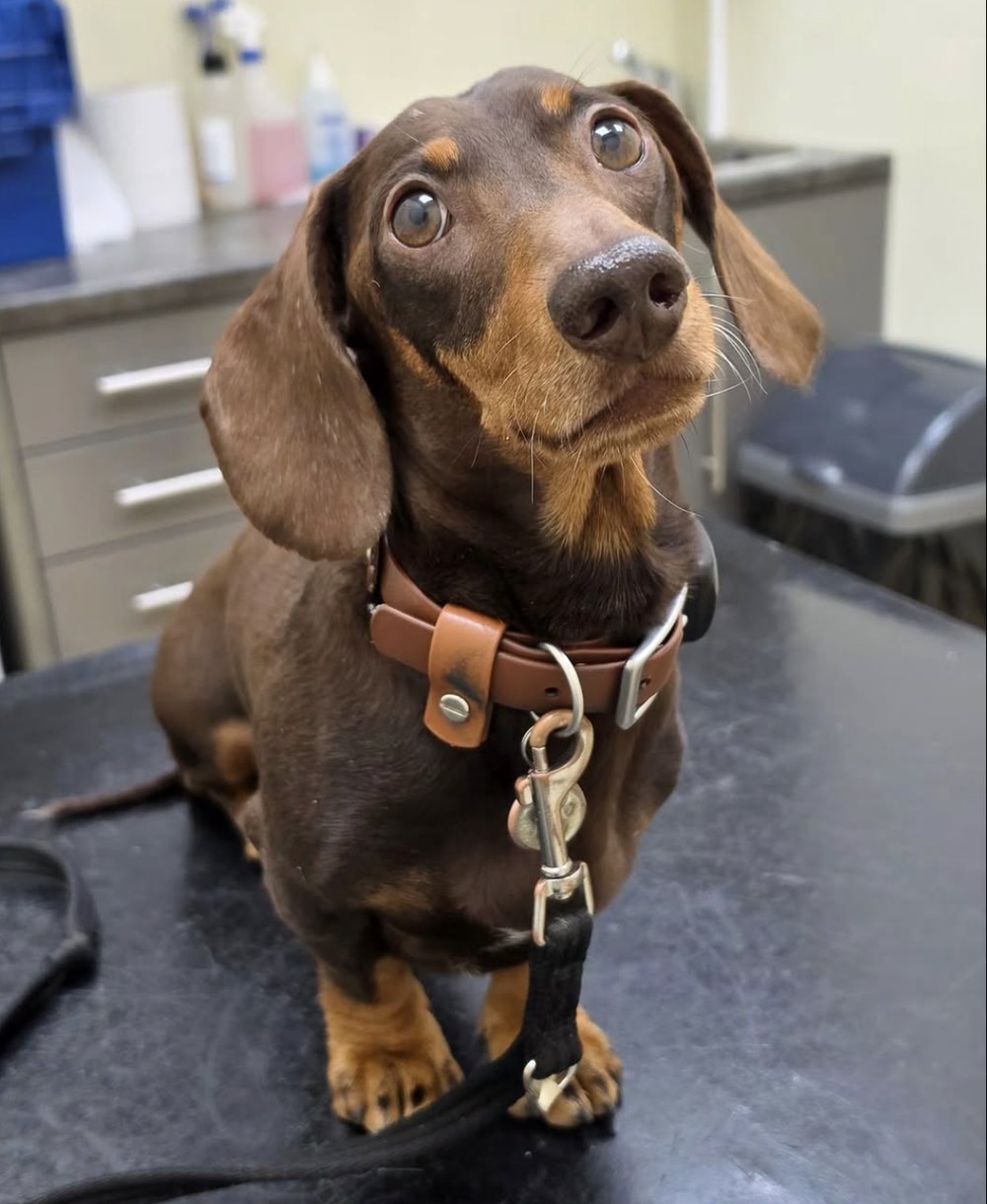
Any dog can tear a cruciate, but the odds aren’t even. The breeds that show up most are Labradors, Rottweilers, Newfoundlands, Golden Retrievers, Staffordshire Bull Terriers, Boxers, Mastiffs and, among smaller dogs, Bichons, Westies and Yorkies. Dogs between about five and eight are the typical age for the degenerative kind; the one-moment athletic tear in a young dog is the exception. Being overweight is the single biggest controllable risk factor, both because of the load and because fat tissue drives inflammation in joints. Dogs neutered before they’re fully grown have a higher rate in several large breeds. And conformation matters: dogs with a steeply sloped top to the shin bone put more constant strain on the ligament, which is the mechanical problem a TPLO is designed to fix.
Treatment options: surgery versus conservative management
This is the conversation most owners find hardest, so here is the plain version. The ligament can’t be repaired or stitched back together. Every treatment is about making the knee stable enough to work without it, and there are two routes.
Surgery
Three operations are common. A TPLO (tibial plateau leveling osteotomy) cuts and rotates the top of the shin bone and plates it, so the knee is stable under load without the ligament. A TTA (tibial tuberosity advancement) moves a different piece of the shin for a similar effect. Both are bone surgeries with an eight-to-twelve-week bone-healing period. A lateral suture (extracapsular repair) places a strong suture outside the joint to do the ligament’s job while scar tissue builds; it’s cheaper, less invasive, and used mostly in dogs under about 30 pounds, because the suture tends to stretch or fail in bigger, more active dogs. Surgery gives the most predictable return to full function, especially for medium and large dogs, and it slows (but doesn’t stop) the arthritis that follows any cruciate tear. Recovery is 12 to 16 weeks to normal activity, and the full program is in our guide to exercises after ACL surgery.
Conservative management
Conservative or non-surgical management means letting the knee stabilize itself with scar tissue while protecting it from further damage: strict rest for 8 to 12 weeks, anti-inflammatory pain relief from the vet, weight loss if the dog is carrying any extra, and a structured rehab program, sometimes with a custom brace. It is not the same as “wait and see.” A dog left to its own devices with a torn cruciate will usually keep limping, lose muscle, wreck the meniscus and develop worse arthritis than a dog that was managed properly.
Who it suits: the long-standing finding is that small dogs do well. In the classic study that shaped veterinary thinking, the great majority of dogs under about 33 pounds returned to normal or near-normal function with rest and management alone, while only about one in five larger dogs did. More recent work with modern rehab and bracing has improved the picture for bigger dogs, and there are plenty of large dogs managed without surgery that end up comfortable, but the odds are still clearly better with surgery for a dog over 30 or 40 pounds, and much better for a young active one. Conservative management is also the route for dogs that can’t safely have an anesthetic, dogs with other serious illness, very old dogs, partial tears in calm dogs, and owners for whom surgery isn’t financially possible. If that’s you, don’t let anyone make you feel you’ve chosen badly; a well-run conservative program is a real treatment, not a consolation prize.
| Surgery (TPLO / TTA / lateral suture) | Conservative management | |
|---|---|---|
| Best for | Dogs over about 30 lb, young or active dogs, complete tears, meniscus damage, working and sporting dogs | Dogs under about 30 lb, partial tears in calm dogs, seniors, dogs that can’t have anesthesia, budget constraints |
| Return to normal | Most dogs, 12 to 16 weeks | Most small dogs, a minority of large dogs, 3 to 6 months |
| Arthritis later | Some, slower to develop | More, especially in larger dogs |
| Typical US cost | TPLO or TTA roughly $3,500 to $7,000; lateral suture roughly $1,500 to $3,500. Varies a lot by region. | Vet visits and medication, rehab sessions at roughly $75 to $150 each, a custom brace around $800 to $1,200 if used |
| Main risk | Surgical complications, implant failure if the dog overdoes it early | It doesn’t work and the dog has surgery anyway, three months later and with more muscle lost |
A sensible middle path many vets suggest: commit fully to conservative management for eight weeks, re-examine, and if the dog isn’t clearly improving, go to surgery then. The eight weeks aren’t wasted; a leaner, fitter dog with a stronger core recovers from surgery faster.
Dog knee braces: do they work?
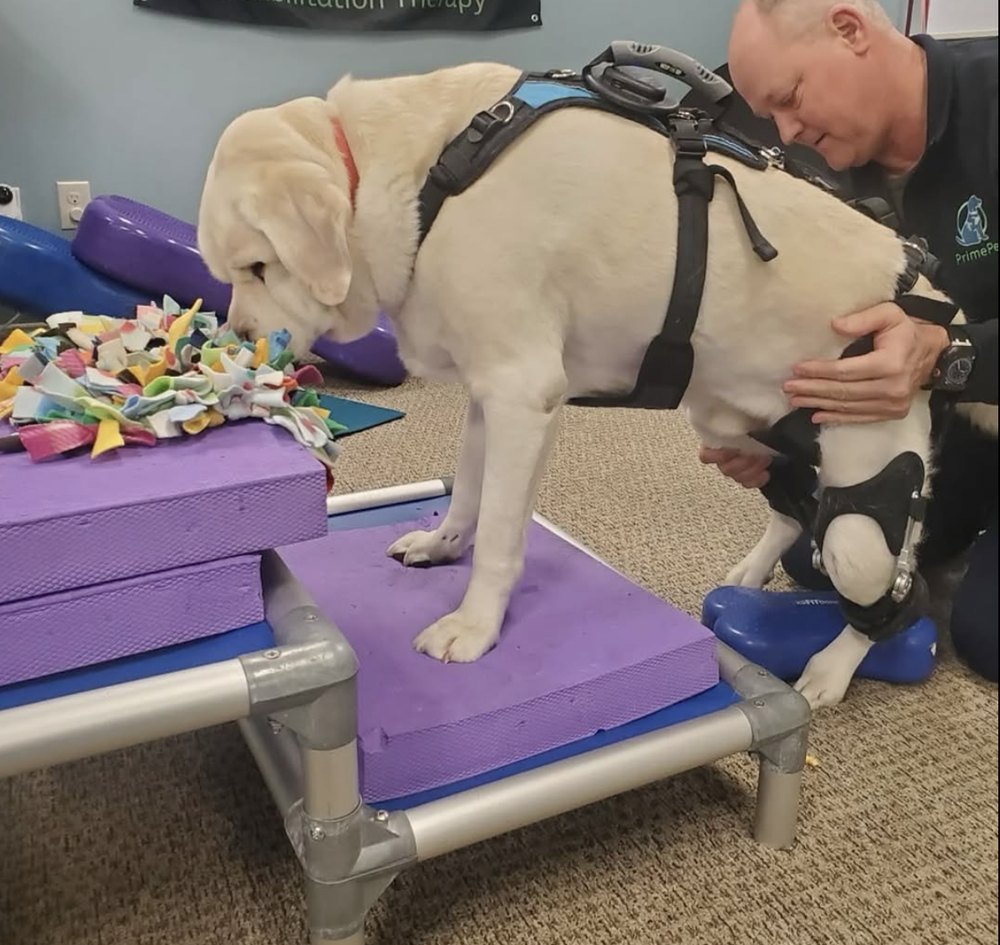
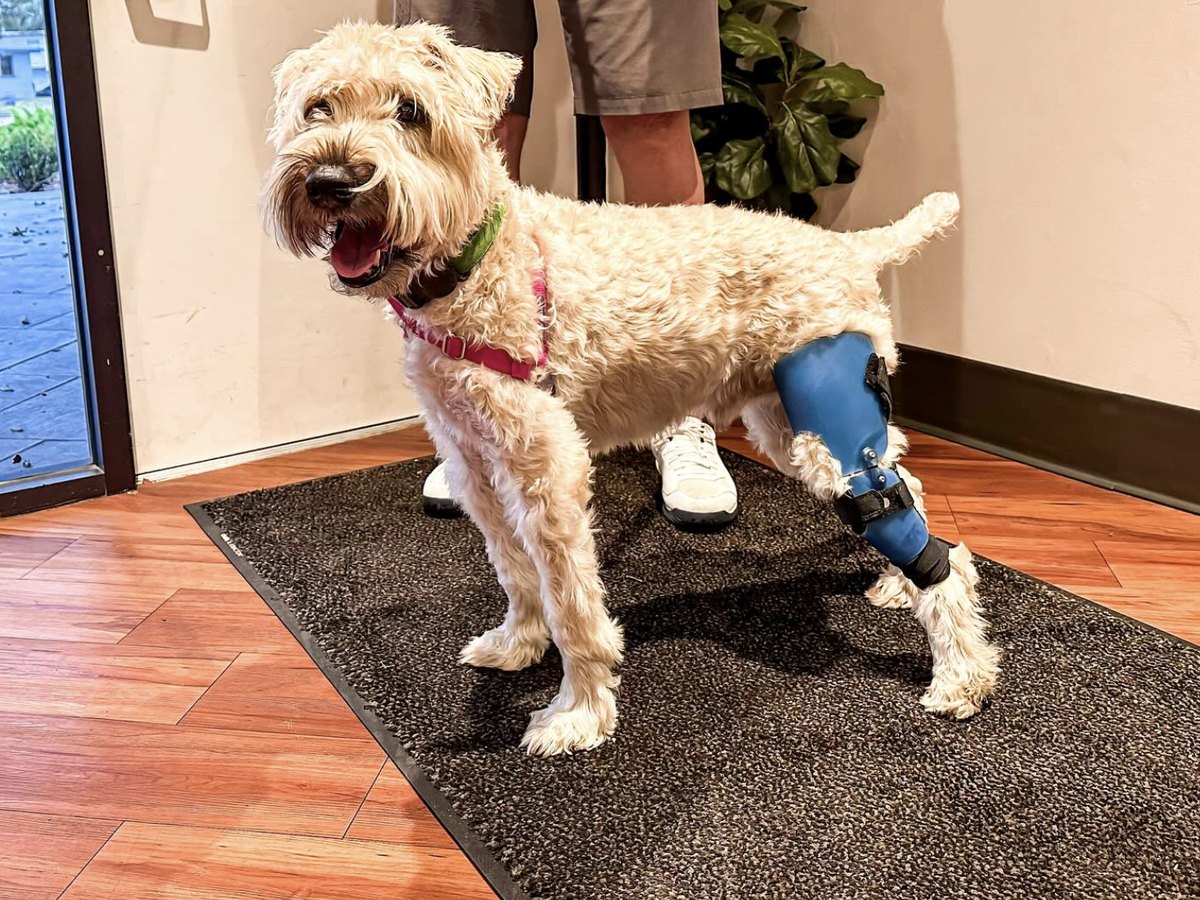
A stifle brace is a rigid or semi-rigid support, fitted around the thigh and shin with a hinge at the knee, that limits the forward slide of the shin bone the way the ligament used to. The state of the evidence: it’s thin but encouraging. Small studies and a lot of rehab-clinic experience suggest a properly fitted custom brace helps many dogs walk more comfortably and use the leg more during conservative management, and some dogs do very well long term in one. There are no large trials showing a brace matches surgery, and vets disagree about them. Two things everyone agrees on: an off-the-shelf brace from an online store is unlikely to help and may rub the leg raw, and a brace is a tool for use alongside rest and rehab, not instead of them. If you go this route, get a custom-molded one through a vet or rehab therapist, expect a fitting process, check the skin under it daily, and plan on the dog wearing it during activity for months, not weeks. The dog in the photo above is doing exactly that: brace on, controlled strength work on stable platforms, under a therapist’s eye.
Recovery without surgery: what the next six months look like
If you and your vet choose conservative management, this is the shape of it. Dates are typical, your vet’s instructions override them, and the rules in our general injury recovery guide apply throughout.
| Weeks | Goal | What to do | Not yet |
|---|---|---|---|
| 0 to 4 | Let the knee settle and start forming scar tissue. Get pain under control. | Strict rest: pen or crate, leash potty trips of 5 minutes, rugs on every floor, no stairs or furniture. Anti-inflammatories as prescribed. Cold pack 10 minutes after any activity if the knee is puffy. Passive range of motion once the vet shows you. Start the diet if the dog is overweight. Fish oil. | Walks, play, other dogs, any off-leash time. “He seems fine” is not a reason to loosen up. |
| 4 to 8 | Rebuild weight-bearing and keep the muscle. | Slow leash walks, 5 minutes building to 15, two or three times a day, on grass. Weight shifts, standing holds, cookie stretches. Brace fitted if using one. Underwater treadmill once or twice a week if available. Thigh measurements every two weeks. | Trotting, hills, sit-to-stands until the dog sits square, stairs. |
| 8 | Decision point. Vet re-check. | If the dog is clearly using the leg, the limp is mild or gone at a walk and the knee isn’t getting thicker, continue. If not, this is when to talk seriously about surgery. | |
| 8 to 16 | Strength. | Walks to 30 minutes with gentle hills. Square sit-to-stands, backing up, cavaletti poles on the ground, cushion stands. Hydrotherapy continues. Short controlled trotting late in this phase if cleared. | Fetch, jumping, dog parks, rough play. |
| 4 to 6 months | Return to normal life, with permanent rules. | Gradual off-leash time in a quiet area, normal walks, two short core sessions a week for life, ramps for the car and couch, lean body weight. | Ball launchers, frisbee and twist-and-land games, ideally for good. |
The exercises themselves, with step-by-step instructions, are the same ones used after surgery and are laid out in the ACL surgery recovery guide and the core strength guide. The two that matter most for a cruciate knee are square sit-to-stands, because they force the knee to bend fully under load, and backward weight shifts, because they teach the dog to stand on its back legs again instead of leaning on the front.
Weight: the part that changes everything
If you take one thing from this page, take this. An overweight dog with a torn cruciate heals slower, limps more, develops worse arthritis, and is far more likely to tear the other knee. A lean dog does better on every one of those measures, whichever treatment you choose. Weight loss during the rest period is also the one thing you can do that nobody can stop you doing: the dog is confined, the food is in your control, and the walks aren’t burning anything anyway. Check where your dog is with our body condition guide; if the ribs aren’t easy to feel, start the weight loss plan the same day you get the diagnosis. Alongside it, a fish oil supplement dosed by your vet for its anti-inflammatory omega-3s is the one supplement with decent evidence behind it for joints; our guide to the best food for active dogs covers protein and omega-3 in more depth. Glucosamine and chondroitin are unlikely to hurt but the evidence is mixed. Weight and fish oil first.
The other knee
Around half of dogs that tear one cruciate ligament tear the other within a year or two. The same degeneration is usually under way on the other side, and that knee has been carrying extra load for months. You can’t change the dog’s anatomy, but you can change the two biggest modifiable factors: keep the dog lean, and keep the hind-end muscle strong with two short strength sessions a week for the rest of its life. Retire the ball launcher and the frisbee, put ramps by the couch and the car, keep rugs on slippery floors, and treat any new stiffness or a crooked sit on the other side as a reason for an early vet check rather than something to watch. Long term, arthritis in the injured knee is the usual outcome with or without surgery, and the same two levers, lean and strong, are what keep it mild; our arthritis exercise guide covers the years after.
When to go to the vet today
Same day, not next week, if the dog won’t put the leg down at all, if the knee is swollen, hot or obviously painful to touch, if the limp came with a yelp and a fall, or if the dog is already being managed for a tear and suddenly gets much worse (a click, a new non-weight-bearing limp), which usually means the meniscus has gone. Within a few days if a limp hasn’t improved after 48 hours of rest, keeps coming back, or you’ve noticed the crooked sit. Don’t give human painkillers while you wait; ibuprofen, acetaminophen and naproxen are toxic to dogs.
Frequently asked questions
Can a dog’s torn ACL heal on its own?
The ligament itself doesn’t heal. What can happen, especially in small dogs, is that scar tissue stabilizes the knee enough for the dog to walk comfortably again. That takes months of strict rest and rehab, not just time, and it’s less reliable in dogs over about 30 pounds.
How do I know if my dog tore a ligament or just pulled a muscle?
A strain usually improves noticeably within 48 hours of rest. A cruciate tear persists, comes back, or is paired with the dog sitting with the leg kicked out, a thickened knee, or holding the leg up. Only a vet exam can tell for sure, and the drawer test is quick.
What is the best therapy for dogs with a torn ACL?
Whether or not the dog has surgery, the therapy is the same: strict rest at first, then controlled leash walking, weight shifts, square sit-to-stands, balance and core work, and hydrotherapy where available, under a vet or certified rehab therapist. Weight loss if the dog is heavy, and fish oil.
Can a dog live with a torn ACL without surgery?
Yes, many do, particularly small dogs. The trade-off is a higher chance of lingering lameness and earlier arthritis, especially in larger dogs. A proper conservative program and a lean body weight make the difference between a dog that lives comfortably with it and one that doesn’t.
How long does recovery without surgery take?
Plan on three to six months. The first eight weeks are strict rest with gentle rehab, then a re-check decides whether to continue or operate, then strength work builds for another two to three months.
Should I walk my dog with a torn ACL?
Short, slow leash potty walks only for the first four weeks, then gradual controlled leash walks that build by about five minutes a week. No off-leash, no running, no fetch, no stairs. Walking too much too early is the most common reason conservative management fails.
Do dog knee braces work for a torn ACL?
A custom-fitted brace from a vet or rehab therapist helps many dogs move more comfortably during conservative management and some dogs do well in one long term. The evidence is limited and it’s not a substitute for rest and rehab. Off-the-shelf braces rarely fit well enough to help.
How much does dog ACL surgery cost?
In the US, a TPLO or TTA typically runs somewhere between $3,500 and $7,000 depending on the region and the hospital, and a lateral suture repair roughly $1,500 to $3,500. Rehab afterward is extra. Prices vary widely, so get a written estimate.
Will my dog tear the other ACL?
Around half do, usually within a couple of years. Keeping the dog lean and keeping the hind-leg muscle strong are the two things that lower the odds; retiring high-impact fetch games helps too.
Is a torn ACL painful for a dog?
Yes, particularly at first and whenever the meniscus is involved. Dogs hide pain well, so a dog that’s “just limping a bit” is usually sorer than it looks. Pain relief from the vet is part of the treatment, not an optional extra.
Where this fits in your dog’s plan
A PetFitness plan for a dog with a cruciate injury sits alongside your vet’s treatment: the house setup and rest rules for the first weeks, the rehab exercises in the right order, the weight loss program if the dog needs it, and the long-term strength work that protects the other knee. If you’d like the plan built for your dog, build your dog’s plan here. If you’d rather start on your own tonight: put a rug on every slippery floor between the dog’s bed and the back door, block the stairs, weigh tomorrow’s food instead of scooping it, and book the vet appointment if you haven’t yet.