Written by the PetFitness team and reviewed by our Certified Canine Fitness Trainers. Last updated September 21, 2026.
Most dogs need between 30 minutes and two hours of exercise a day, and the honest answer for your dog depends far more on what it was bred to do than on how big it is. A 25-pound Border Collie needs three times the exercise of a 150-pound Mastiff. This page gives you the actual numbers: minutes per day by breed group, how that changes with age, how to split it between walks and everything else, how many miles a walk should be, and the signs your dog is getting too little or too much.
The short version
- Most adult pet dogs: 60 minutes a day, split into two or more sessions. Companion and giant breeds need less (30 to 45). Herding, sporting, and working breeds need more (90 to 120+).
- Puppies: about 5 minutes of structured exercise per month of age, twice a day. A 4-month-old gets two 20-minute sessions. Free play on top of that is fine.
- Seniors: the same daily total in shorter, more frequent sessions, at a slower pace, until the dog tells you otherwise.
- Walks: at least two a day. A normal walk covers about 1.25 to 1.5 miles per 30 minutes.
- The test: a dog getting enough exercise settles in the evening, holds a healthy weight, and isn’t destructive. If any of those is off, the number below is your starting point, not your ceiling.
Daily exercise by breed group
These are the daily totals we use as starting points in PetFitness plans for healthy adult dogs (1 to 7 years). The number is total active time: walks, off-leash running, play, training, and conditioning combined. Mixed breeds go by the type they most resemble in build and energy, not by size.
| Breed group | Examples | Minutes per day | What it should include |
|---|---|---|---|
| Herding | Border Collie, Australian Shepherd, German Shepherd, Malinois, Corgi, Heeler | 90 to 120+ | Off-leash running or a job most days, plus training. Walks alone won’t do it. |
| Sporting | Labrador, Golden Retriever, Springer, Vizsla, Pointer, Weimaraner | 60 to 90 | Fetch, swimming, or running several times a week on top of walks. |
| Working | Husky, Boxer, Doberman, Rottweiler, Cane Corso, Akita | 60 to 120 | Huskies at the top of the range with running. Mastiff-types at the bottom with strength work. |
| Terriers | Jack Russell, Westie, Border Terrier, Airedale, Pit Bull, Staffordshire | 60 to 90 | Short bursts of hard play plus walks. Bully breeds respond well to tug and hill work. |
| Scent hounds | Beagle, Basset, Bloodhound, Dachshund | 45 to 60 | Long sniff walks. Nose work counts as exercise for these dogs. |
| Sighthounds | Greyhound, Whippet, Italian Greyhound, Saluki | 30 to 45 | One chance to sprint flat out a few times a week, then they sleep. Not endurance dogs. |
| Companion and toy | Shih Tzu, Maltese, Cavalier, Chihuahua, Bichon, Havanese | 30 to 45 | Two short walks and indoor play. Easy to overdo on hot days. |
| Flat-faced | French Bulldog, English Bulldog, Pug, Boston Terrier | 20 to 40 | Several 10-minute sessions in cool conditions. Breathing, not fitness, sets the limit. |
| Giant | Great Dane, Mastiff, Newfoundland, Bernese, Saint Bernard | 30 to 60 | Steady walks, swimming. No repetitive jumping or hard running; the joints can’t take it. |
| Northern and primitive | Malamute, Samoyed, Shiba, Basenji | 60 to 90 | Cold-weather dogs need more in winter and much less in summer heat. |
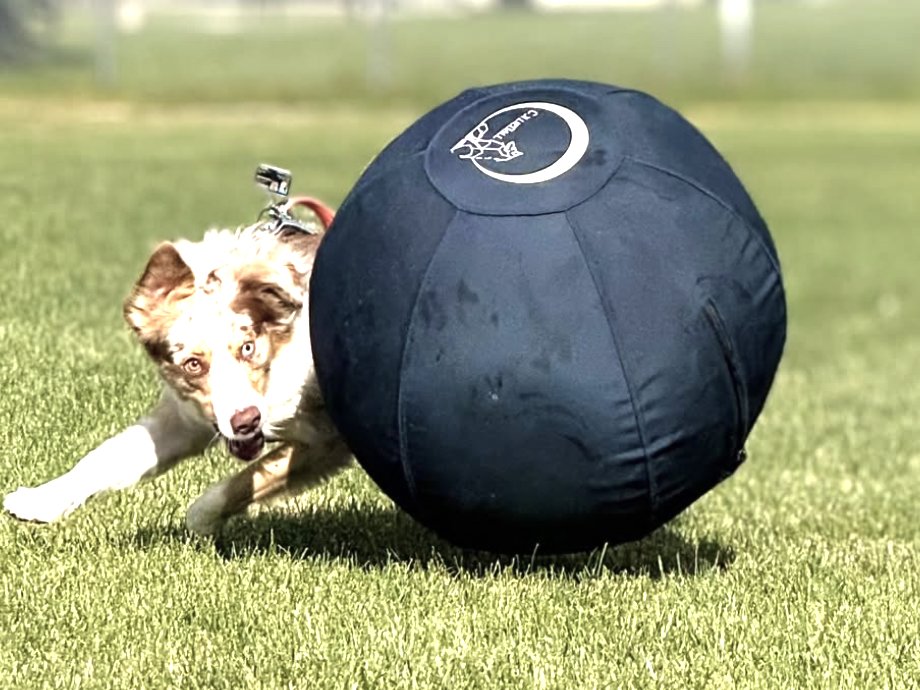
The single biggest mistake we see is a herding or sporting dog being walked for 30 minutes a day and everyone wondering why it eats the couch. The second is a giant or flat-faced dog being run for an hour because “big dogs need lots of exercise.” Breed group first, then adjust for the individual dog in front of you. We have breed-specific numbers for Golden Retrievers, Labradors, German Shepherds, and French Bulldogs.
Daily exercise by age
Age changes the number more than most owners expect, in both directions.
| Age | Structured exercise | Notes |
|---|---|---|
| Puppy, 8 weeks to 6 months | 5 minutes per month of age, twice a day (3 months: 2 x 15 min; 5 months: 2 x 25 min) | Leash walks and training count as structured. Free play in the yard is extra and self-limiting. No forced running, no stairs marathons, no jumping. |
| Adolescent, 6 to 18 months | Build toward the adult number, reaching it at 12 months (18 for giant breeds) | The hardest age. Energy is adult, joints aren’t. Long walks and sniffing over sprinting and jumping. |
| Adult, 1 to 7 years | The breed group number above | Add conditioning three times a week from 12 months on. |
| Senior, 7 to 10 years | Same total, or slightly less, in shorter sessions (3 x 20 instead of 1 x 60) | Slower pace, softer ground, warm-up matters. Strength work becomes more important, not less. |
| Geriatric, 10+ (earlier for giants) | Whatever the dog can do comfortably, every day. Usually 20 to 40 minutes total | Never zero. The dog that stops walking loses its back end within months. |
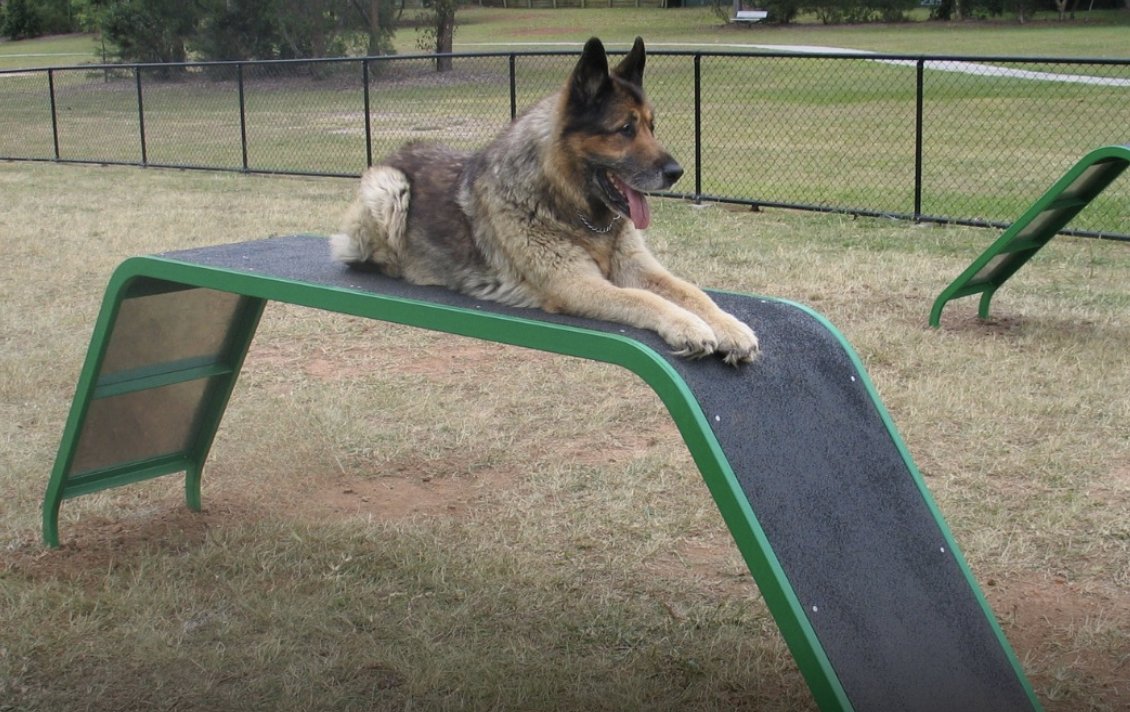
The puppy rule (5 minutes per month of age) is a guideline for structured, on-leash exercise, and it exists because growth plates in the joints don’t close until 12 to 18 months. It doesn’t mean a puppy should be confined the rest of the day; it means you shouldn’t take a 4-month-old on a 45-minute jog. Our guides on puppy exercise and low-impact exercise for senior dogs go deeper on both ends.
How to split the daily total
Sixty minutes in one block is worse than 60 minutes across the day, for the dog’s joints, its bladder, and its behavior. Here’s how we structure it in a plan.
| Component | 60-minute dog (Lab, Beagle, Boxer) | 120-minute dog (Border Collie, Husky, Malinois) |
|---|---|---|
| Morning walk | 20 min, brisk | 30 min, brisk, or a run |
| Midday | 10 min play or training | 20 min fetch, tug, or a treadmill session |
| Evening walk | 25 min, with sniffing time | 40 min, including off-leash or long-line running |
| Training or scent work | 5 min | 15 to 20 min |
| Conditioning (3 days a week) | 15 min, replacing the midday slot | 20 min, added |
Two rules inside the split. At least one walk a day should be a sniff walk, where the dog sets the pace and reads the neighborhood; 20 minutes of that tires a dog’s brain more than 20 minutes of trotting. And for herding and working breeds, some of the total has to be at speed or with a job. A Border Collie that walks two hours a day on a leash is a Border Collie that has done zero of what its body is built for.
How long, how often, and how far to walk
How often: twice a day minimum for a healthy adult, three or more for puppies and seniors. Once a day works for some low-energy adults, but not for bladders, and not for dogs that get anxious or destructive between outings.
How long: 20 to 30 minutes per walk for most dogs, 30 to 45 for the high-energy groups. Under 15 minutes is a bathroom break, not a walk.
How far: most dogs walk at 2.5 to 3 mph on a leash, so a 30-minute walk is about 1.25 to 1.5 miles. Here’s what that adds up to.
| Dog | Miles per day (walking) | Longest single walk a fit adult handles |
|---|---|---|
| Toy and flat-faced | 1 to 2 | 2 to 3 miles, cool weather only |
| Small and medium (Beagle, Cocker Spaniel, Corgi) | 2 to 3 | 5 miles |
| Large sporting and working | 3 to 5 | 10 miles, built up over months |
| Herding and northern | 4 to 6, or less if running | 15+ miles when conditioned |
| Giant | 1.5 to 3 | 4 miles |
Build distance the same way a person would: no more than 10 to 15 percent more per week. A dog that walks 2 miles a day can’t do a 10-mile hike on Saturday without paying for it Sunday. The stamina guide covers how to build up to long distances.
Signs your dog isn’t getting enough
- Restless in the evening, pacing, can’t settle, barks at nothing.
- Destructive when left alone: chewing, digging, shredding.
- Pulls hard on the leash for the entire walk, not just the first five minutes.
- Gaining weight on the same food. Check the body condition guide; if you can’t feel ribs, the dog is under-exercised, overfed, or both.
- Demand behavior: dropping toys in your lap, nudging, whining for attention constantly.
- Reactivity on walks that gets worse over time. An under-exercised dog has no outlet, and it comes out at the first dog it sees.
If two or more of these fit, add 15 minutes a day for two weeks and see what changes. Most owners are surprised how much behavior is just energy. Our guide to dogs gaining weight covers the weight side.
Signs your dog is getting too much
- Stiff or slow getting up the next morning, especially in a dog under 7.
- Limping or favoring a leg after exercise, even briefly.
- Worn or cracked paw pads, or licking the paws after walks.
- Sleeping much more than usual in the day, or reluctance to go on the next walk.
- Panting that takes more than 10 to 15 minutes to settle after stopping.
- Puppies: any of the above, or sitting down mid-walk. A puppy that sits down is done.
Too much is rarer than too little, but it happens, usually to weekend warriors (no exercise Monday to Friday, then a 3-hour hike) and to puppies and giant breeds being run like adult sporting dogs. If you see these, cut the total by a third for a week and rebuild gradually.
Adjusting for weather, weight, and your schedule
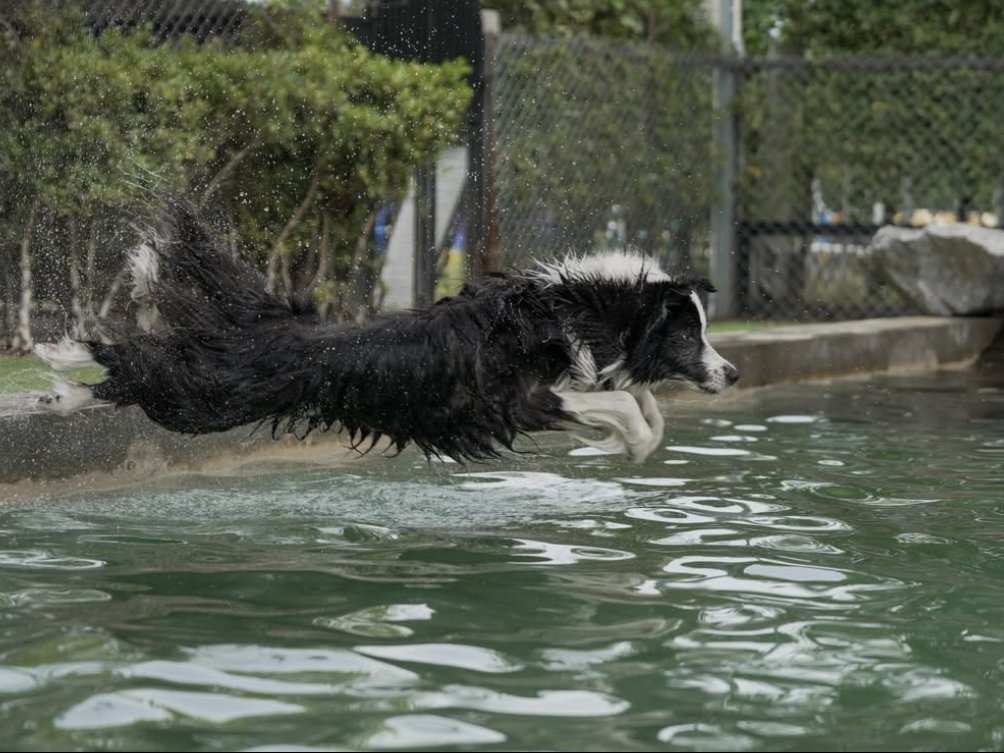
Heat. Above about 80°F (27°C), cut intensity and move walks to early morning and after dark. Above 90°F, walks are short bathroom trips and exercise moves to swimming or indoors. Flat-faced breeds, thick-coated northern breeds, overweight dogs, and seniors hit trouble 10 degrees sooner than that. Pavement that’s too hot for the back of your hand for 7 seconds is too hot for paws. Swimming is the summer answer for dogs that take to it; not every dog does.
Cold. Most dogs are fine to well below freezing with a coat on the short-haired ones. Salt and ice on paws are the real problem. Keep the daily total, shorten each session.
Overweight dogs. Start at half the breed group number and build by 5 minutes a week. Walking on grass or dirt, not pavement. No fetch or jumping until the weight is down. Pair it with the weight loss plan; exercise alone rarely fixes it.
Rain and indoor days. Indoor options that count: a treadmill session, stair work, tug, hide-and-seek with treats, and a 15-minute conditioning session. Our indoor exercise guide has a full list. Ten minutes of scent work is worth about 20 minutes of walking for tiring a dog out.
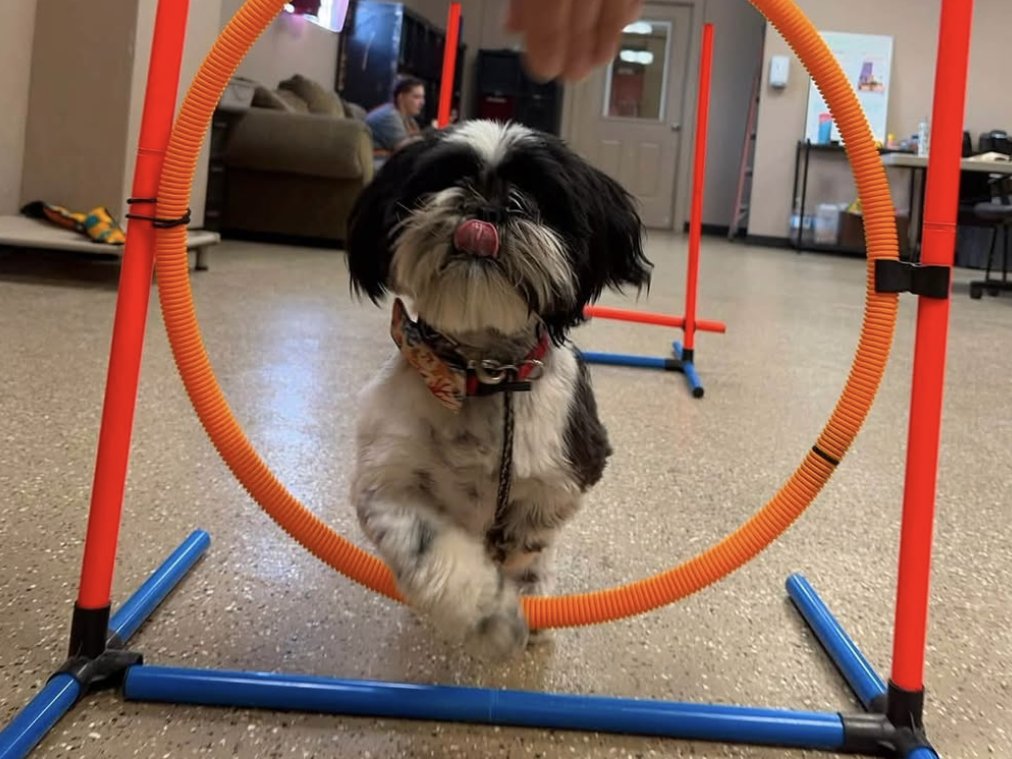
Long workdays. A dog that needs 90 minutes and gets 20 on weekdays doesn’t average out on weekends. Options in rough order of cost: a longer morning walk (get up 30 minutes earlier, it works), a midday dog walker, a treadmill, daycare two or three days a week. A yard doesn’t count; most dogs don’t exercise themselves in one.
Two or more dogs. Dogs that play together get some exercise from each other, but not the walking, and the higher-energy dog still needs its number. Walk them separately once a week so you can see each one’s pace and gait on its own.
Mental exercise counts, up to a point
Sniff walks, training sessions, food puzzles, and scent games tire a dog in a way physical exercise doesn’t, and for scent hounds and companion breeds they can be a third of the daily total. For herding, sporting, and working breeds they’re an addition, not a substitute. A Malinois that has done 20 minutes of scent work still needs to run. The mix that works for most dogs is physical exercise for the body, five to ten minutes of training or nose work for the brain, and a walk where the dog gets to be a dog.
Frequently asked questions
Is 30 minutes of exercise a day enough for a dog?
For companion breeds, sighthounds, flat-faced breeds, giants, and most seniors, yes. For an adult Lab, Beagle, or Boxer it’s the floor, not the target. For herding, working, and sporting breeds it isn’t close.
How many times a day should I walk my dog?
Twice for a healthy adult, three or more for puppies and seniors. Each walk 20 to 30 minutes for most dogs. A third short walk before bed helps dogs that are restless at night.
How many miles should a dog walk a day?
Two to three miles for most medium dogs, three to five for large sporting and working breeds, one to two for toy and flat-faced breeds. Build distance by no more than 10 to 15 percent a week.
Do dogs need a walk every day?
Yes. A rest day from hard exercise is fine and useful; a day with no walk at all isn’t, for the bladder, the joints, or the behavior. On rest days, walk slowly and let the dog sniff.
Can a dog get too much exercise?
Yes. Puppies and giant breeds most easily, and any dog that goes from nothing to a lot in one day. Stiffness the next morning, limping, worn pads, or reluctance to go out again are the signs.
Is a backyard enough exercise?
No. Almost no dog exercises itself in a yard beyond a few minutes of patrol. A yard is a bathroom and a play space with you in it, not a substitute for walks.
How much exercise does a puppy need?
About 5 minutes of structured exercise (leash walks, training) per month of age, twice a day, plus free play. A 4-month-old puppy gets two 20-minute sessions. No forced running or repetitive jumping until the growth plates close at 12 to 18 months.
How much exercise does a senior dog need?
Roughly the same daily total as before, in shorter and more frequent sessions, at a pace the dog chooses. Twenty minutes three times a day beats an hour once. Stop only if a vet tells you to, and add strength and balance work; it’s what keeps old dogs on their feet.
Where this fits in your dog’s plan
The daily number is the base a PetFitness plan is built on. The plan takes your dog’s breed, age, weight, and starting fitness, sets the daily total and how to split it, and adds the strength, balance, and stretching work that turns a walked dog into a fit one. If you want it built for your dog, build your dog’s plan here. If you’d rather start on your own, find your dog’s breed group in the first table and compare it to what the dog got yesterday. The gap is your answer.
About the author. Richie Allen is the founder of PetFitness. Every exercise in the PetFitness program is tested on real dogs before it goes into a plan.
Reviewed by the PetFitness training team. Our Certified Canine Fitness Trainers checked the breed group ranges, the age adjustments, and the puppy and senior guidance on this page against the standards used in the PetFitness program.
Related guides: Dog conditioning: the complete guide · How to build your dog’s stamina · Indoor exercise for dogs · Exercises for working dog breeds · Dog stretching