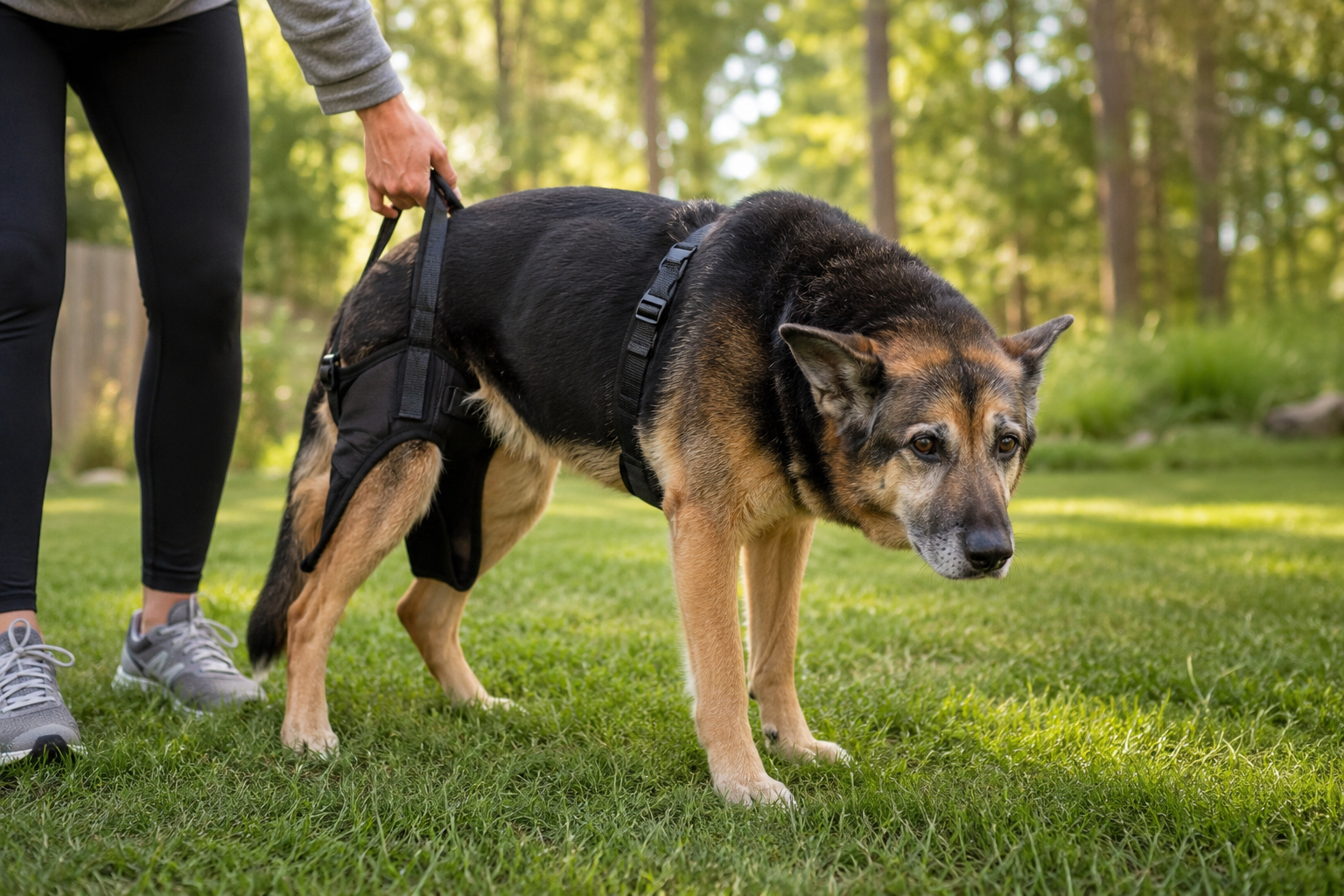
Weak back legs can make it difficult for dogs to walk, climb stairs, or stand comfortably. While the underlying cause should always be evaluated by a veterinarian, gentle exercises and regular movement may help improve strength, balance, and overall mobility for many dogs.
If your dog is getting older, you may also find our guide on Can Senior Dogs Build Muscle Through Exercise? helpful.
What Causes Weak Back Legs?
Weakness in the hind legs can occur for many reasons, including:
- aging
- arthritis
- muscle loss
- neurological conditions
- hip dysplasia
- recovery after injury or surgery
If weakness appears suddenly or worsens quickly, contact your veterinarian immediately.
1. Short Controlled Walks
Walking remains one of the safest exercises for many dogs with mild weakness. Slow, controlled walks encourage muscle use while helping maintain joint mobility and overall conditioning.
Several shorter walks are often better than one long walk.
Learn more in How Often Should You Walk a Senior Dog?.
2. Sit-to-Stand Exercises
Encouraging your dog to slowly move from sitting to standing can strengthen the muscles of the hind legs.
- Have your dog sit comfortably.
- Use a treat to encourage standing.
- Repeat a few times while your dog remains comfortable.
Stop immediately if your dog appears uncomfortable.
3. Gentle Hill Walking
If approved by your veterinarian, walking slowly up a gentle incline may help activate the muscles of the rear legs.
Avoid steep hills or slippery terrain.
4. Swimming
Swimming or supervised water exercise may allow dogs to move more comfortably while placing less stress on painful joints.
Always supervise your dog around water and consider using a canine life jacket.
5. Balance Exercises
Simple balance exercises may help improve stability and coordination.
Examples include:
- standing on different safe surfaces
- slow weight shifting
- controlled turning exercises
All exercises should remain gentle and controlled.
6. Indoor Mobility Games
Indoor activities can encourage movement even when outdoor walks are limited.
- short indoor walks
- scent games
- food puzzles
- gentle toy retrieval
Read Best Indoor Exercises for Senior Dogs for additional ideas.
Maintain a Healthy Weight
Extra body weight places additional stress on weak hind legs. Keeping your dog at a healthy weight may improve comfort and make movement easier.
Watch for Signs of Fatigue
Stop exercising if your dog shows:
- limping
- dragging the back legs
- difficulty standing
- heavy panting
- reluctance to continue
Exercise should be adjusted based on your dog’s comfort and recovery.
Related Articles
- Exercises for Dogs With Arthritis
- Can Senior Dogs Build Muscle Through Exercise?
- How to Keep a Senior Dog Active Safely
- Best Low-Impact Exercises for Senior Dogs
- How Often Should You Walk a Senior Dog?
Final Thoughts
Many dogs with weak back legs can benefit from safe, low-impact exercise. Regular movement, appropriate strengthening exercises, and maintaining a healthy weight may help improve mobility and confidence over time.
Always work with your veterinarian if your dog’s weakness is severe, sudden, or continues to worsen.
Want a Personalized Plan for Your Dog?
PetFitness creates structured exercise plans based on your dog’s breed, age, mobility, and conditioning level.