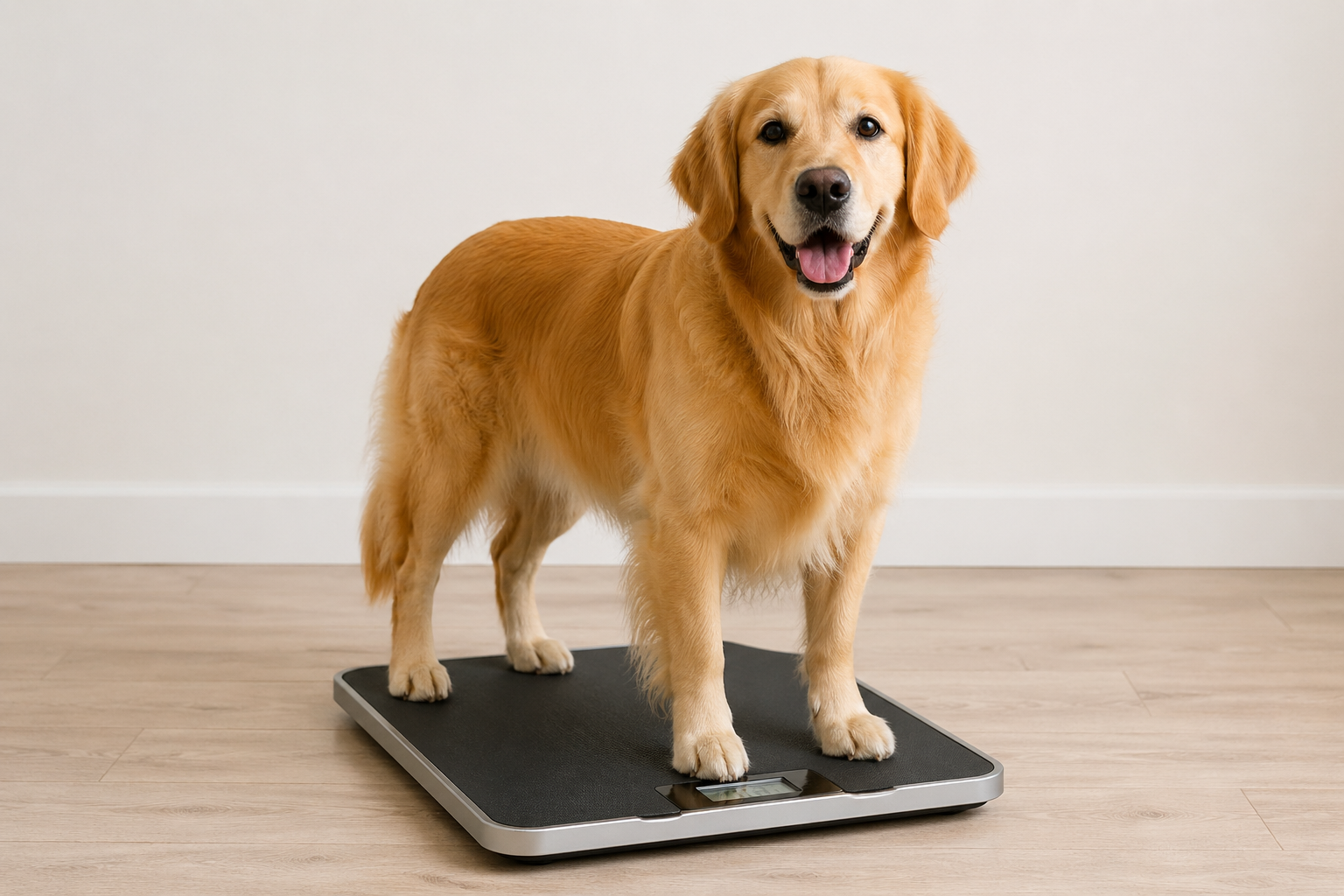
You can weigh your dog at home using a scale, by holding them, or by using simple measuring techniques. Tracking weight regularly helps monitor progress and maintain your dog’s health.
If your dog is overweight, start here: Overweight Dog: Causes, Risks, and How to Fix It
Why Tracking Weight Matters
Weighing your dog helps:
- monitor weight loss
- track progress
- adjust diet and exercise
Without tracking, it’s hard to know what’s working.
Simple Ways to Weigh Your Dog at Home
1. Use a Regular Scale
For small dogs:
- place them directly on a scale
- keep them still
- record the weight
2. Weigh Yourself First, Then With Your Dog
For larger dogs:
- weigh yourself
- weigh yourself holding your dog
- subtract the difference
3. Visit a Pet Store or Vet
If needed:
- use a larger scale
- get a more accurate reading
How Often Should You Weigh Your Dog?
- once per week is ideal
- track changes over time
- avoid daily fluctuations
What to Look For
- gradual weight loss
- steady progress
- consistency over time
Common Mistakes to Avoid
- weighing too often
- relying only on visual changes
- not tracking results
- expecting quick changes
Related: How to Tell If Your Dog Is Losing Weight
Read: How to Tell If Your Dog Is Losing Weight (Signs to Watch)
Related: Dog Weight Loss Plan
Follow this: Dog Weight Loss Plan: Diet + Exercise Guide
Final Thoughts
Weighing your dog regularly is one of the simplest ways to track progress.
Consistency and tracking lead to better results.
Want a Personalized Plan for Your Dog?
If your dog is overweight, the fastest way to see results is with a structured plan tailored to your dog’s breed, age, and goals.