Some dog breeds have a striking wolf-like appearance, with thick coats, upright ears, long muzzles, and athletic builds. But looking like a wolf doesn’t necessarily mean a dog behaves like one.
Many of the most wolf-like dog breeds are working dogs originally developed for pulling sleds, herding, guarding, or other demanding jobs. That means appearance shouldn’t be the only consideration when choosing one—they can also have significant exercise, training, grooming, and enrichment needs.
| Breed | Why They Look Wolf-Like | Exercise Needs |
|---|---|---|
| Siberian Husky | Upright ears, thick coat, athletic build | High |
| Alaskan Malamute | Large frame, dense coat, powerful build | High |
| German Shepherd | Upright ears, long muzzle, athletic body | Moderate to high |
| Czechoslovakian Wolfdog | Especially wolf-like body, coat, and facial features | High |
| Swedish Vallhund | Gray coat, pointed ears, alert expression | Moderate to high |
| Canadian Eskimo Dog | Powerful Arctic build and thick double coat | High |
| Samoyed | Dense Arctic coat, erect ears, spitz appearance | Moderate to high |
7 Dog Breeds That Look Like Wolves
1. Siberian Husky
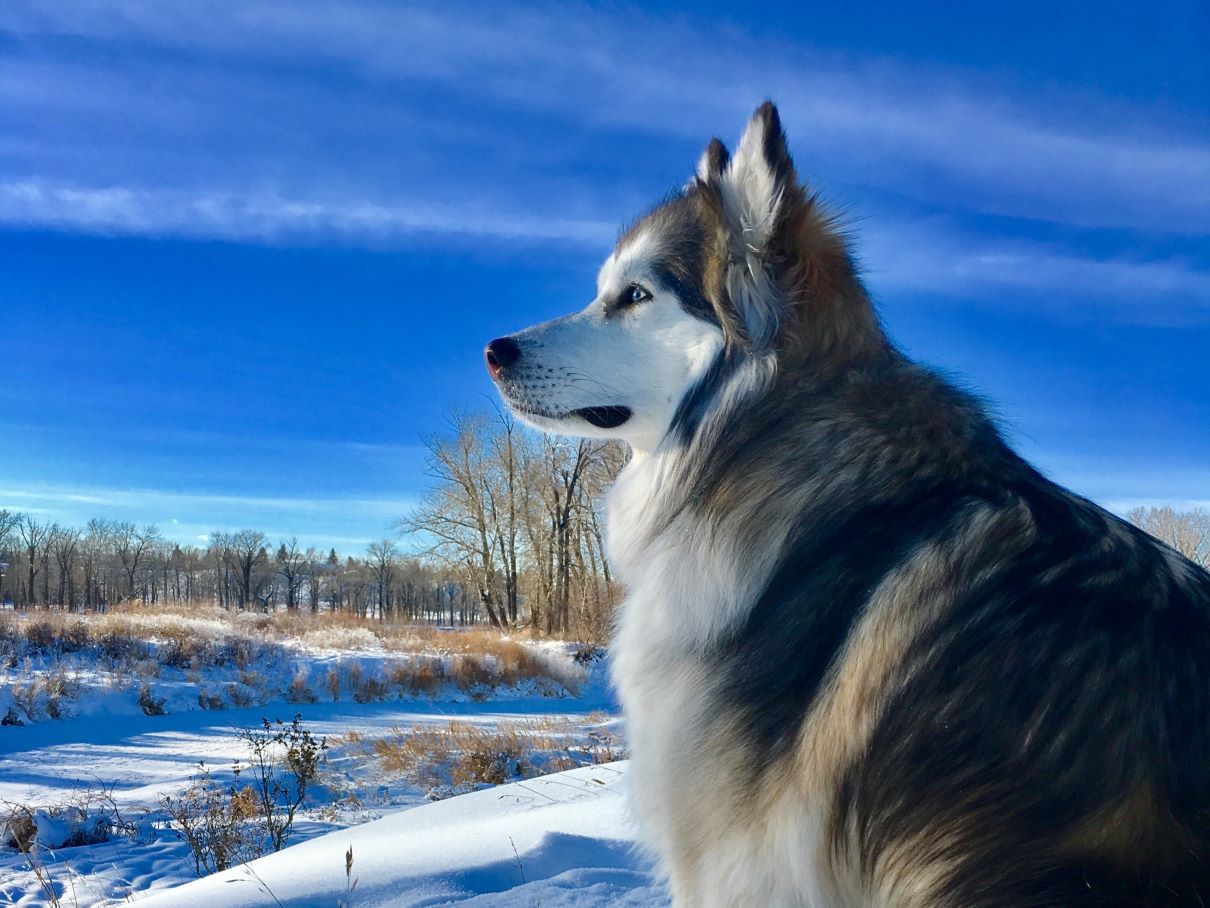
The Siberian Husky is one of the breeds people most commonly associate with wolves. Its erect ears, thick double coat, almond-shaped eyes, and athletic build create a distinctly northern appearance.
Huskies were developed as endurance sled dogs, so their needs go far beyond appearance. They are energetic dogs that typically benefit from substantial physical activity, mental stimulation, and opportunities to move.
2. Alaskan Malamute
The Alaskan Malamute has an even larger and more powerful build than the Siberian Husky. Its dense coat, broad head, upright ears, and substantial frame give it a rugged Arctic appearance.
Malamutes were developed for demanding work and can be strong, active dogs. Owners should be prepared to provide regular exercise, training, enrichment, and considerable coat maintenance.
3. German Shepherd
German Shepherds don’t resemble wolves as closely as some northern breeds, but their erect ears, long muzzle, athletic frame, and alert expression can still give them a wolf-like profile.
They are intelligent working dogs that often thrive when given both physical exercise and mentally engaging activities such as training, scent work, and structured play.
4. Czechoslovakian Wolfdog
Few established dog breeds look more wolf-like than the Czechoslovakian Wolfdog. The breed originated in former Czechoslovakia and is internationally recognized as a distinct breed.
Its appearance includes a wolf-like coat, upright ears, athletic body, and facial structure. This is also an active working breed that requires thoughtful training, socialization, exercise, and experienced ownership.
5. Swedish Vallhund
If you like wolf-like features but prefer a much smaller dog, the Swedish Vallhund is an interesting option. This compact herding breed has pointed ears, an alert expression, and coat colors that can create a surprisingly wolf-like appearance despite its short legs.
Vallhunds are active herding dogs, so their smaller size shouldn’t be mistaken for low exercise needs. They typically benefit from regular activity, training, and mental enrichment.
6. Canadian Eskimo Dog
The Canadian Eskimo Dog is a powerful Arctic working breed with a dense double coat, erect ears, strong body, and distinctly northern appearance.
Historically used for demanding work in Arctic environments, these dogs were built for strength and endurance. They are uncommon companion dogs and require owners prepared for the needs of a powerful working breed.
7. Samoyed
The Samoyed has many of the physical characteristics associated with northern wolf-like dogs, including a thick double coat, upright ears, and sturdy working-dog build. Its bright white coat gives it a very different appearance from a gray wolf, however.
Samoyeds were developed for demanding work in cold environments. They are active, social dogs that generally need regular exercise, mental stimulation, training, and significant grooming.
Why Do Some Dogs Look Like Wolves?
Dogs and wolves share evolutionary ancestry, but modern dog breeds vary enormously because humans selectively bred dogs for different physical traits and working abilities.
Many breeds that appear particularly wolf-like share characteristics such as:
- Upright triangular ears
- Longer muzzles
- Dense double coats
- Athletic body structure
- Bushy tails
- Gray, sable, black, or white coloring
These characteristics can create a wolf-like appearance even in breeds developed for very different purposes.
Are Wolf-Like Dogs Part Wolf?
No. A dog does not need recent wolf ancestry to look like a wolf. Siberian Huskies, Alaskan Malamutes, German Shepherds, Samoyeds, Swedish Vallhunds, and many other domestic breeds can have wolf-like characteristics without being wolf-dog hybrids.
The Czechoslovakian Wolfdog has a unique breed history involving wolves during the development of the breed, but today it is recognized as an established dog breed rather than simply being another name for a random wolf-dog hybrid.
Do Wolf-Like Dogs Need More Exercise?
Many dogs on this list have high activity requirements, but that’s largely because of the work they were bred to perform rather than because they resemble wolves.
Sled dogs, herding dogs, and other working breeds may have considerable endurance and benefit from a combination of physical exercise and mental enrichment.
At PetFitness, we recommend choosing exercise based on the individual dog’s breed, age, health, conditioning, and energy level rather than appearance alone.
Are Wolf-Like Dogs Good Pets?
Some can make excellent companions in the right home, but appearance shouldn’t be the reason you choose a breed.
Before bringing home a wolf-like dog, consider:
- Daily exercise requirements
- Training needs
- Mental stimulation
- Grooming requirements
- Adult size and strength
- Prey drive
- Vocal behavior
- Space and lifestyle
A beautiful wolf-like appearance doesn’t automatically mean the breed will fit your household.
Frequently Asked Questions
What dog looks the most like a wolf?
The Czechoslovakian Wolfdog is one of the most visibly wolf-like established breeds. Siberian Huskies and Alaskan Malamutes are also commonly associated with a wolf-like appearance.
What dog looks like a wolf but is smaller?
The Swedish Vallhund has pointed ears, wolf-like coloring, and an alert expression while standing much shorter than most northern working breeds.
Are Siberian Huskies part wolf?
Siberian Huskies are a domestic dog breed. Their northern appearance can resemble wolves, but being a Husky does not mean a dog is a wolf hybrid.
Are wolf-like dogs dangerous?
Appearance alone does not determine temperament. Behavior varies by breed, genetics, socialization, training, environment, and the individual dog.
Which wolf-like dog is best for families?
There isn’t one breed that’s right for every family. Consider exercise requirements, temperament, training needs, size, grooming, and your household before choosing a dog.
Final Thoughts
Wolf-like dog breeds are fascinating because they combine striking northern or primitive-looking features with the enormous variety found among domestic dogs.
But don’t choose a dog simply because it looks like a wolf. Research the breed’s exercise requirements, temperament, training needs, grooming, and lifestyle compatibility first.
The best dog isn’t necessarily the one that looks the most impressive—it’s the one whose needs you can realistically meet throughout its life.