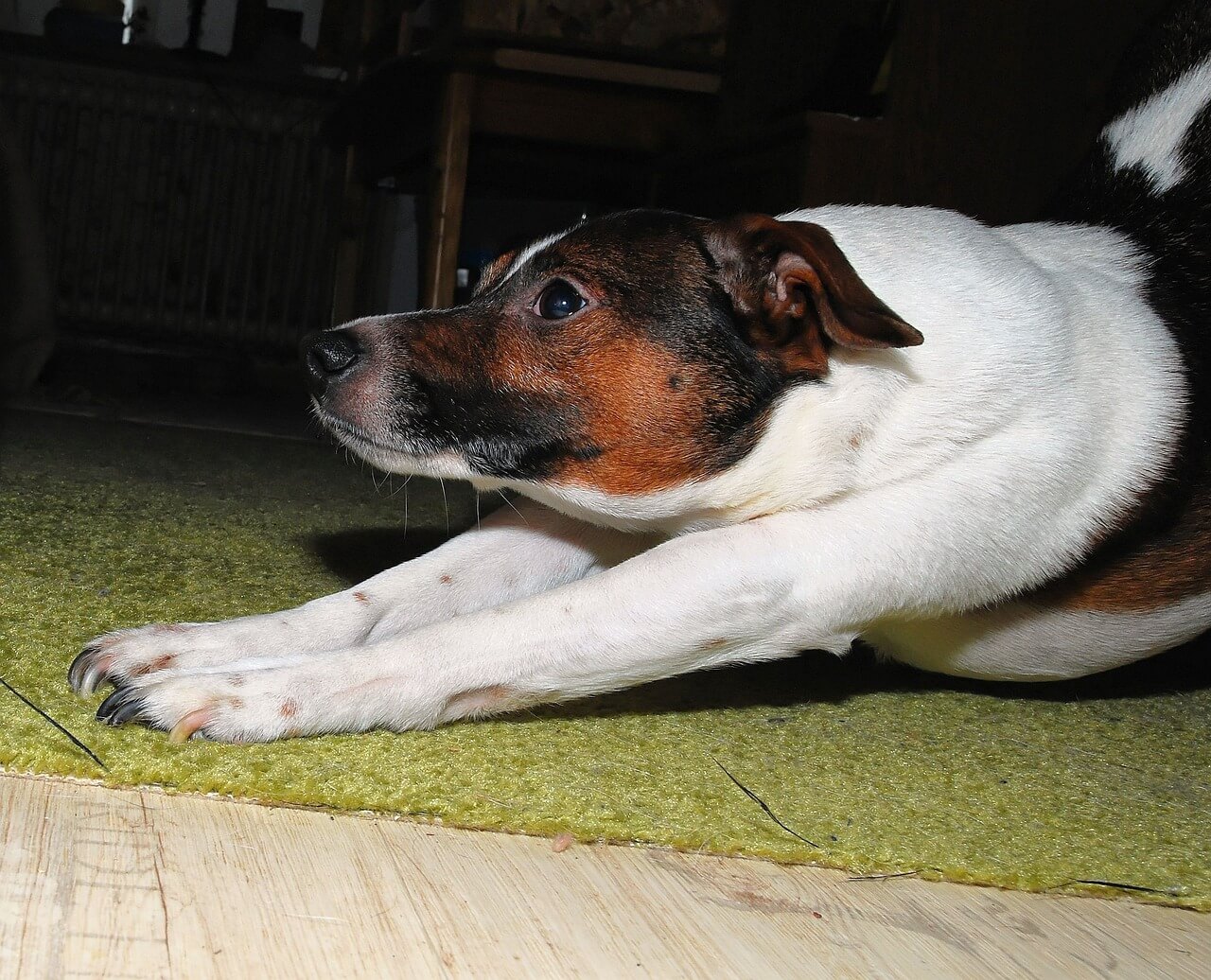
Dogs stretch for many of the same basic reasons people do: to loosen their muscles after resting, prepare their bodies for movement, and relieve temporary stiffness. That’s why it’s especially common to see a dog stretch after waking up from a nap or getting out of bed in the morning.
For dogs that can safely exercise, you can also explore our dog core strength exercises and balance exercises for dogs for ideas on controlled conditioning.
Occasional stretching is usually completely normal. However, a sudden increase in stretching—especially when accompanied by pain, reluctance to move, vomiting, restlessness, or other unusual behavior—can sometimes signal discomfort that deserves attention.
| When Your Dog Stretches | Possible Reason | Usually Normal? |
|---|---|---|
| After waking up | Loosening muscles after rest | ✅ Yes |
| Before activity | Preparing the body for movement | ✅ Yes |
| During play | Play bow or communication | ✅ Yes |
| Occasionally throughout the day | Changing position or relieving temporary stiffness | ✅ Usually |
| Repeatedly or suddenly much more often | Possible discomfort or pain | ⚠️ Monitor |
| With vomiting, restlessness, or obvious pain | Possible medical problem | ❌ Contact your veterinarian |
Why Do Dogs Stretch After Waking Up?
Stretching after waking is one of the most common times you’ll see this behavior. After lying in one position, a dog may extend the front legs, lower the chest, arch or lengthen the back, and stretch the hind legs before becoming active again.
This helps transition the body from rest to movement and is generally normal when your dog otherwise appears comfortable and behaves normally.
6 Common Reasons Dogs Stretch
1. They Just Woke Up
Dogs often stretch immediately after sleeping or resting. Muscles and joints haven’t been moving much, so stretching can simply be part of getting up and becoming active again.
2. They’re Preparing to Move
You may notice your dog stretch before walking, playing, or becoming more active. Changing posture and extending the body can help prepare them for movement.
3. They’re Doing a Play Bow
Not every position that looks like a stretch is actually about the muscles. Dogs commonly lower their front end while keeping their rear end elevated as a play bow.
A loose body, wagging tail, playful movement, and an invitation to interact usually distinguish a play bow from stretching caused by discomfort.
4. They’re Relieving Temporary Stiffness
After lying down for a while, dogs may stretch simply because their bodies feel temporarily stiff. Occasional stretching followed by normal movement generally isn’t concerning.
5. Stretching Feels Good
Sometimes the simplest explanation is the right one. Extending the body after resting can feel good, particularly before a dog begins moving around again.
6. They May Be Uncomfortable
Stretching becomes more important to monitor when the behavior suddenly changes. A dog that repeatedly assumes unusual stretching positions, appears unable to get comfortable, or shows other signs of illness or pain may be experiencing discomfort rather than performing a routine stretch.
When Should You Worry About a Dog Stretching?
Normal stretching is generally brief and followed by ordinary behavior. Your dog stretches, gets up, and continues with their day.
Pay closer attention if stretching becomes unusually frequent or occurs alongside signs such as:
- Vomiting or repeated attempts to vomit
- Loss of appetite
- Restlessness or inability to get comfortable
- Whining or other signs of pain
- A swollen or distended abdomen
- Limping or difficulty walking
- Reluctance to stand, jump, or use stairs
- Unusual lethargy
- A sudden change from your dog’s normal behavior
If your dog repeatedly stretches and appears sick, painful, or distressed, contact your veterinarian. A sudden swollen abdomen, repeated unproductive retching, collapse, or severe distress warrants urgent veterinary attention.
What Is the Difference Between a Dog Stretching and a Play Bow?
The positions can look very similar. During both, a dog may lower the front half of the body while leaving the rear end elevated.
Context helps tell them apart.
A play bow typically happens during an interaction and is accompanied by loose, energetic body language. The dog may bounce away, wag, run, or invite another dog or person to play.
A normal stretch is usually slower and often happens after waking or resting. The dog extends the body briefly and then returns to normal activity.
Do Dogs Need Help Stretching?
Healthy dogs generally stretch naturally and don’t need owners to force their limbs or bodies into stretching positions.
If you’re working on your dog’s mobility or fitness, controlled exercises may be useful, but don’t aggressively pull or manipulate your dog’s legs, hips, back, or joints simply because stretching seems beneficial.
At PetFitness, we recommend focusing on appropriate movement, strength, balance, and gradual conditioning rather than forcing a dog into stretches.
Can Exercise Help a Stiff Dog?
Appropriate regular movement can help dogs maintain strength, mobility, and conditioning. Walking, controlled strength exercises, balance work, and other activities can all be incorporated depending on the individual dog’s health and abilities.
However, persistent stiffness shouldn’t automatically be treated by simply exercising more. If your dog regularly appears stiff, painful, or reluctant to move, talk with your veterinarian before increasing exercise.
Related Dog Exercise & Fitness Guides
If you’re interested in keeping your dog active, mobile, and properly conditioned, these guides can help:
- Dog Fitness & Exercise: How to Build a Healthy Routine
- Why Do Dogs Have Strong Stamina?
- Dog Core Strength Exercises
- Best Balance Exercises for Dogs
Frequently Asked Questions
Why does my dog stretch every time they wake up?
Stretching after waking is generally normal. Your dog has been resting in one position and is transitioning back into movement.
Why does my dog stretch when they see me?
Context matters. Your dog may simply be getting up because you’ve approached, or the position may actually be a playful or social gesture rather than a physical stretch.
Why does my dog keep stretching their back legs?
Occasional hind-leg stretching can be normal, particularly after rest. If it becomes repetitive or your dog also limps, appears painful, or has difficulty moving, have your veterinarian evaluate the change.
Why does my dog keep doing the downward-dog position?
A brief stretch or play bow can look like the downward-dog position and may be completely normal. Repeatedly assuming an unusual posture while appearing uncomfortable or ill deserves veterinary attention.
Is it good for dogs to stretch?
Natural stretching is a normal part of movement for many dogs. Owners generally don’t need to force additional stretching in healthy dogs.
Can too much stretching mean my dog is in pain?
Sometimes. A sudden increase in stretching combined with stiffness, pain, digestive symptoms, restlessness, or other behavioral changes should be discussed with your veterinarian.
Final Thoughts
Most dogs stretch because they’ve been resting, they’re preparing to move, they’re playing, or stretching simply feels good. Stretching after waking up is particularly common and usually nothing to worry about.
What matters most is a change from your dog’s normal pattern. If stretching suddenly becomes repetitive or appears alongside pain, digestive problems, difficulty moving, or other unusual symptoms, don’t assume your dog simply needs a better stretch—have your veterinarian evaluate what’s going on.
Need more dog facts? Check out our PetFitness blog for more interesting articles about our furry friends!