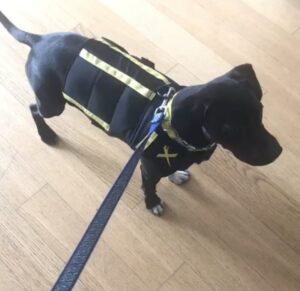
Some athletic dogs can learn to scramble up angled walls or use walls as part of controlled agility exercises, but dogs should not be encouraged to scale tall vertical walls. Falls, poor footing, and hard landings can lead to paw, joint, or soft-tissue injuries. If you want to develop your dog’s climbing ability, focus on low, purpose-built obstacles and controlled training instead.
| Activity | Recommendation |
|---|---|
| Low angled obstacle | ✅ Can be appropriate with supervision |
| Purpose-built agility wall | ⚠️ Use controlled training and appropriate equipment |
| Tall vertical wall | ❌ Don’t encourage it |
| Brick or concrete wall | ❌ Avoid |
| Wall with loose rocks or poor footing | ❌ Avoid |
| Puppy climbing walls | ❌ Avoid high-impact climbing |
Can Dogs Actually Climb Walls?
Some highly athletic dogs can scramble up angled surfaces, jump against walls, or climb certain obstacles using momentum and strong hind legs. However, dogs are not naturally built to climb vertical surfaces in the same way as cats.
A dog’s ability depends on body structure, strength, coordination, confidence, training, and the surface itself. Being physically capable of climbing something also doesn’t necessarily mean the activity is safe.
Is Wall Climbing Safe for Dogs?
Wall climbing can become dangerous when the surface is too steep, too high, slippery, unstable, or doesn’t provide a safe landing area. Potential injuries include damaged paw pads, broken nails, muscle strains, joint injuries, and injuries caused by falling.
Puppies, senior dogs, poorly conditioned dogs, and dogs with orthopedic or mobility problems should not be encouraged to perform high-impact climbing activities.
How to Safely Teach Climbing Skills
If you want to develop your dog’s climbing ability, use equipment designed for canine exercise or agility rather than an ordinary wall.
Start with a low, stable, gently angled obstacle. Allow your dog to investigate it without forcing them upward. Use positive reinforcement to reward calm, controlled movement and gradually progress only when your dog is comfortable.
Keep sessions short and provide a secure, non-slip surface and safe landing area. Stop if your dog appears hesitant, fatigued, uncomfortable, or begins losing traction.
At PetFitness, we recommend developing strength and coordination before introducing advanced obstacles. The goal should be controlled movement—not seeing how high your dog can climb.
Safer Alternatives to Climbing Walls
You don’t need a vertical wall to challenge an athletic dog. Safer options include:
- Hill walking
- Low agility ramps
- A-frames designed for dogs
- Cavaletti poles
- Balance exercises
- Controlled stair work when appropriate
- Hiking over varied terrain
These activities can challenge strength, coordination, balance, and confidence without requiring your dog to scale a dangerous vertical surface.
Frequently Asked Questions
Can dogs climb vertical walls?
Some exceptionally athletic dogs can briefly run or scramble up vertical surfaces using momentum, but dogs are not naturally built for sustained vertical climbing.
Which dogs are best at climbing?
Athletic, lightweight dogs with strong hind legs and good coordination may be better climbers, but individual ability varies considerably.
Can puppies learn to climb walls?
Puppies should not be encouraged to perform high-impact wall climbing while their bodies are still developing. Stick with age-appropriate exercise and low-risk obstacles.
Can I train my dog using an agility wall?
Purpose-built canine agility equipment is much more appropriate than an ordinary wall. Introduce obstacles gradually and prioritize controlled movement and safe footing.
Why does my dog try to climb walls?
Dogs may jump or scramble against walls because of excitement, prey drive, play, learned behavior, or an attempt to reach something on the other side.
Final Thoughts
Dogs can develop impressive strength, coordination, and climbing skills, but ordinary walls aren’t appropriate exercise equipment. If your dog enjoys climbing, channel that athleticism into controlled obstacles, hills, agility equipment, and other activities designed with safe footing and landings in mind.
Build the dog’s fitness first, progress gradually, and prioritize control over height.