Written by the PetFitness team and reviewed by our Certified Canine Fitness Trainers. Last updated October 6, 2026.
You don’t need any equipment to get a dog fit. A leash, a hill, and a kitchen floor cover most of what matters. But a handful of tools make specific jobs easier: building strength without impact, adding load to a walk, burning off a high-drive dog in a small yard, or keeping a dog moving when the weather won’t cooperate. This page covers the six accessories we use most in PetFitness plans, what each one is actually for, how to use it safely, what to buy and what to skip, and the gear you can make yourself for nothing. All of it is tested on real dogs before it goes into a plan.
The short version
- Start with balance gear. An inflatable disc or peanut builds the stabilizing muscles around the hips, shoulders, and spine with zero impact. It’s the most useful single purchase for most dogs, and a couch cushion does 80 percent of the job for free.
- Cavaletti poles teach a dog to lift and place each foot deliberately. Broom handles on the ground work as well as the branded version.
- A weighted vest turns a walk into a strength session. Keep it under 10 percent of body weight, adult dogs only, never for jumping or running.
- A flirt pole is the fastest way to tire out a high-energy dog in a small space. Keep it low and slow for anything under 18 months or over 7.
- A herding ball gives working breeds a job. A long line gives any dog safe off-leash-style running.
- Skip ball launchers, anything that makes a dog jump repeatedly, and any “dog fitness” product that doesn’t tell you what it’s for.
Before you buy anything
Equipment is a multiplier, not a program. A dog that isn’t getting enough daily walking won’t be fixed by a balance disc, and a dog that’s overweight shouldn’t be loaded with a vest until the weight is off. Get the basics right first: a daily total that matches the breed (our guide on how much exercise a dog needs has the numbers), a healthy body condition (check it against our body condition guide), and a vet’s okay for any dog that’s young, old, or has a joint history. Then add gear for the specific thing you’re trying to improve. Every item below says what that thing is.
1. Balance discs, peanuts, and wobble boards
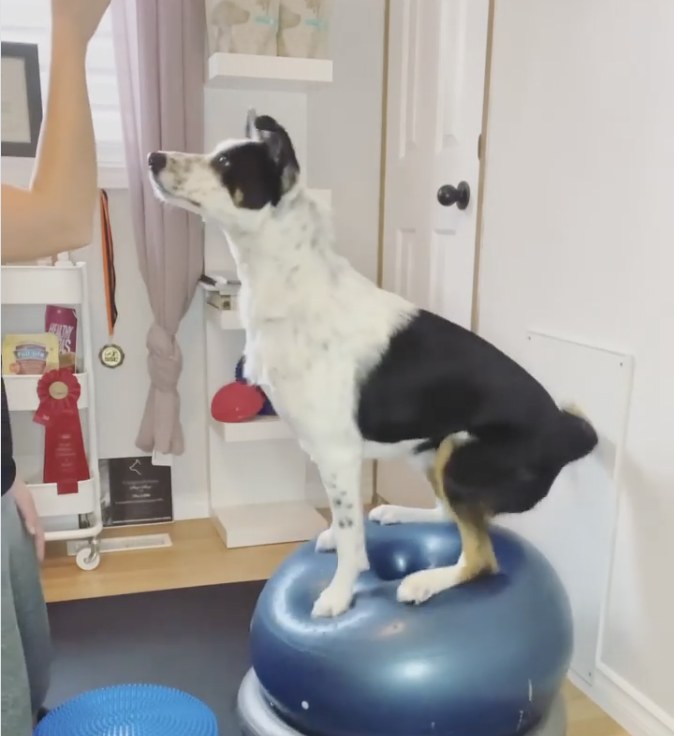
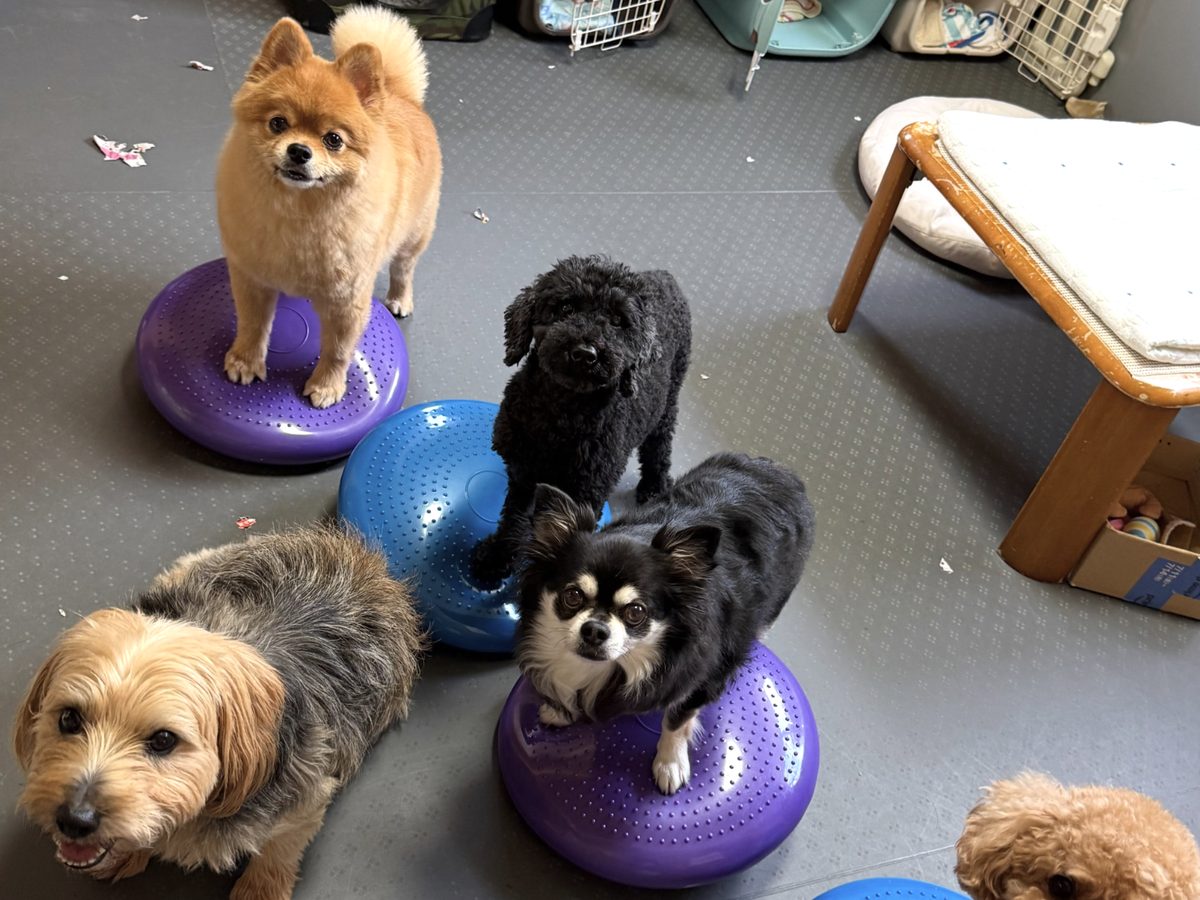
What it’s for. Strength and stability in the muscles you can’t work any other way: the small stabilizers around the hips, shoulders, and spine that keep a dog’s joints in place when it turns, lands, or slips. Standing still on an unstable surface makes all of them fire at once. It’s the single most useful piece of equipment for a dog with hip dysplasia, a senior with a wobbly back end, a sport dog that needs to cut and turn safely, or any dog recovering from injury. It also builds body awareness, which is why rehab therapists use it on nearly every patient.
What to buy. An inflatable balance disc (a round cushion about 14 inches across, sometimes sold as a “wobble cushion” for people) is the cheapest and most versatile: $15 to $25 and it works for every size of dog. A balance peanut (a long inflatable shape the dog stands on with all four feet) is the step up for medium and large dogs, $40 to $80 for a good one. Wobble boards (a hard platform on a half-dome base) are more challenging and better for dogs that already have some balance work behind them. The branded canine versions (FitPAWS, Blue-9) are tougher than the human ones but the human ones are fine for most pet dogs; just check the weight rating.
How to use it. Start on a non-slip floor with the disc inflated firm (firmer is easier). Lure the dog to put its front feet on the disc and stand still for 10 to 15 seconds, reward, step off. Build to 30 seconds, then a minute, then progress to all four feet on the disc (or the peanut), then to hind feet only, which is the hardest and the most useful for the back end. Three to five holds a session, once a day. The dog should be standing square and quiet; if it’s scrambling, the surface is too soft or the progression too fast. Let a little air out as the dog gets stronger to make it harder. Our guide to improving your dog’s balance has the full progression, and the core strength guide covers the exercises you do once the dog is stable on it.
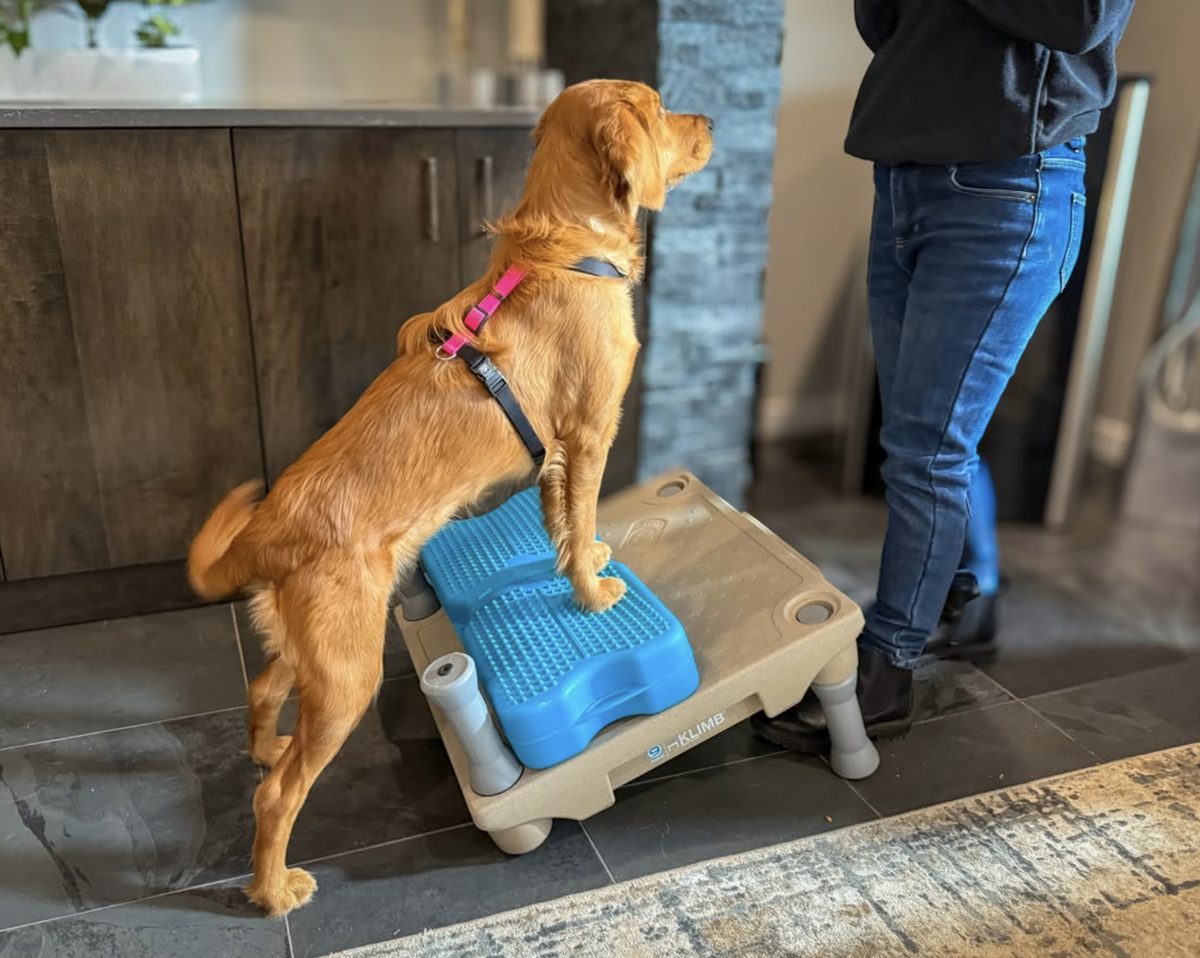
The photo above shows a common progression: front feet up on a balance pad placed on a raised platform. Raising the front end shifts the dog’s weight back onto its hind legs, so the hips and thighs work harder while the dog holds still. It’s a strength exercise disguised as standing.
The free version. A firm couch cushion, a folded blanket on a yoga mat, or a half-deflated air mattress. The dog can’t tell the difference and neither can its muscles. Buy the disc when you want something that fits in a bag and doesn’t get dog hair in your couch.
Don’t. Put the disc on a slippery floor. Let the dog jump on or off it. Use it with a puppy under 6 months for more than a few seconds of standing.
2. Cavaletti poles
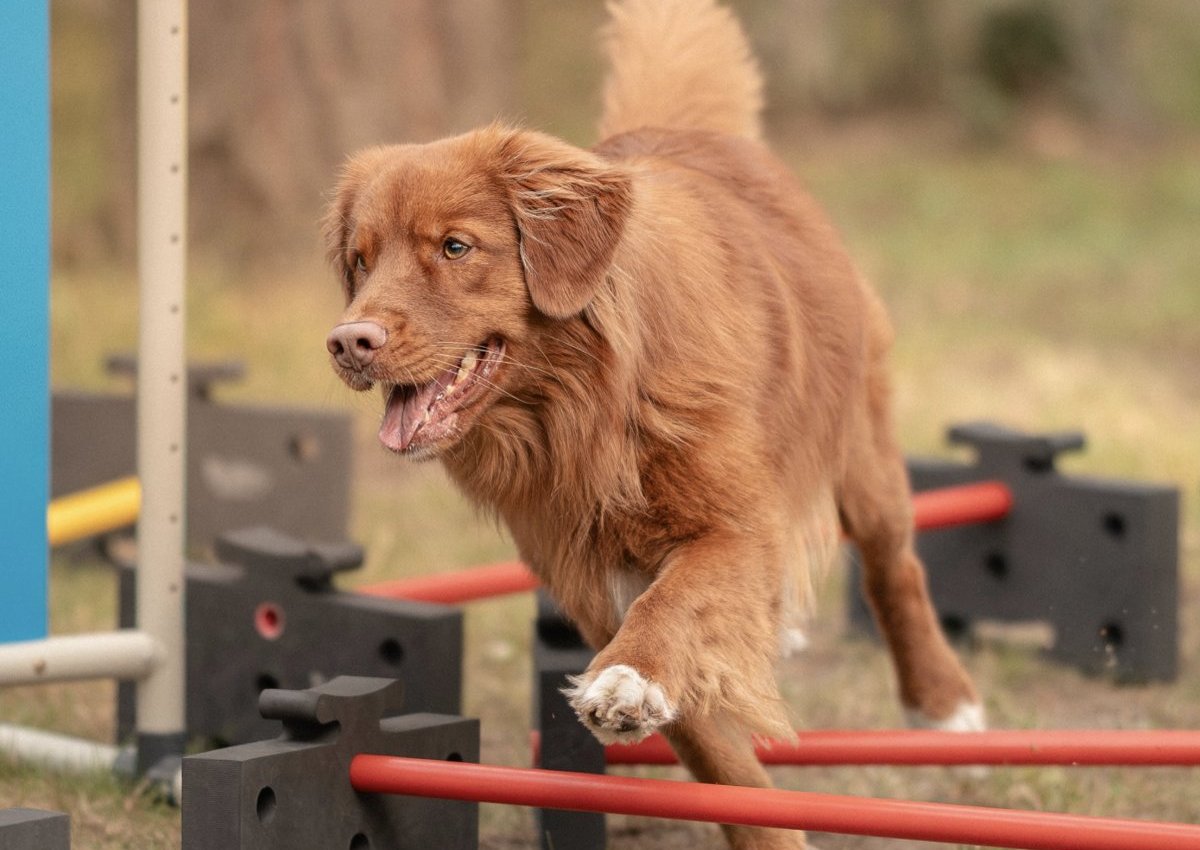
What it’s for. Teaching a dog to pick up and place each foot on purpose. Walking slowly over a row of low poles makes the dog flex every joint in each leg, lengthen or shorten its stride to match the spacing, and pay attention to where its feet are. It builds the muscles that lift the legs (the ones that fade first in old and injured dogs), improves coordination, and is one of the few exercises that works the front end and the back end equally. Rehab therapists use it after almost every orthopedic surgery. It’s also the best warm-up there is for a sport dog.
What to buy. Honestly, nothing. Four to six broom handles, PVC pipes, or pool noodles laid on the grass work exactly as well as the $60 to $150 branded sets. The sets add adjustable height and a case. If you want to buy, look for poles that can be set from ground level to about wrist height for your dog and that won’t roll when stepped on.
How to use it. Space the poles one of your dog’s strides apart (roughly the distance from its nose to the base of its tail for a walk, a bit more for a trot). Start with the poles flat on the ground, walk the dog through on a loose leash slowly enough that it steps over each one rather than stepping between two or jumping. Four to six passes, two or three days a week. Raise the poles to pastern (wrist) height once the dog is clean at ground level, and never above the elbow. Slow is the point; a dog that trots through fast isn’t lifting its feet.
Don’t. Set them high enough to jump. Use them on a slippery surface. Run a dog with a fresh injury through them without a therapist’s say-so.
3. Weighted vest
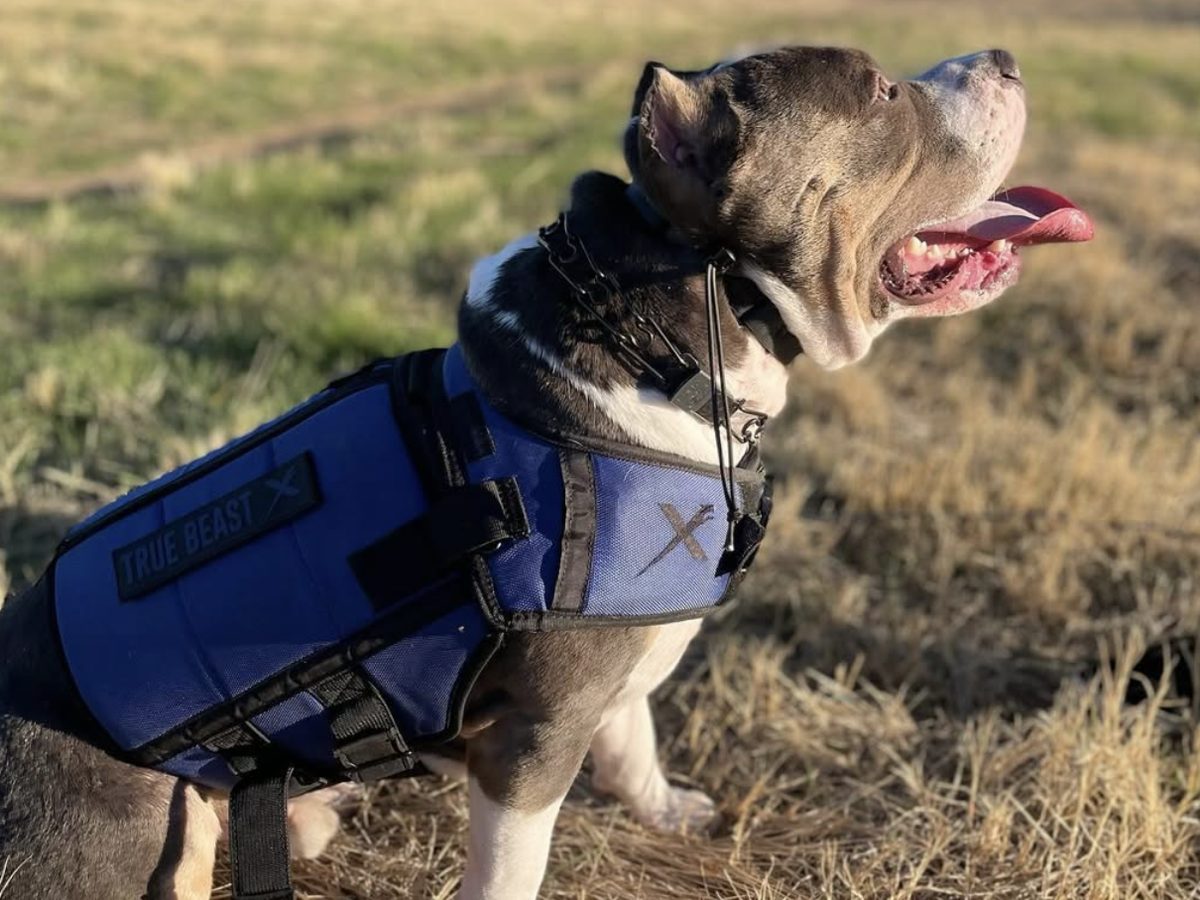
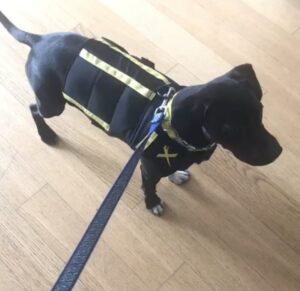
What it’s for. Adding load to a walk. A vest with a few pounds in it makes every step more work for the dog’s whole body, which builds muscle and burns more calories in the same amount of time. It’s useful for a fit adult dog that needs more challenge than a walk gives it, a high-drive dog that needs to be tired without being run into the ground, or a dog that needs to lose weight but can’t run yet. It is not a shortcut, and it’s not for every dog.
What to buy. A vest built for the purpose, with the weight spread evenly over the dog’s back and shoulders in small pockets, a snug fit that doesn’t shift, and a handle on top. Expect $40 to $90. The weight should be adjustable in small increments so you can start light. Avoid vests that hang weight under the belly or concentrate it in one spot, and avoid anything with a built-in leash ring on the back that encourages pulling.
How to use it. Start with the vest empty for a few walks so the dog gets used to wearing it. Then add 2 to 3 percent of the dog’s body weight (1 to 1.5 pounds for a 50-pound dog) and walk at a normal pace for 15 to 20 minutes. Build by about half a pound a week to a maximum of 10 percent of body weight, and most pet dogs never need more than 5 to 8 percent. Walking only, on flat or gently rolling ground. Take it off for any running, fetch, or play. Watch for a dog that slows down, pants harder than usual, or looks stiff the next day; that’s too much weight too soon. Our full guide to dog weight vests covers sizing and the breed-by-breed limits.
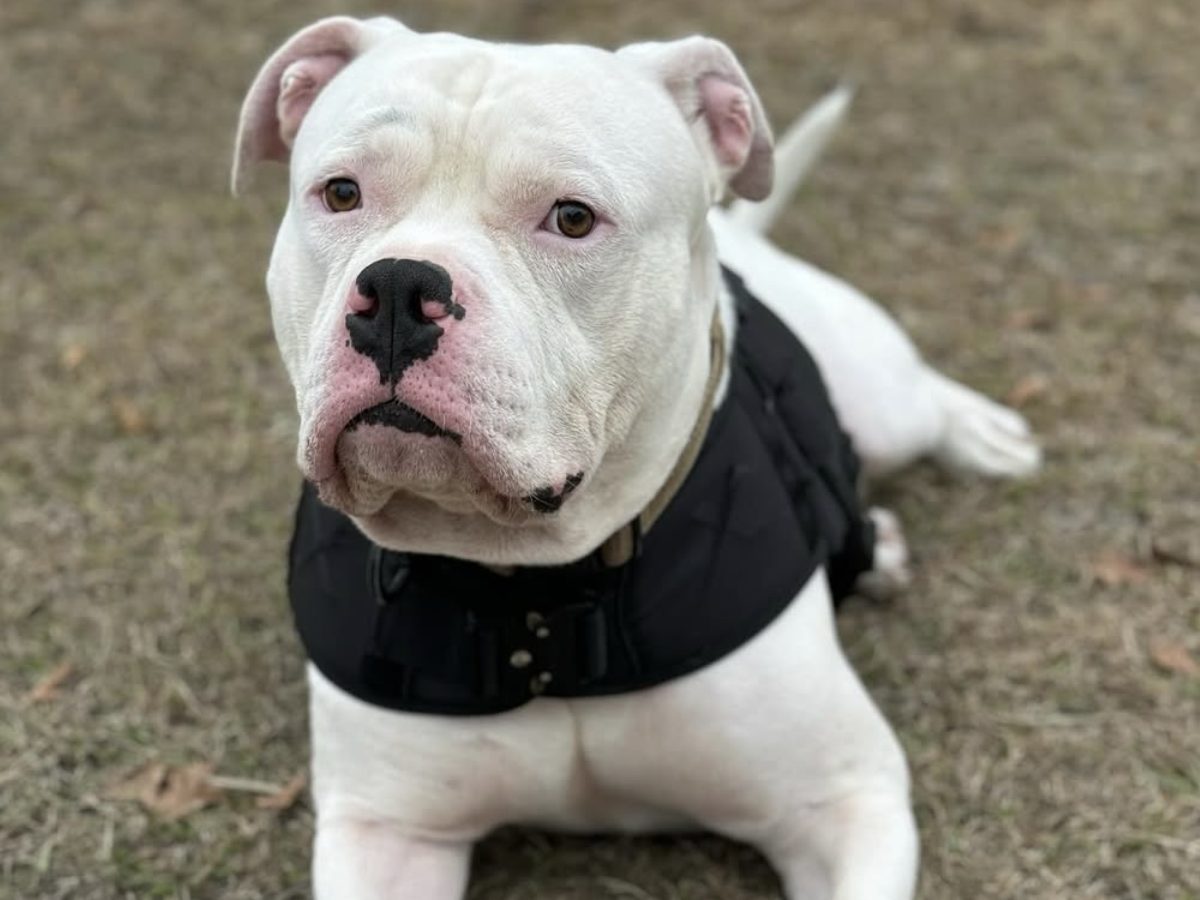
Don’t. Put a vest on a dog under 18 months (growth plates), a dog with any joint, back, or heart problem, a flat-faced breed, or a dog that’s overweight. Never jump, run, or play in it. Never go above 10 percent of body weight.
4. Flirt pole
What it’s for. Burning off a high-drive dog in a small space, and building drive and impulse control at the same time. A flirt pole is a long handle with a cord and a lure on the end, like a giant cat toy. The dog chases the lure as you move it, and you control the speed, direction, and when it gets to catch it. Ten minutes with a flirt pole tires out most dogs more than a 30-minute walk, because the chasing, turning, and stopping use far more energy. It’s the best tool we know for terriers, herders, bully breeds, and any young dog that comes home from a walk still wired.
What to buy. A pole with a strong, slightly flexible shaft (fiberglass or heavy PVC), a bungee or elastic section in the cord to absorb the shock when the dog grabs it, and a durable lure that can be replaced. $20 to $40. Longer poles (4 to 6 feet) give you more control and keep the dog’s turns wider and safer. Horse lunge whips with a toy tied on work for big dogs.
How to use it. On grass or another soft surface, never concrete. Keep the lure low, at the dog’s chest height or below, so it chases rather than leaps. Move it in big arcs and straight lines, not tight circles, and change direction gently. Let the dog catch it every few passes (it’s not fun if it never wins), ask for a release, and go again. Five to ten minutes is a session. Build in a “sit” or “down” before each release and you’re training impulse control while the dog thinks it’s playing.
Don’t. Lift the lure so the dog jumps or twists in the air. Use it with a puppy under about 12 months at anything but a slow walk, or with a dog that has joint problems. Run tight circles, which strain the back and knees. Go longer than ten minutes; the dog won’t stop itself.
5. Herding ball
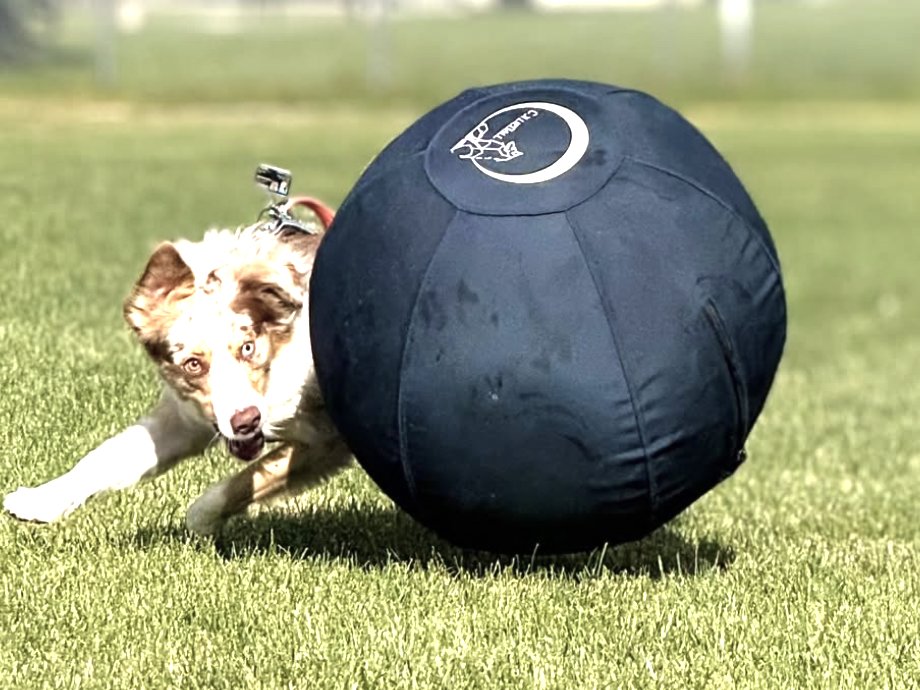
What it’s for. Giving herding and working breeds a job. A herding ball is a large, hard ball (usually 10 to 25 inches) the dog can’t pick up, so it pushes it with its nose, chest, and shoulders instead. Herders will drive it around a yard for as long as you let them, and the pushing builds the shoulders, chest, and core in a way nothing else in a pet dog’s life does. It also solves a behavior problem: a Border Collie or Heeler with nothing to herd will herd the kids, the cat, or the vacuum. The ball gives the instinct somewhere to go.
What to buy. A ball made for the purpose, hard enough that the dog can’t puncture it and sized so the dog can’t get its mouth around it. The virtually indestructible ones (Jolly Ball, Varsity Ball, and similar) run $25 to $60. For big, intense dogs, the hard plastic ones hold up; the softer rubber ones get chewed. Our guide to exercises for working breeds has more on using it.
How to use it. Roll it across the yard and let the dog figure it out. Most herders need about thirty seconds. Keep sessions to 10 to 15 minutes at first, since dogs that love this will overdo it, and check the nose and the insides of the front legs for scrapes after the first few sessions. Grass is better than concrete for the ball and for the dog. A yard with a fence is best; a tennis court works.
Don’t. Use it on hard ground with a dog that pushes with its nose. Let a dog with a sore neck or shoulder use it. Leave it out unsupervised with a dog that will work it until it drops.
6. Long line
What it’s for. Letting a dog run, sniff, and move at its own pace without being off leash. A long line is a 15 to 50 foot leash. It’s the tool that makes real exercise possible for a dog that doesn’t have reliable recall, a dog in an area where off-leash isn’t allowed, or a young dog you’re not ready to trust. A dog on a long line in an open field gets three or four times the movement of the same dog on a 6-foot leash, and it’s how most of the dogs in the PetFitness program get their stamina work. It’s also the tool for building recall in the first place.
What to buy. Biothane (a coated webbing) is the best material: it doesn’t absorb water, doesn’t burn your hands like nylon, and wipes clean. 20 to 30 feet is the useful length for most dogs; 50 is for recall training in big spaces. Expect $20 to $45. Attach it to a harness, never a collar, so a dog hitting the end of the line doesn’t take it in the neck. A back-clip harness is best for this.
How to use it. Open space, no other dogs close by, gloves if your dog pulls hard. Let the line drag and step on it to stop the dog, rather than holding it tight; the dog learns that the line is a boundary, not a tug-of-war. Keep an eye out for the line wrapping around legs (yours or the dog’s) and trees. For stamina building, a 20-minute long-line session on grass with the dog free to trot and sniff is a better workout than most on-leash walks twice as long; our guide to building a dog’s stamina uses it throughout.
Don’t. Clip it to a collar. Use it near roads, cyclists, or other dogs that might get tangled. Use a retractable leash instead; they’re the opposite of a long line (constant tension, thin cord, a locking mechanism that fails) and they cause injuries.
Worth having: the treadmill
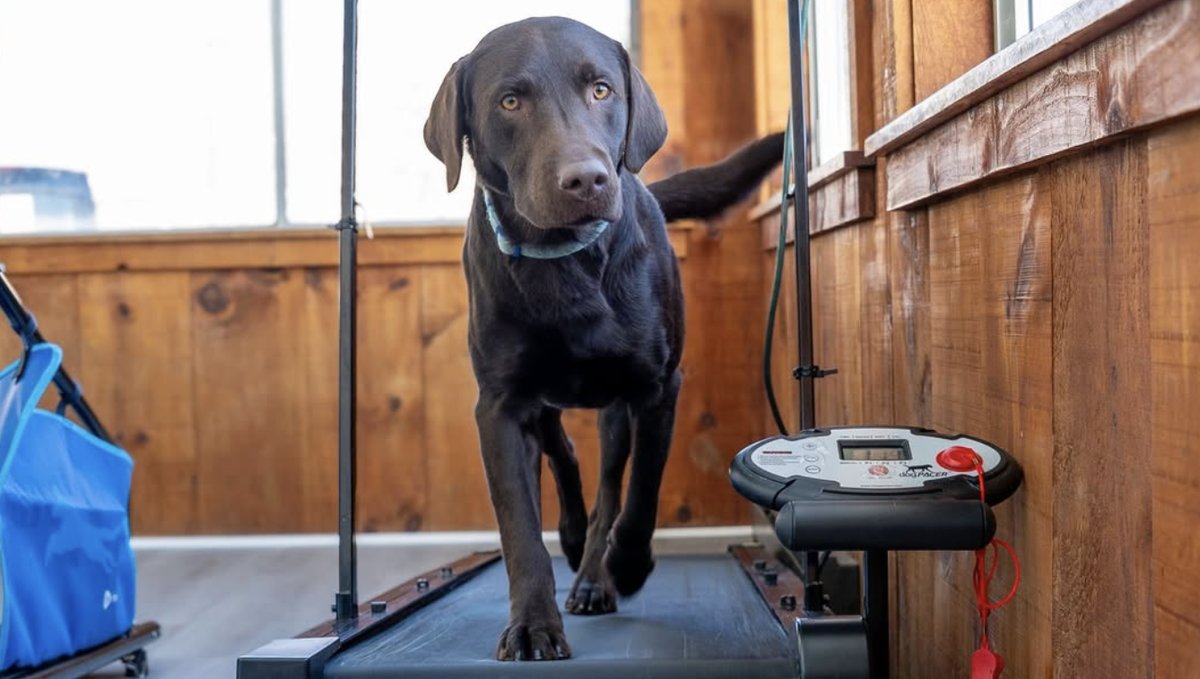
Not on the six because it’s a bigger purchase, but a treadmill earns a mention for anyone who lives somewhere with real winters or summers, works long days, or has a dog that needs more steady-state walking than they can give it. A dog treadmill (longer belt, side rails, no front console) gives exact control of pace and time, and a dog that’s trained to it will happily walk 20 minutes while you make dinner. Human treadmills work for medium and large dogs with care, but the short belt and the console are problems for small and giant breeds. Our treadmill training guide covers the 4-week introduction and what to buy.
What to skip
Automatic ball launchers. They produce exactly the kind of exercise that wrecks joints: repeated sprints, hard stops, and leaps, with no one watching how the dog lands. A few minutes of fetch is fine; a machine that does it for an hour is not.
Spring poles and hanging tug toys. Marketed for bully breeds. A dog hanging from its jaws with its whole body weight loads the neck and spine badly, and the landings are uncontrolled. Flirt pole instead.
Weighted collars and ankle weights. Weight on the neck or on the legs changes the way a dog moves and puts load exactly where you don’t want it. Weight goes on the trunk, in a vest, or nowhere.
Retractable leashes. See the long line section. The injuries are to people as often as to dogs.
Any “fitness” product that doesn’t say what it’s for. Agility kits for dogs that aren’t trained for agility, “dog gym” bundles, exercise wheels. If you can’t name the muscle or the skill it builds, it’s a toy, and that’s fine, but don’t buy it for fitness.
Equipment by goal
| Goal | Buy first | Then | Free alternative |
|---|---|---|---|
| Strength and stability (seniors, joint issues, rehab) | Balance disc | Cavaletti set, peanut | Couch cushion; broom handles on grass |
| Burn off a high-drive dog | Flirt pole | Herding ball (herders), long line | Rope toy on a stick; hill sprints on a long line |
| Weight loss | Long line | Treadmill; vest only once the dog is near target weight | More walking, measured food (see the weight loss plan) |
| Build a fit adult dog harder | Weighted vest | Peanut, cavaletti at wrist height | Hills, sand, snow |
| Bad weather, small space | Balance disc + flirt pole | Treadmill | Stairs on a leash, hallway recalls, indoor exercise |
| Puppy under 12 months | Long line | Balance disc for short holds after 6 months | Everything else waits (see puppy exercise) |
A sample week using the gear
For a healthy adult dog that’s already getting its daily walks, here’s how we’d layer the equipment in. Each item is a few minutes added to a day, not a separate workout.
Monday: balance disc holds, 5 minutes, after the evening walk. Tuesday: flirt pole, 10 minutes, on grass. Wednesday: cavaletti, 6 passes, at the start of the walk as a warm-up. Thursday: balance disc, 5 minutes, progress to hind feet if ready. Friday: long line session in an open field, 20 to 30 minutes, replacing one walk. Saturday: weighted vest on the morning walk (fit adults only), flirt pole or herding ball in the afternoon. Sunday: rest day, easy sniff walk only. Our dog conditioning guide builds this into a full 8-week program.
Frequently asked questions
What is the best exercise equipment for dogs?
A balance disc, for most dogs. It builds the stabilizing muscles that protect the joints, works for any size and age, costs under $25, and a couch cushion does most of the same job. After that it depends on the dog: a flirt pole for a high-drive dog, a long line for a dog that needs more running, a weighted vest for a fit adult that needs more challenge.
Are weighted vests good for dogs?
For healthy adult dogs, used for walking only, with the weight kept under 10 percent of body weight, yes. Not for puppies, seniors, overweight dogs, flat-faced breeds, or any dog with a joint, back, or heart problem, and never for running or jumping.
Can I make dog fitness equipment at home?
Most of it. Broom handles or pool noodles on the ground are cavaletti. A couch cushion or folded blanket is a balance surface. A rope toy tied to a stick is a flirt pole. A basketball or soccer ball is a herding ball for a small dog. The things worth buying are a long line (biothane, 20 to 30 feet) and, if you want one, a weighted vest.
Is a flirt pole safe for dogs?
Used on grass, kept low, with wide turns and sessions under ten minutes, yes. The risks come from lifting the lure so the dog jumps and twists, running tight circles, and using it with puppies or dogs that have joint problems.
What equipment helps a senior dog?
A balance disc for short, easy holds and cavaletti poles flat on the ground. Both build the muscle that keeps an old dog able to get up and walk steadily. Skip the vest, the flirt pole, and anything that involves speed. Our guide to low impact exercise for senior dogs covers the full approach.
Do I need a dog treadmill?
Only if weather, schedule, or space keeps your dog from getting enough walking. If it does, a treadmill is one of the best investments you can make. If your dog is getting its daily total outside, you don’t need one.
Where this fits in your dog’s plan
A PetFitness plan tells you which of these your dog needs and when, based on its age, breed, body condition, and goal, and builds the sessions into the weekly program so they’re a few minutes added to a walk rather than a chore. Most dogs need two or three of these, not all six. If you’d like the plan built for your dog, build your dog’s plan here. If you’d rather start on your own: put a couch cushion on the floor tonight and see if your dog can stand on it for 30 seconds.
About the author. Richie Allen is the founder of PetFitness. Every exercise in the PetFitness program is tested on real dogs before it goes into a plan.
Reviewed by the PetFitness training team. Our Certified Canine Fitness Trainers checked the equipment selection, the usage guidance, and the safety limits on this page against the standards used in the PetFitness program.
Related guides: Dog conditioning guide · Dog weight vests · Improve your dog’s balance · Treadmill training · Core strength exercises · Weave poles workout · Indoor exercise for dogs